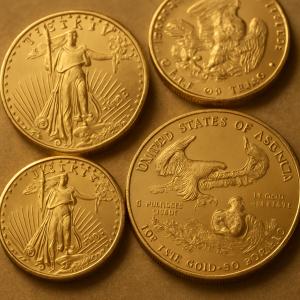
Solid Gold Bullion Bars
You probably think you know what a gold bar is—a giant, gleaming brick locked away in a high-security vault. But what if the most popular gold bars are closer to the size of a domino, and their purpose has less to do with movie heists and more to do with protecting your savings?
People are increasingly asking if gold bars are a good investment for their financial security. The answer starts not with market speculation, but with understanding why this metal has been a cornerstone of wealth for millennia.
First and foremost, gold has long been considered the ultimate store of value. For thousands of years, across nearly every civilization, it has been recognized as having inherent worth, independent of any government or financial institution.
Unlike currencies that can be printed and devalued, the global supply of gold is finite. This historical stability means that an ounce of gold has maintained its purchasing power through centuries of economic change, acting as a reliable way to preserve wealth from one generation to the next.
This leads to its second powerful appeal: it is a tangible asset. In an age where most of our money exists as digital numbers on a bank’s server, a gold bar is a physical item you can hold in your hand.
It possesses value in and of itself, completely outside the digital banking system. Industry experience shows that for many people, this physical ownership provides a unique and powerful sense of security that a checking account balance or a stock portfolio statement simply cannot match.
Finally, owning gold offers a straightforward defense against inflation. You’ve seen it yourself: if a coffee costs $3 this year and $3.30 next year, your dollar is effectively buying less. That’s inflation eroding your savings. Because gold is priced globally in dollars, its value often rises as the purchasing power of the dollar falls.
This historical relationship allows it to act as a financial anchor, helping to safeguard your hard-earned money against the slow, steady decline in its value over time.
What Do ‘Troy Ounce,’ ‘.9999 Fineness,’ and ‘Assay’ Actually Mean?
When you hold a gold bar, you’ll notice it’s stamped with specific numbers and words. This isn’t just for decoration; it’s a universal language that guarantees what you’re holding. But if you’ve ever felt confused by terms like “troy ounce,” you’re not alone.
The world of precious metals has its own system of measurement, and it’s simpler than you think. A troy ounce is the industry standard for weighing gold, silver, and other precious metals. It’s about 10% heavier than the standard ounce (also called an Avoirdupois ounce) you might use for cooking or weighing mail. So, one troy ounce of gold is a bit heavier than one ounce of sugar.
Beyond the weight, the most important number stamped on a bar is its purity, known as its fineness. You’ve likely heard of “24-karat” gold in jewelry, which means it’s pure. Fineness is just a more precise way to say the same thing. You’ll see numbers like “.999” or “.9999.”
This simply means the bar is 99.9% or 99.99% pure gold, respectively. That last fraction of a percent accounts for tiny, trace amounts of other elements that are nearly impossible to remove. For investment-grade bullion, a fineness of .999 or higher is the standard.
Finally, how can you be sure the bar’s weight and purity are accurate? That’s where the assay certificate comes in. Think of it as a bar’s birth certificate or official passport. This certificate, often included as a card sealed with the bar itself, is issued by the refiner that produced it.
It officially guarantees the bar’s key details: its exact weight, its fineness level, and often a unique serial number that matches the one stamped on the bar. This document is your proof of authenticity, assuring you that the gold you own is genuine and meets the required quality standards.
To put it all together, here’s a quick guide to what you’ll see on a typical gold bar:
- Troy Ounce: The official unit of weight for precious metals (31.1 grams), about 10% heavier than a standard ounce.
- Fineness: The gold’s purity, where .9999 means 99.99% pure—the investment-grade benchmark.
- Assay: The certificate of authenticity from the refiner, guaranteeing the bar’s weight and purity.
From the Size of a SIM Card to a Smartphone: A Guide to Gold Bar Sizes
Unlike the massive bricks you see in heist movies, gold bars for personal investment come in a surprisingly wide range of sizes. This variety makes owning physical gold far more accessible than most people realize.
The smallest and most affordable options begin with the 1 gram gold bar, which is roughly the size of a mobile phone’s SIM card. These tiny bars, along with their slightly larger 5-gram and 10-gram siblings, provide an easy entry point into gold ownership, perfect for a first-time purchase or even as a unique gift.
These smaller bars, however, come with a trade-off. Think of it like buying soda: a single can is convenient, but the price per ounce is much higher than if you bought a two-liter bottle. Similarly, the cost to manufacture and certify a small gold bar makes up a larger percentage of its total price.
While a 1 gram gold bar is inexpensive to buy outright, its cost-per-gram is higher than that of a larger bar. They are excellent for starting small but are less cost-effective for building a significant holding over time.
For most investors looking to buy gold as a long-term store of value, the 1 oz gold bar is considered the industry standard and the most popular choice. Weighing 31.1 grams, a one-ounce bar is compact—about the size of a small domino—yet contains a substantial amount of value.
It strikes the perfect balance between being a significant investment and being easy to store and sell. As you move up in size to 10-ounce or even 1-kilogram (32.15 troy ounces) bars, which can be as large and heavy as a modern smartphone, the price per gram becomes even more efficient.
Ultimately, the different sizes of gold bullion serve different needs. Your choice depends entirely on your budget and your goals. Starting with a smaller gram-denominated bar can be a great way to get comfortable, while aiming for the popular one-ounce size is a classic strategy for more serious saving.
This difference in cost-effectiveness brings up a crucial question: how is the price of any gold bar actually determined? It’s a mix of the raw value of the gold itself and the costs of production.

How Is a Gold Bar’s Price Actually Calculated? Unpacking ‘Spot Price’ and ‘Premium’
The final price of a gold bar isn’t a single number pulled from thin air. It’s calculated using a simple, two-part formula, much like buying a new car. You have the wholesale cost of the vehicle’s parts and labor, and then you have the dealer’s fees to get it from the factory into your hands. In the world of gold, these two components are known as the spot price and the premium. Every gold bar’s price is simply a combination of these two figures.
First, you have the spot price , which represents the live market value for one ounce of raw, unrefined gold. Think of it as the “ingredient cost.” This price is not set by a single dealer; it’s a global figure that changes constantly throughout the day based on supply and demand. Major financial centers trade gold, but the most widely recognized standards for quality and pricing benchmarks are upheld by organizations like the London Bullion Market Association (LBMA). This group helps ensure that the global price is consistent and transparent, giving everyone a fair starting point for calculating value.
Added to the spot price is the premium. This is a small percentage on top that covers everything else: the cost of minting and stamping the raw gold into a finished bar, assaying (certifying) its purity, secure packaging, and the dealer’s operational costs. Understanding gold spot price vs premium is crucial, as the premium also explains why a 1-gram bar is less cost-effective than a 1-ounce bar. The fixed costs of manufacturing make up a much larger slice of a small bar’s total price, just as a single can of soda has a higher markup per ounce than a large bottle.
So, when you buy a gold bar, you’re paying for the gold itself (spot price) plus the service of getting it to you in a refined, certified form (premium). For example, the process of calculating the value of a 1 oz gold bar means taking the live spot price and adding the dealer’s specific premium for that product. This straightforward pricing model applies to all investment-grade gold, not just bars, which often leads new buyers to wonder about the popular gold coins they see for sale. Are they priced the same way, and is one a better choice for a first-time buyer?
Gold Bars vs. Gold Coins: Which Is a Better Choice for a First-Time Buyer?
Now that you understand how gold is priced, the natural next question when looking at how to buy physical gold for beginners is: should you choose a bar or a coin? While both are priced using the spot price and a premium, they serve slightly different purposes. The best choice depends on whether your top priority is getting the most gold for your money or having the easiest possible time selling it later.
From a pure cost-efficiency standpoint, gold bars are typically the winner. Because they are simpler to manufacture than intricately designed coins, bars almost always carry a lower premium. This means that for the same amount of money, you can acquire slightly more physical gold by choosing a 1-ounce bar over a 1-ounce coin. For investors focused on maximizing their holdings, bars offer the most straightforward path to accumulating weight.
However, coins offer a powerful advantage: instant recognizability. Government-minted coins, like the American Gold Eagle or the Canadian Maple Leaf, are produced by official national mints and are recognized worldwide. This government backing acts as an immediate guarantee of the coin’s weight and purity, making them incredibly easy to sell. This quality, known as high liquidity, means that almost any dealer in the world will buy these coins from you without hesitation. You’re paying a slightly higher premium for that universal trust and convenience.
So, when it comes to the debate of gold bars vs gold coins for investing, there’s no single “correct” answer—only what’s correct for you. The decision comes down to a simple trade-off.
- Gold Bars: Best for maximizing the amount of gold you own. They offer lower premiums and are easy to stack and store efficiently.
- Gold Coins: Best for maximum convenience and ease of selling. Their government backing makes them instantly trusted and simple to sell individually.
Whether you choose a sleek bar from a reputable refiner or a classic government-minted coin, the most important step is ensuring its authenticity. Knowing what to look for is key to a secure purchase.
How to Be Sure You’re Buying Real Gold: Top Brands and Anti-Counterfeiting Clues
The idea of buying a fake gold bar is understandably a major concern for any newcomer. After all, you’re making a significant purchase. The good news is that the precious metals industry has spent decades developing sophisticated ways to guarantee authenticity, making it incredibly safe to buy gold as long as you know what to look for. Your first and most important line of defense isn’t a magnet or a scale—it’s the reputation of the brand that made the bar.
Just as you trust certain brands for quality electronics or cars, the world of gold bullion has its own globally recognized leaders. Two of the most respected names you will encounter are PAMP Suisse and Valcambi, both based in Switzerland. Think of these refiners as the gold standard of, well, gold. Their bars are trusted and accepted by dealers all over the world, which means buying one of their products is the safest bet. When you buy a bar from a top-tier brand, you’re not just buying the gold; you’re buying the unconditional trust and recognition that comes with their name.
This trust is solidified by the packaging. Reputable gold bars don’t come loose in a velvet bag. Instead, they arrive sealed in a durable, protective package called an assay card. This card serves as the bar’s official certificate of authenticity. It lists the bar’s exact weight, its purity (e.g., .9999 fine gold), and, most importantly, a unique serial number. Your first simple check is to ensure the serial number printed on the card perfectly matches the serial number stamped directly onto the gold bar visible through the transparent case.
To combat modern counterfeiting, leading brands have gone even further. PAMP Suisse, for example, developed an innovative technology called VERISCAN™. Every gold bar has a microscopic surface texture that is as unique as a human fingerprint. During production, PAMP scans this unique surface and stores it in a secure database. Using a simple smartphone app, you can scan your PAMP bar—even through its sealed assay card—to instantly verify that it is the exact bar that left their refinery. This technology offers peace of mind that was unimaginable just a few decades ago.
Ultimately, guaranteeing the authenticity of your gold bar is less about being an expert yourself and more about relying on the systems the experts have already built. By choosing a world-renowned brand like PAMP or Valcambi, you are leveraging their multi-billion dollar reputation and advanced security features. This simple choice eliminates nearly all the risk, allowing you to focus on the next step: making the purchase itself.

Your First Purchase: A Step-by-Step Walkthrough to Buying a Gold Bar Safely
Knowing how to spot an authentic gold bar is the first step, but where do you actually go to buy one? While you might find a local coin shop, the vast majority of precious metals are now bought and sold through large, reputable online dealers. These companies operate like the Amazons of the gold world, offering wide selections, transparent pricing, and secure, insured delivery. For beginners wondering how to buy physical gold, this online route is often the most straightforward and competitive.
The actual buying process is surprisingly simple and follows a clear, four-step path that prioritizes security for both you and the dealer. It’s designed to be efficient, as the price of gold can change by the minute.
A 4-Step Buying Checklist:
- Choose a Reputable Online Dealer : Start with one of the industry’s most trusted names, such as APMEX , JM Bullion , or SD Bullion. Their long-standing reputations are your primary layer of security.
- Lock In Your Price: When you add a gold bar to your online cart, you will be asked to “lock in” the price. This secures your purchase price for a short period (often 5-10 minutes) so you can complete checkout without the price changing.
- Complete Payment : For most gold purchases, the preferred method is a bank wire transfer. This is a direct payment from your bank to the dealer’s. Unlike credit cards that can add a 3-4% processing fee, a bank wire has a small, flat fee, which can save you hundreds of dollars on a larger purchase. It’s the industry standard for security and cost-effectiveness.
- Arrange for Insured Shipping: Your purchase will be shipped in discreet packaging and is fully insured until you sign for it. You can have it delivered to your home or, for larger amounts, directly to a secure third-party depository.
You might be surprised when the dealer asks you to verify your identity on your first or a particularly large purchase. This is not a red flag; it’s the sign of a legitimate, professional operation. Reputable dealers are required by federal anti-money laundering regulations to “know their customer,” much like a bank must verify your identity to open an account. A dealer who doesn’t ask for this information on a significant transaction is one to be wary of.
By following this established system of using trusted dealers, locking in your price, and using secure payment methods, you can confidently make your first gold purchase. The process is designed to be transparent and safe from start to finish. Once your insured package is on its way, you’re faced with one final, important decision: where will you keep it?
You Own Gold, Now What? The 3 Safest Ways to Store Your Precious Metals
That insured package has arrived, you’ve signed for it, and the weight of the gold bar in your hand is substantial and real. This moment brings a critical question that movies often skip over: where do you actually keep it? The decision of how to safely store precious metals is just as important as the purchase itself, as it involves balancing your personal needs for access, security, and cost. For a gold owner, there are three primary gold storage options, each with distinct pros and cons.
The most intuitive choice is often a high-quality home safe. The undeniable advantage here is immediate, 24/7 access to your asset—it’s yours and it’s right there. However, this convenience comes with the highest risk of theft or loss. It’s vital to understand that a standard homeowner’s insurance policy offers very limited coverage for valuables like gold, often capping it at just a few hundred dollars. To be fully protected, you would need to add a special extension to your policy, known as a “rider,” which specifically lists your gold and will increase your insurance costs.
For many, a bank’s safe deposit box seems like a secure and familiar alternative. It provides excellent protection from burglary in a trusted location. But this option comes with a crucial detail that surprises most people: the contents of a bank safe deposit box are not insured by the bank or the FDIC. In the event of a fire, flood, or a rare internal issue, your assets are not automatically protected. You would need to purchase a separate, private insurance policy to cover them, and your access is, of course, limited to banking hours.
This brings us to the third and most secure method: a third-party depository. Think of these facilities as specialized, high-security fortresses built specifically for storing precious metals—like a Fort Knox for private investors. Their entire business is safeguarding assets like yours. They offer round-the-clock surveillance, are geographically located in low-risk areas, and, most importantly, provide all-risk insurance for the full market value of your holdings. While you pay an annual storage fee and can’t just walk in on a whim, this is the preferred choice for those who want to “set it and forget it,” prioritizing maximum security above all else.
Ultimately, choosing your storage is a personal balancing act. There is no single correct answer, only the one that best fits your goals. The decision between the instant access of home storage, the familiarity of a bank box, or the ultimate peace of mind from a depository forces you to weigh what you value most. This practical responsibility is one of the key distinctions between owning a physical asset and other types of investments.

The Unspoken Downsides: Acknowledging the Risks of Owning Physical Gold
While the heft of a gold bar feels secure in your hand, it’s important to understand that physical gold is not a magic solution for building wealth. The first major downside of gold to consider is that it doesn’t produce any income. Unlike a savings account that pays interest or a stock that might pay dividends, a gold bar just sits there. Its entire potential for profit comes from its price increasing over time, which means its value is only realized when you decide to sell it. It’s a silent partner in your financial plan, not an active earner.
Beyond its lack of income, the price of gold itself can be surprisingly volatile. News headlines often shout about gold soaring to new highs, but they are quieter when its price drops. These price swings mean that gold is not a get-rich-quick investment. Its reputation as a stable store of value is built over decades, not weeks or months. This is one of the key risks of investing in physical gold; you must be prepared to hold it for the long term and ignore the short-term noise.
Another practical reality emerges when you want to convert your gold back into cash. The price a dealer is willing to buy your gold for will always be slightly lower than the price they are selling it for. Think of it like trading in a car: you sell it to the dealer for one price, and they turn around and sell it to another customer for a higher price. That difference, or “spread,” is how dealers cover their costs and make a profit. This is a built-in transaction cost you must account for.
These downsides of gold—its lack of yield, price volatility, and transaction costs—don’t necessarily mean it’s a bad investment, but they are essential truths of owning a physical asset. They highlight that owning gold is fundamentally different from having money in the bank or the stock market. Understanding these trade-offs is crucial before you can answer whether gold is a good investment for your specific situation.
Is a Solid Gold Bullion Bar Right for You? Your Action Plan for Getting Started
A solid gold bullion bar, once a cinematic symbol of unimaginable wealth, is now an understandable asset with a clear price, specific qualities, and a practical purpose. You’ve demystified the jargon and can confidently navigate the fundamentals of this timeless form of gold investment.
Owning physical gold is a unique choice. Unlike stocks or savings accounts, it doesn’t generate dividends or interest. Its value lies in what it is: a finite, physical store of wealth that you can hold in your hand, independent of digital systems. Deciding if it’s right for you means weighing that powerful sense of security against the practicalities of storage and its role as a quiet protector of value, not an active earner.
Ready to turn your new knowledge into confidence? Here is a simple, no-cost way to take the next step.
Your 3-Step Action Plan:
- Browse two reputable dealer websites (like APMEX or JM Bullion) to see the live prices for a 1-gram bar.
- Note the “spot price” and the final price to see the “premium” in action.
- Consider which of the three storage options you learned about feels most comfortable for you.
This simple exercise will make the entire process feel real and manageable. The next time you hear about gold prices on the news, it will no longer be an abstract headline. You’ll understand the tangible reality behind the numbers—and be empowered to decide if a piece of that timeless value belongs in your hands.
Q&A
Question: How is a gold bar’s price calculated, and why does a 1-gram bar cost more per gram than a 1-ounce bar?
Short answer: A gold bar’s price = spot price + premium. The spot price is the live global market value for one troy ounce, guided by benchmarks such as those upheld by the London Bullion Market Association (LBMA). The premium covers minting, assaying, packaging, and dealer costs. Smaller bars carry higher premiums per gram because fixed manufacturing and handling costs are spread over less gold—like paying more per ounce for a single can of soda than a large bottle. Larger bars dilute those fixed costs, making their per-gram pricing more efficient.
Question: What size gold bar should a first-time buyer choose?
Short answer: Pick based on budget and goals:
- 1 g–10 g: Lowest upfront cost and great for getting comfortable, but highest cost per gram.
- 1 oz (31.1 g): The most popular “sweet spot”—compact, easy to store and sell, and more cost-effective than tiny bars.
- 10 oz–1 kg: Most efficient per gram, but require a bigger single outlay. Many beginners start small, then target the widely trusted 1 oz size to build a long-term position.
Question: Gold bars vs. gold coins—which is better, and can I mix them?
Short answer: Bars usually win on cost (lower premiums), so you get slightly more gold for your money. Coins from government mints (e.g., American Gold Eagle, Canadian Maple Leaf) win on liquidity: they’re instantly recognizable and easy to sell worldwide, which is why they carry higher premiums. There’s no single “right” answer—choose based on what you value most. If you want both efficiency and convenience, you can hold mostly bars for value and add coins for ultra-easy, piecemeal selling.
Question: How can I be sure I’m buying real gold, and what should I check when it arrives?
Short answer: Rely on brand reputation and built-in security:
- Buy from top-tier refiners (e.g., PAMP Suisse, Valcambi) via reputable online dealers.
- Ensure the bar is sealed in its assay card listing weight, purity (e.g., .9999), and a unique serial number.
- Confirm the serial number on the assay card matches the one stamped on the bar.
- For PAMP bars, use their VERISCAN smartphone app to authenticate the bar’s unique surface “fingerprint” through the sealed card. These steps leverage industry-grade safeguards so you don’t have to be an expert tester.
Question: What’s the safest way to store gold, and how does insurance work?
Short answer: Three common options:
- Home safe: Immediate access but highest theft risk; typical homeowners policies cover very little unless you add a specific rider.
- Bank safe deposit box: Strong burglary protection, but contents aren’t insured by the bank or FDIC; you’d need separate private insurance and access is limited to bank hours.
- Third-party depository: Purpose-built, high-security vaults in low-risk areas with all-risk insurance for the full market value of your holdings; you pay an annual storage fee and don’t have walk-in access. Choose the balance of access, security, and cost that best fits your priorities.