Gold Bar Purity: What Every Serious Investor Needs to Know
Gold bar purity is one of those things that sounds straightforward until you’re actually standing in front of a purchase decision and suddenly, the difference between 99.5% and 99.99% starts to matter quite a lot.
At Minerals Base Agency, Uganda’s leading gold seller and exporter, we’ve worked with investors, refineries, and institutional buyers across Africa and beyond. One question keeps coming up in nearly every conversation: “How do I know this gold bar is actually pure?”
That question deserves a clear, honest answer. Whether you’re buying a single bar or sourcing in bulk, what you’re really buying is trust and trust is built on verified purity.
This guide breaks down exactly what gold bar purity means, how it’s measured, what standards govern it globally, and why certified purity documentation should be non-negotiable for any serious investor.
What Is Gold Bar Purity, Exactly?
Put simply, gold bar purity refers to the proportion of actual gold in a bar relative to any other metals or alloys it might contain. A bar that is “100% pure” would contain nothing but gold though in practice, even the finest gold bars carry trace impurities at the parts-per-million level.
Purity is expressed in two ways you’ll encounter constantly:
- Karats (K): A scale out of 24. A 24K gold bar is as close to pure gold as commercial refining can get.
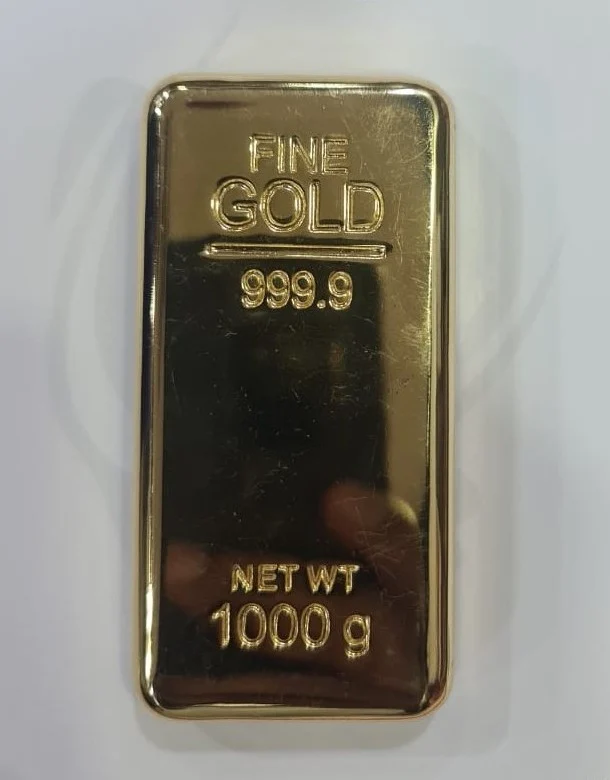
- Fineness: A decimal or parts-per-thousand figure. A fineness of 999.9 means 999.9 parts gold per 1,000 which is 99.99% purity, the benchmark for investment-grade gold.
So when you see a bar stamped 999.9 or marked 24K, you’re looking at the same thing: gold refined to its highest commercially achievable purity. Anything below that isn’t necessarily inferior but it carries implications for value, liquidity, and how buyers in different markets will price it.
Global Gold Bar Purity Standards You Should Know
Not all gold bars are created equal, and global markets have established formal benchmarks to keep standards consistent. As a buyer or investor, recognising these marks on a bar is your first line of assurance.
LBMA Good Delivery Standard
The London Bullion Market Association (LBMA) sets what is widely regarded as the gold standard for, well, gold standards. To qualify as a Good Delivery bar:
- Minimum fineness of 995.0 (99.5% pure)
- Weight between 350 and 430 troy ounces
- Strict specifications for dimensions, markings, and surface quality
- Must be produced by a refinery on the LBMA’s approved list
This is the bar format most commonly traded between central banks and institutional investors. If a bar carries LBMA certification, its purity and authenticity are accepted in virtually every financial market in the world.
COMEX Approved Bars
The Commodity Exchange (COMEX) in New York applies similar standards, requiring a minimum fineness of 995.0 and typically a weight of 100 troy ounces. COMEX approval is essential for gold traded as futures contracts on U.S. commodity markets.
ISO Certification
ISO 9001-certified refineries operate under quality management systems that cover the entire production chain from raw material intake to finished bar delivery. ISO certification speaks to process quality, not just the end product, which matters when you’re evaluating a supplier long-term.
| Standard | Minimum Fineness | Weight Requirement |
|---|---|---|
| LBMA Good Delivery | 995.0 (99.5%) | 350–430 troy oz |
| COMEX Approved | 995.0 (99.5%) | 100 troy oz |
| ISO Certified Refinery | 995.0 (99.5%) | Varies by contract |
| Investment Grade (Common) | 999.9 (99.99%) | 1g – 400oz range |
At Minerals Base Agency, all gold bars we supply are sourced and verified against these internationally accepted benchmarks. We work with Uganda’s certified mineral export framework and partner refineries to ensure every bar we move carries traceable documentation.
How Gold Bar Purity Is Tested
Knowing what purity means is one thing. Knowing how it’s verified is another and as a buyer, you should always ask how a bar’s purity was tested before you trust the number stamped on it.
Non-Destructive Testing Methods
These methods analyse a bar without altering or damaging it ideal for verification at the point of sale or delivery.
X-Ray Fluorescence (XRF) Spectrometry XRF is the most widely used field-testing method. A handheld or benchtop device scans the bar’s surface and measures the energy signatures of the elements present. Within seconds, you get an accurate purity reading. XRF is fast, reliable, and non-invasive it’s what reputable dealers use for quick authentication.
Ultrasonic Testing Ultrasonic devices send sound waves through the bar to detect inconsistencies in density. It’s particularly useful for identifying tungsten-filled counterfeits, since tungsten has a similar density to gold but a different acoustic signature.
Sigma Metalytics Verification This method measures electrical conductivity to confirm gold content. It’s especially effective on coins and smaller bars.
Destructive Testing Methods
These methods require removing a small sample from the bar. They are the most accurate but are typically reserved for dispute resolution or bulk acquisition verification.
Fire Assay The oldest and most trusted gold purity test. A small sample is melted, separated from base metals, and weighed before and after treatment to calculate the exact gold content. Fire assay results are accepted as legally binding in most international gold trade contracts.
Aqua Regia Dissolution This involves dissolving the sample in a specific mixture of nitric and hydrochloric acids. The resulting solution is analysed to determine gold concentration. It’s precise but irreversible the tested portion of the bar is consumed in the process.
A word of caution: destructive testing should only be carried out by qualified assayers in controlled laboratory conditions. Attempting fire assay or acid testing without proper training risks both inaccurate results and physical harm.
Gold Bar Purity Certificates Why They Matter More Than You Think
A gold bar without a purity certificate is like a car without a logbook. The bar might be exactly what the seller claims but you have no way to prove it, and neither does any buyer you might want to sell to down the line.
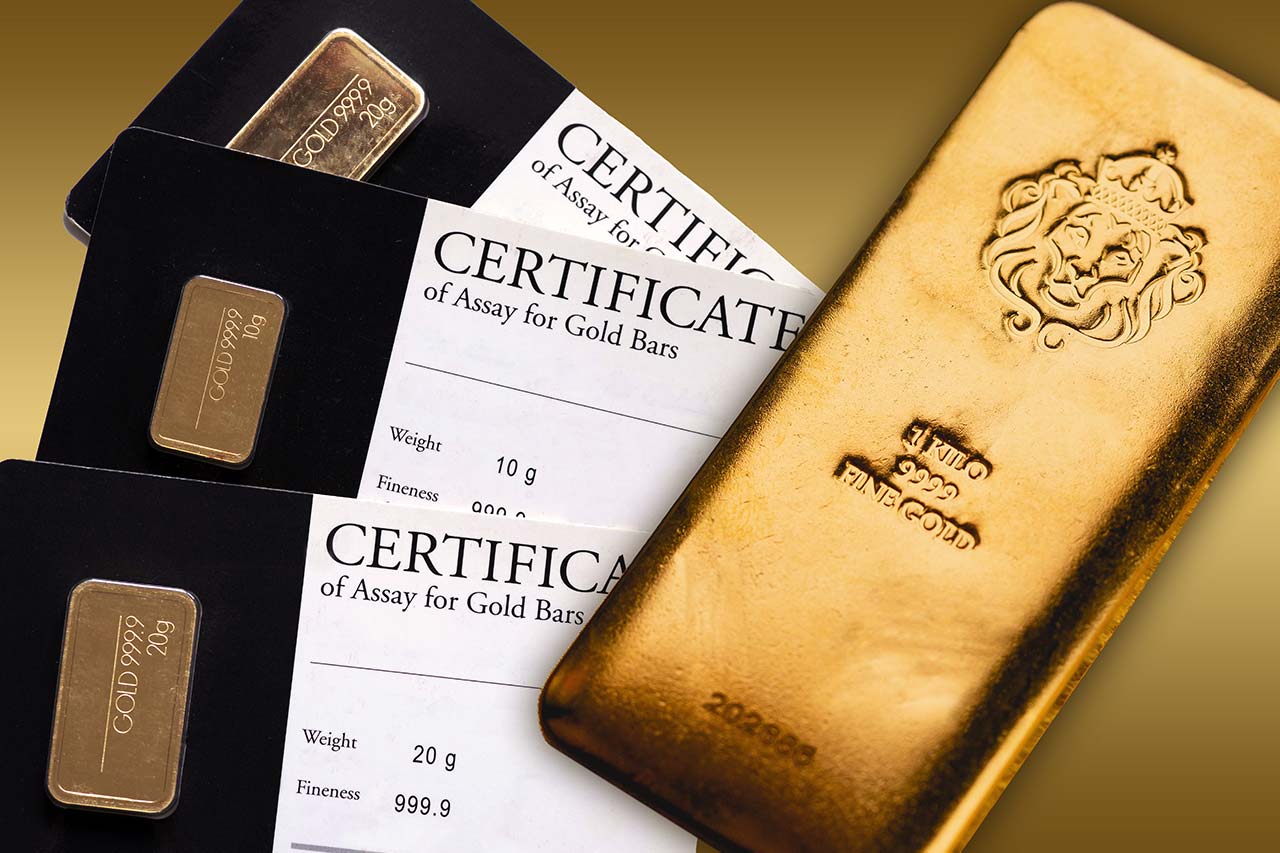
A legitimate gold bar purity certificate sometimes called an assay certificate will include:
- The refiner’s name and hallmark
- The bar’s serial number (unique to each bar)
- Gross weight in troy ounces or grams
- Fineness (e.g. 999.9)
- The date and method of assay
- The issuing assayer’s seal or signature
This document creates an unbroken chain of custody. If the bar ever changes hands whether through private sale, bank deposit, or commodity exchange the certificate travels with it and authenticates the bar’s identity and quality.
At Minerals Base Agency, every gold bar we supply comes with full documentation, including assay certificates from accredited testing facilities. We don’t cut corners on paperwork, because we know that documentation is part of the product.
Achieving the Highest Gold Bar Purity: What Goes Into a 999.9 Bar
Here’s something worth understanding: the purity level stamped on a gold bar doesn’t come from wishful thinking. It’s the direct result of the refining process and the refining process is where the real work happens.
Reaching 999.9 fineness requires multiple stages of processing:
1. Ore Extraction and Initial Smelting Raw gold ore contains a mix of gold, silver, copper, iron, and other trace elements. Initial smelting separates the gold concentrate from waste rock, producing a doré bar typically 70–95% gold.
2. Chlorination (Miller Process) The doré is treated with chlorine gas at high temperatures. Impurities like silver and base metals form chlorides that rise to the surface and are skimmed off. The result is gold at approximately 99.5% purity.
3. Electrolytic Refining (Wohlwill Process) For 999.9 fineness, the bar undergoes electrorefining passed through an electrolytic cell where pure gold deposits on a cathode electrode while remaining impurities stay in solution. This step brings gold to 99.99% purity and sometimes beyond.
The quality of raw materials matters too. Gold sourced from regions with naturally high-grade ore like Uganda’s mineral-rich deposits starts the refining process with a better baseline, reducing the number of processing cycles needed to reach the highest purity levels.
Uganda has long been recognised as one of Africa’s significant gold sources. At Minerals Base Agency, we leverage direct access to locally sourced, high-grade gold and established partnerships with certified refineries to supply bars that meet and exceed international purity benchmarks.
Why Gold Bar Purity Matters for Your Investment
This isn’t just a technical detail. Gold bar purity has direct, practical consequences for investors.
Liquidity A 999.9 fine gold bar is universally accepted. Banks, commodity exchanges, and private buyers across the world will price it without hesitation. Lower purity bars even those meeting the 995.0 LBMA minimum may attract a small discount depending on the buyer’s requirements.
Premium and Resale Value Higher purity generally commands a higher per-gram premium at the time of purchase, but it also tends to hold value better and sell faster when you’re ready to exit. The market for 999.9 bars is simply broader.
Storage and Insurance Many vault storage and insurance providers base their rates partly on the documented purity of the gold they hold. Certified bars with verified fineness are easier and sometimes cheaper to insure.
Cross-Border Trade If you’re buying from or through an export market like Uganda, purity documentation is not optional. Customs authorities, export agencies, and destination banks all require certified assay documentation for international gold shipments. Minerals Base Agency handles these logistics routinely as Uganda’s leading gold exporter.
Why Source Your Gold From Minerals Base Agency?
Minerals Base Agency is Uganda’s premier gold seller and exporter, operating within the full legal framework of Uganda’s mineral export regulations. We supply gold bars to private investors, institutional buyers, and international trading partners with full compliance, proper documentation, and transparent pricing.
Here’s what sets us apart:
- Direct source access — We source gold directly from verified Ugandan mines, cutting out unnecessary intermediaries and reducing your acquisition cost.
- Certified purity — Every bar comes with a traceable assay certificate from accredited testing facilities.
- Export-ready documentation — We handle all export permits, customs clearance, and international shipping documentation.
- Compliance-first approach — We operate under Uganda’s Directorate of Geological Survey and Mines (DGSM) framework and maintain full transparency in our supply chain.
- Experienced team — Our team has years of experience navigating the East African mineral trade, and we know how to get gold from mine to investor safely, legally, and efficiently.
Whether you’re an individual investor looking to diversify with physical gold or an institutional buyer seeking a reliable long-term supply partner, we have the capacity, credentials, and track record to serve you.
📞 Contact Minerals Base Agency today to discuss your gold bar requirements Contact Us
Frequently Asked Questions About Gold Bar Purity
What does gold bar purity mean?
Gold bar purity is the measure of how much actual gold is in a bar, expressed as a percentage or fineness figure. A bar stamped 999.9 contains 99.99% pure gold, with only 0.01% trace elements.
What is the difference between 24K and 22K gold bars?
24K gold (fineness 999 or 999.9) is the highest purity available commercially essentially pure gold. 22K gold (fineness approximately 916) contains about 91.6% gold and 8.4% other metals. For investment purposes, 24K bars are preferred for their liquidity and universal market acceptance.
How can I verify the purity of a gold bar before buying?
Ask your supplier for the assay certificate, check that the bar carries a recognised refinery hallmark, and if possible request XRF testing at the point of purchase. Reputable dealers like Minerals Base Agency provide full documentation with every transaction.
Is 999.9 gold the purest available?
For commercial investment bars, yes. 999.9 (four nines fine) is the highest standard in common production. Some specialised bars reach 999.99 (five nines), but these are rare and typically produced for laboratory or industrial use rather than general investment.
What is an LBMA Good Delivery bar?
A bar that meets the London Bullion Market Association’s standards for minimum purity (99.5%), weight, dimensions, and markings. LBMA Good Delivery status is the international gold standard for institutional gold trading.
Why is Uganda a good source of investment-grade gold?
Uganda has significant, well-documented gold deposits particularly in regions such as Karamoja and the Albertine Rift zone. The country’s regulatory framework, managed through the Directorate of Geological Survey and Mines, provides a structured pathway for legal export. Agencies like Minerals Base Agency operate within this framework to supply certified, traceable gold to international buyers.
What documents should come with a gold bar purchase from Minerals Base Agency?
Every purchase through Minerals Base Agency includes an assay certificate, export permit documentation, a bill of origin, and shipping/customs paperwork for international buyers. Domestic buyers receive the assay certificate and proof of purchase.
The Bottom Line
Gold bar purity isn’t just a number it’s the foundation of value, trust, and liquidity in every gold transaction. Understanding the standards that define it, the methods that verify it, and the documentation that certifies it puts you in a position to buy confidently and sell easily.
At Minerals Base Agency, purity isn’t something we talk about after the fact. It’s built into every step of how we source, process, and supply gold because Uganda’s reputation as a gold export destination, and our reputation as its leading agency, depends on it.
If you’re ready to invest in certified, investment-grade gold bars from a trusted Ugandan source, get in touch with our team today.