Navigating Palladium Trading: Unveiling Opportunities in Precious Metal Markets
Something is fascinating about palladium a metal so rare that most people have never held it, yet so essential that it sits quietly inside almost every modern vehicle. If you have been exploring the world of precious metals trading, you have likely noticed palladium attracting serious attention from investors, industrial buyers, and commodity traders alike. And that attention is well-deserved.
At Minerals Base Agency, Uganda’s leading gold seller and exporter of precious metals, we operate at the intersection of mining, mineral trade, and global commodity markets every day. We have watched palladium evolve from a little-known platinum-group metal into one of the most dynamic and talked-about assets in the precious metals space. This guide is our honest, experience-backed breakdown of what palladium trading involves, why it matters, and how you can position yourself to benefit from the opportunities it presents.
| About Minerals Base Agency: Founded and headquartered in Kampala, Uganda, Minerals Base Agency is a licensed gold exporter and precious metals dealer with a strong track record across African and international markets. Beyond gold, we trade palladium, platinum, raw diamonds, copper, and tantalum ore connecting buyers and sellers across the globe with transparency and expertise. |
What Exactly Is Palladium and Why Does It Matter in 2025?
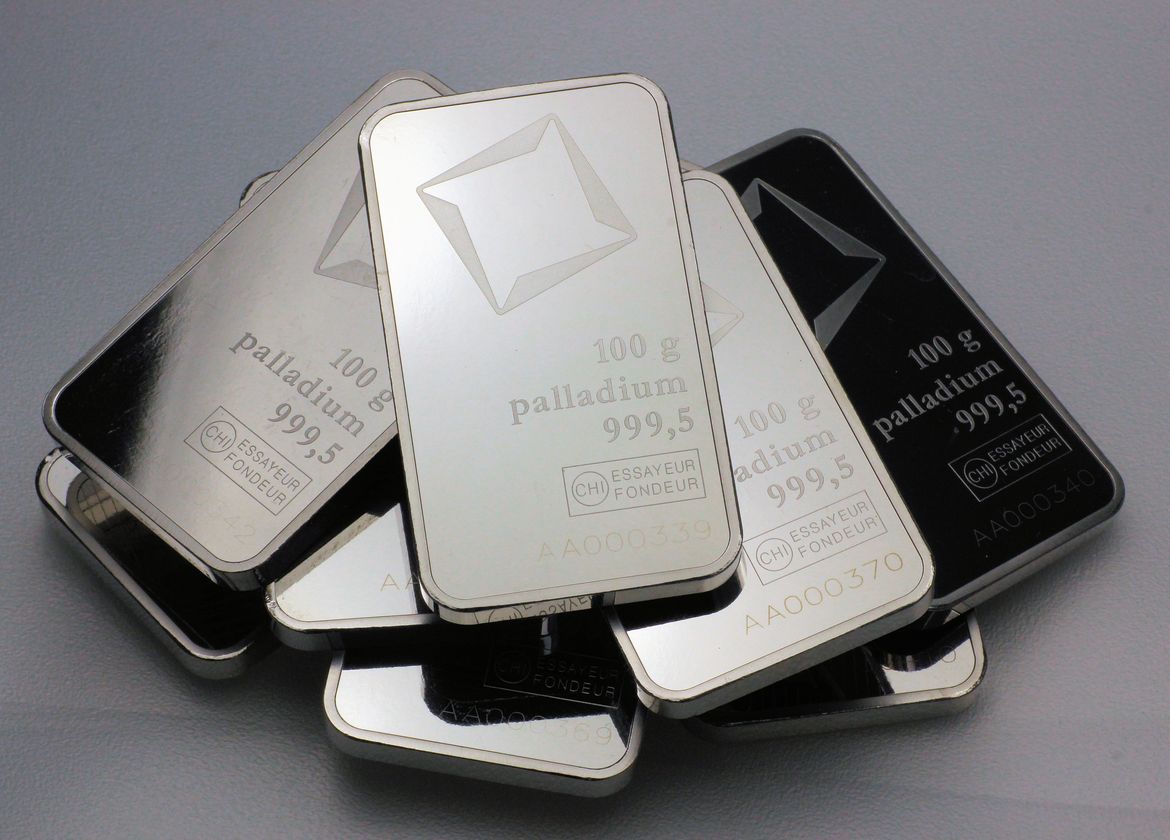
Palladium belongs to the platinum-group metals (PGMs) a family that also includes platinum, rhodium, iridium, osmium, and ruthenium. What sets palladium apart is an unusual dual identity: it is simultaneously a critical industrial material and a store of value that investors treat much like gold or silver.
Industrially, palladium is the go-to metal for catalytic converters in petrol and hybrid vehicles. When exhaust gases pass through a catalytic converter lined with palladium, harmful pollutants like carbon monoxide and hydrocarbons are converted into less harmful emissions. With increasingly strict emissions regulations across Europe, North America, and Asia, the automotive sector’s appetite for palladium has remained consistently high even as electric vehicle adoption grows.
From an investment perspective, palladium’s scarcity is its biggest draw. Roughly 40% of global palladium supply comes from Russia, with South Africa contributing another 40%. The rest is mined in smaller quantities across North America and other regions. This geographic concentration means that supply disruptions whether political, logistical, or environmental can shift prices dramatically and quickly.
Quick fact: Between 2016 and 2022, palladium outperformed gold, platinum, and silver on a price-appreciation basis briefly surpassing $3,000 per troy ounce in early 2022. That kind of trajectory is what makes navigating palladium trading such a compelling conversation for serious investors.
Palladium Market Dynamics: The Push and Pull of Supply and Demand
Every commodity market is fundamentally a story about supply and demand. Palladium’s story is particularly compelling because both sides of that equation are volatile.
On the Demand Side
- Automotive sector consumption remains the dominant demand driver. Catalytic converters account for roughly 80–85% of annual palladium demand.
- Hybrid vehicles which still use internal combustion engines alongside electric motors continue to grow in market share globally, keeping palladium demand elevated even as full EVs expand.
- Electronics manufacturing uses palladium in multilayer ceramic capacitors (MLCCs), printed circuit boards, and dental equipment.
- Investment demand, while smaller than industrial demand, adds pressure during periods of economic uncertainty when investors seek safe-haven assets.
On the Supply Side
- Russia’s Norilsk Nickel is the world’s single largest palladium producer a fact that introduced significant geopolitical risk into palladium pricing from 2022 onward.
- South African production faces persistent challenges including energy shortages, labor disputes, and aging mine infrastructure.
- Recycling primarily from spent catalytic converters now accounts for a meaningful but still insufficient share of annual supply.
- New mining projects take years to reach production scale, meaning supply cannot respond quickly to demand spikes.
The result is a market where palladium prices can move sharply on relatively small news events. For traders who understand these dynamics, that volatility is an opportunity. For those who do not, it is a risk.
Key Factors That Move Palladium Prices
If you want to be serious about navigating palladium trading and unveiling opportunities in precious metal markets, you need to understand what actually moves the price. Here are the forces that matter most:
| Factor | Why It Matters |
| Automotive production volumes | Higher car output = more catalytic converters = greater palladium demand |
| Emissions regulations | Stricter limits drive up the amount of palladium needed per vehicle |
| Russian geopolitics | Russia supplies ~40% of global palladium; sanctions or disruptions tighten supply |
| USD strength | Palladium, like most commodities, is priced in USD dollar moves affect returns for non-USD investors |
| EV adoption rate | Faster EV growth could eventually reduce catalytic converter demand long-term |
| Recycling rates | More efficient recycling increases secondary supply and can cap price spikes |
| Platinum substitution | In some applications, platinum can substitute for palladium; relative pricing affects which is preferred |
At Minerals Base Agency, we track these variables continuously to advise our clients on timing and positioning. Whether you are a first-time precious metal buyer or an experienced commodity trader, having a clear picture of these drivers makes all the difference.
Proven Strategies for Navigating Palladium Trading
There is no single “correct” way to trade palladium. Your approach should be shaped by your goals, risk tolerance, capital base, and time horizon. Below are the most widely used strategies, explained in plain terms.
1. Physical Palladium Ownership
Buying physical palladium in the form of bars or coins is the most straightforward way to gain exposure. You own the metal outright, no counterparty risk involved. The downside is storage, insurance, and the bid-ask spread when buying and selling.
For clients working directly with Minerals Base Agency, physical procurement of palladium and other precious metals is handled through our secure supply chain, with documentation and compliance built in.
2. Palladium Futures Contracts
Futures are agreements to buy or sell palladium at a specified price on a future date. Trading palladium futures on the NYMEX (New York Mercantile Exchange) or other commodity exchanges allows traders to take leveraged positions without storing physical metal. This is a strategy suited to experienced traders who understand margin requirements and price volatility.
3. Palladium ETFs and Structured Products
Exchange-traded funds (ETFs) that track palladium prices offer a more accessible entry point for retail investors. Products like the Aberdeen Standard Physical Palladium Shares ETF (PALL) allow investors to gain price exposure through a brokerage account. ETFs are liquid, regulated, and easy to understand a solid choice for portfolio diversification.
4. PGM Mining Company Stocks
Investing in companies that mine platinum-group metals gives you leveraged exposure to palladium prices. When palladium prices rise, well-managed mining companies often see amplified gains in their share price. This approach comes with company-specific risks alongside market risk, but also offers the potential for dividends and long-term capital appreciation.
5. Technical and Fundamental Analysis Combined
Professional palladium traders rarely rely on a single analytical framework. Technical analysis — studying price charts, support and resistance levels, moving averages, and momentum indicators helps identify short-term entry and exit points. Fundamental analysis monitoring supply data, automotive production reports, and geopolitical developments informs the bigger picture.
The most effective traders layer both approaches together, using fundamentals to determine direction and technicals to time their moves.
| Minerals Base Agency Insight: Our trading desk monitors palladium market data daily. We have found that the most consistent returns come from traders who stay patient, keep position sizes disciplined, and never let short-term price noise override their longer-term thesis. The precious metals market rewards those who do their homework. |
Risks Every Palladium Trader Must Account For
No honest guide to navigating palladium trading would be complete without a frank discussion of the risks. These are real, and they deserve your attention before you commit capital.
- Price volatility: Palladium can move 5–10% in a single week during periods of market stress. Position sizing and stop-loss discipline are essential.
- Geopolitical concentration risk: With Russia and South Africa controlling ~80% of supply, political or operational disruptions in either country can trigger sudden price shocks.
- EV transition risk: A faster-than-expected shift to battery electric vehicles could structurally reduce catalytic converter demand, pressuring palladium prices over a multi-year horizon.
- Liquidity risk: Physical palladium markets are less liquid than gold or silver. In a fast-moving market, finding a buyer at your target price can be challenging.
- Currency risk: For investors outside the US, palladium’s dollar denomination adds a layer of currency exposure to your position.
- Counterparty risk: Working with unverified or unlicensed dealers introduces the risk of fraud or non-delivery. Always choose regulated, verified partners.
Our recommendation: Never allocate more to palladium than you can afford to hold through a 30–40% drawdown without being forced to sell. Treat it as a component of a broader precious metals portfolio, not your entire strategy.
Palladium vs. Platinum: Two Sides of the Same Coin
Many newcomers to precious metal markets treat palladium and platinum as interchangeable. They are not. While both are platinum-group metals with overlapping industrial applications, they trade quite differently.
| Characteristic | Palladium vs. Platinum |
| Primary industrial use | Palladium: petrol engines | Platinum: diesel engines |
| Price history | Palladium ran well above platinum 2019–2022; gap has narrowed since |
| Supply concentration | Both dominated by Russia and South Africa |
| Investment vehicles | Both available as bars, coins, ETFs, and futures |
| EV sensitivity | Both face long-term headwinds from EV adoption |
| Substitution | Manufacturers can partially switch between them based on relative pricing |
At Minerals Base Agency, we deal in both palladium and platinum, and we regularly advise clients on relative value between the two metals based on current market conditions. Contact us for a current market assessment.
Why Uganda and Africa Matter in the Global Precious Metals Story
When most people think about precious metals, they picture Swiss vaults or London trading floors. But the reality is that Africa and Uganda in particular sits at an increasingly important node in the global minerals supply chain.
Uganda is home to significant deposits of gold, coltan (tantalum ore), copper, and other minerals that are critical to both industrial and investment markets. As Africa’s regulatory environment for mineral exports continues to mature, well-positioned companies like Minerals Base Agency are bridging the gap between African mineral production and international buyers.
Our operations span sourcing, quality verification, documentation, export compliance, and international logistics. We work with buyers across Europe, the Middle East, Asia, and the Americas who need reliable African supply partners with proper certification and track records.
For palladium and platinum specifically, while primary production is concentrated in Russia and South Africa, the growth of African precious metals markets creates adjacent opportunities from PGM-adjacent mineral trading to portfolio diversification strategies that include African-sourced gold alongside palladium exposure.
How Minerals Base Agency Supports Your Precious Metals Trading Goals
Whether your interest in palladium trading is for direct investment, industrial procurement, or portfolio diversification, Minerals Base Agency offers the expertise and infrastructure to support your objectives.
What We Offer
- Physical precious metals sourcing gold, palladium, platinum, and other PGMs with verified documentation
- Export and import compliance support for cross-border precious metals transactions
- Market intelligence and pricing guidance based on current commodity market conditions
- Partnerships with verified international buyers and logistics providers
- Consultation for investors looking to add physical precious metals to a diversified portfolio
Why Clients Choose Us
- Licensed and registered operation based in Kampala, Uganda
- Years of experience in African mineral export markets
- Transparent pricing and clear documentation standards
- Active network spanning gold, palladium, platinum, diamonds, copper, and tantalum
- Responsive client service we know your time matters
| Ready to discuss palladium trading or precious metals procurement? Reach out to our team at Minerals Base Agency. We speak your language whether you are a commodity trader, an industrial buyer, or a first-time precious metals investor. Visit mineralsbase.com or contact us directly through our website. |
Frequently Asked Questions About Palladium Trading
Is palladium a good investment in 2025?
Palladium remains a compelling asset for portfolio diversification, particularly for investors seeking exposure to precious and industrial metals beyond gold and silver. Its tight supply, concentrated geography, and persistent automotive demand create a market with real price-moving dynamics. Like any commodity, it carries risk but informed, patient investors have historically found value in it.
How does palladium trading differ from gold trading?
Gold trading is primarily driven by investment demand, central bank behavior, and currency dynamics. Palladium trading is more heavily influenced by industrial demand particularly from the automotive sector which makes it more sensitive to economic cycles and manufacturing data. Palladium is also less liquid than gold, meaning price moves can be sharper in both directions.
Can I buy physical palladium through Minerals Base Agency?
Yes. Minerals Base Agency facilitates physical precious metals transactions including palladium. We work with clients to ensure proper documentation, compliance, and secure logistics. Contact us directly to discuss your specific requirements.
What is the relationship between palladium and electric vehicles?
Electric vehicles (EVs) do not require catalytic converters, which means they do not consume palladium. As EV adoption increases globally, there is a long-term structural question about palladium demand. However, hybrid vehicles which still use combustion engines continue to use palladium, and the transition to full EV fleets will take decades in most markets. In the near to medium term, palladium demand from the automotive sector remains meaningful.
How does Minerals Base Agency compare to other precious metals dealers?
Minerals Base Agency is Uganda’s leading gold seller and exporter with a broad portfolio that includes palladium, platinum, diamonds, copper, and tantalum. Our Africa-based operations give us unique access to supply chains that many international dealers cannot match. We combine local expertise with international market knowledge and compliance standards that meet the requirements of buyers worldwide.
Final Thoughts: The Palladium Opportunity Is Real — But It Rewards the Prepared
Palladium trading is not for those looking for a quick and easy win. It is a market shaped by real industrial forces, meaningful geopolitical risk, and genuine scarcity dynamics. But for those who invest the time to understand it the supply picture, the automotive demand drivers, the trading instruments available, and the strategies that professional traders use it offers genuine opportunities.
At Minerals Base Agency, we believe the best approach to any precious metals market is the same: do your homework, work with trustworthy partners, stay disciplined, and take a long view. Those principles have served our clients well across gold, palladium, platinum, and beyond.
Uganda’s mineral sector is growing, Africa’s role in global commodity markets is expanding, and the precious metals market continues to offer opportunities for those ready to engage with it seriously. We are here to help you do exactly that.