How Much Is a Bar of Gold? Real Prices, Sizes & What Buyers Need to Know in 2026
If you’ve ever typed “how much is a bar of gold” into a search engine, you’re not alone. With gold prices hitting record-breaking highs in recent years and global uncertainty continuing to push investors toward hard assets, more people than ever are asking this exact question.
The honest answer? It depends on the bar’s size, its purity, where you buy it, and the live gold spot price on any given day. But don’t worry. This guide breaks it all down in plain language, so you walk away knowing exactly what a gold bar is worth, what drives its price, and how to buy one safely.
And if you’re looking for a verified, reputable source to purchase investment-grade gold especially in East Africa Minerals Base Agency in Uganda is one of the most trusted names in the business.
What Is a Gold Bar, Exactly?
Before we get to prices, it helps to understand what you’re actually buying. A gold bar (also called gold bullion) is a refined, stamped block of gold metal produced by government mints or accredited private refineries. Each bar carries markings for:
- Weight (e.g., 1 oz, 10 oz, 1 kg, 400 oz)
- Purity (expressed as a percentage or in karats 99.99% fine is the gold standard)
- Manufacturer or mint mark
- Serial number (on larger bars)
Gold bars are different from gold coins, which carry a government face value and often a collector’s premium. Bars are typically the more cost-effective choice for serious investors because you’re paying primarily for the metal, not the craftsmanship.
How Much Is a Bar of Gold Right Now? (2026 Prices)
Gold has been on a remarkable run. As of early May 2026, the spot price of gold sits at approximately $4,576–$4,740 per troy ounce, with the metal reaching an all-time high of over $5,593 per ounce in January 2026. That’s a staggering increase gold’s price rose roughly 64% in 2025 alone.
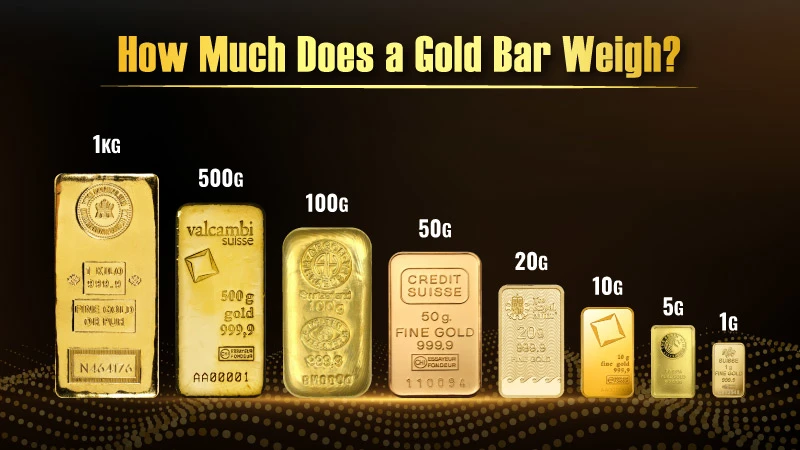
Here’s what that translates to for different bar sizes:
| Gold Bar Size | Approximate Price (May 2026) |
|---|---|
| 1 gram | ~$150–$160 |
| 5 grams | ~$750–$800 |
| 10 grams | ~$1,500–$1,620 |
| 1 oz (31.1g) | ~$4,576–$4,800 |
| 10 oz | ~$45,000–$48,000 |
| 1 kilogram | ~$147,000–$155,000 |
| 400 oz (Good Delivery Bar) | ~$1.8 million–$2 million |
Note: These are approximate figures based on spot price. The actual price you pay will include a dealer’s premium typically 1–5% above spot for larger bars, and slightly higher for smaller ones.
The 400 oz “Good Delivery” bar is what you see stacked in central bank vaults and featured in heist movies. It’s the international standard for institutional gold trading, but it’s not what most private investors buy. Most individual buyers start with 1 oz, 10 oz, or 1 kg bars.

What Makes Gold Bar Prices Go Up or Down?
Gold doesn’t have a fixed price it floats on global markets 24 hours a day, five days a week. Several forces push that price higher or lower:
1. The Gold Spot Price
The spot price is the foundational number everything else is built on. It reflects what buyers and sellers agree a troy ounce of gold is worth right now on the open market. Every gold bar price you see is derived from this figure, plus a premium.
2. Inflation and Currency Weakness
When a currency loses purchasing power as has happened with the US dollar in recent years gold tends to rise. Investors park money in gold because its supply is finite and it can’t be printed. High inflation in 2024 and 2025 played a major role in pushing gold to record highs.
3. Central Bank Buying
Central banks worldwide have been buying gold aggressively. The World Gold Council reported significant increases in central bank gold reserves, adding consistent demand pressure that keeps prices elevated.
4. Geopolitical Tension
Political instability, wars, and trade disputes push investors toward safe-haven assets. Gold is historically the first refuge when uncertainty rises.
5. Interest Rates
When interest rates are low, the opportunity cost of holding gold (which pays no yield) drops. That makes gold more attractive. The Federal Reserve’s rate environment has been a significant driver of gold’s recent performance.
6. Supply Constraints
Mining gold is expensive, slow, and increasingly difficult. Annual global gold mine supply is relatively fixed, which means demand spikes translate directly into price increases.
Gold Bar Purity: Why It Matters
Purity is arguably the most important quality factor in a gold bar. It determines exactly how much of what you’re holding is actually gold.
Purity is measured two ways:
- Fineness (parts per thousand) — e.g., 999.9 means 99.99% pure gold
- Karats — 24K is pure gold; 22K is about 91.6% gold
For investment purposes, you want bars that are at minimum 99.5% pure (995 fine). The international standard for Good Delivery bars is 99.5%, while most premium investment bars like PAMP Suisse or Credit Suisse are 99.99% pure (9999 fine).
Lower purity bars still hold value, but they’re harder to trade at full spot price and may carry questions at customs or from buyers.
Always buy gold bars that come with assay certification a document that independently verifies the bar’s weight and purity. Reputable dealers like Minerals Base Agency provide proper documentation with every transaction.
Gold Bar Sizes: Which One Should You Buy?
There’s no single right answer it depends on your budget, storage situation, and investment goals.
Small Bars (1g – 10g)
Good for first-time buyers or those who want to accumulate gold gradually. They’re more affordable upfront but carry higher premiums per ounce because of the production cost.
Mid-Range Bars (1 oz – 10 oz)
The sweet spot for most individual investors. The 1 oz bar is by far the most popular and liquid bar in the world. It’s universally recognized, easy to sell, and carries a reasonable premium. The 10 oz bar offers slightly better value per ounce.
Large Bars (1 kg – 400 oz)
Best for institutional investors or high-net-worth individuals. The per-ounce premium is lowest on these bars, but storage, insurance, and liquidity become more complex considerations. A 1 kg bar is the largest size most private investors practically handle.
Buying vs. Other Forms of Gold Investment
You’ve probably heard of gold ETFs, mining stocks, and gold certificates. How do they compare to owning physical bars?
| Investment Type | Pros | Cons |
|---|---|---|
| Gold Bars | Tangible asset, no counterparty risk, low premiums on larger bars | Requires storage, less liquid than ETFs |
| Gold Coins | Highly liquid, collectible premium possible | Higher cost per ounce, smaller denomination |
| Gold ETFs | Convenient, low cost, highly liquid | No physical ownership, exposed to fund risk |
| Mining Stocks | Leverage to gold price, potential dividends | Company risk, market volatility |
Physical gold bars sit at the top of the list for investors who want direct, unencumbered ownership of the metal. There’s a reason central banks don’t hold ETFs — they hold bars.
Where to Buy Gold Bars Safely
Buying gold is not like buying electronics online. You need to deal with verified, reputable sources. Here’s what to look for:
- Accreditation — Is the seller recognized by industry bodies? Do they deal in LBMA-approved or assay-certified gold?
- Transparency — Do they disclose pricing clearly, including premiums above spot?
- Documentation — Will you receive certificates of authenticity, weight, and purity?
- Track Record — How long have they been operating? Do they have verifiable client history?
- Secure Transaction Process — Is there a clear, written agreement? A structured payment process?
This is where Minerals Base Agency stands apart.
Why Choose Minerals Base Agency for Gold in Uganda and Beyond
Minerals Base Agency is Uganda’s foremost gold seller and exporter, with years of experience sourcing and supplying investment-grade gold across East Africa and to international buyers worldwide.
What Makes Them Different
Uganda is one of Africa’s most significant gold-producing nations. Minerals Base Agency operates at the source with direct procurement networks connecting them to verified artisanal miners and licensed mining operations across the country. This means buyers get competitive pricing that simply isn’t available from secondary dealers.
Here’s what sets Minerals Base Agency apart from the rest:
- Direct Source Access — Gold is procured directly from Ugandan miners and refineries, cutting out middlemen and reducing costs
- Verified Purity — All gold supplied comes with proper assay certification, confirming weight and fineness
- Legal Compliance — Minerals Base Agency operates fully within Uganda’s mineral export regulations and international trade law
- Transparent Pricing — Pricing is tied directly to the live gold spot price, with clear, disclosed margins
- Secure Transactions — Every deal follows a structured process: written agreement, verified documentation, and staged payment to protect both parties
- International Export Capability — Whether you’re in Kampala, Nairobi, Dubai, or New York, Minerals Base Agency has the logistics to deliver
For investors looking to buy gold close to source avoiding the markup layers built into Western bullion markets working with an established Ugandan gold exporter like Minerals Base Agency can offer meaningful value.
2026 Outlook: Where Is the Gold Price Headed?
The short answer from most analysts: higher.
JPMorgan has set a gold price target of $6,000–$6,300 per troy ounce by end of 2026, citing persistent central bank buying (estimated at around 800 tonnes per year globally), a weakening US dollar, and ongoing geopolitical stress as the main drivers.
Goldman Sachs echoes a similarly bullish view, and the World Gold Council’s base-case scenario sees gold continuing to appreciate in a mild economic cooling environment.
Of course, no forecast is a guarantee. Rising interest rates or a significant easing of geopolitical tensions could dampen demand. But the long-term structural case for gold finite supply, growing global demand, and its role as the ultimate store of value remains intact.
If you’ve been sitting on the fence about gold, the consensus from most institutional forecasters is that 2026 is still an attractive entry window.
Storing Your Gold Bars: What You Need to Plan For
Buying gold is the exciting part. Storing it safely is the part people often underestimate. A few key options:
- Home Safe — Affordable and convenient, but limited protection against fire, flood, or determined theft. Make sure your safe is bolted down.
- Bank Safe Deposit Box — More secure, though access is limited to banking hours. Note that the contents are not always covered by the bank’s insurance.
- Professional Vault/Depository — The gold standard (pun intended) for serious investors. Professional vaulting services offer full insurance, segregated storage, and easy auditing. Costs typically run 0.1–0.5% of gold value per year.
- Allocated vs. Unallocated Storage — With allocated storage, specific bars are assigned to you. With unallocated, you have a claim on a pool of gold. Always prefer allocated.
Frequently Asked Questions About Gold Bar Prices
How much does a standard gold bar weigh?
The “standard” depends on the context. The internationally recognized Good Delivery bar weighs 400 troy ounces (about 12.4 kg). But for most investors, a “standard” bar is a 1 troy ounce bar, which weighs approximately 31.1 grams.
How much is a 1 oz gold bar worth today?
As of May 2026, a 1 oz gold bar is worth approximately $4,576–$4,800, depending on the current spot price and dealer premium at the time of purchase.
How much is a gold bar worth in kg?
A 1 kilogram gold bar is currently valued at approximately $147,000–$155,000, based on the May 2026 gold spot price.
What is the purest gold bar available?
Most premium investment gold bars are 99.99% fine (24 karat), produced by mints such as PAMP Suisse, Perth Mint, and the Royal Canadian Mint. Some specialty bars reach 99.999% purity.
Is it legal to buy and own gold bars?
Yes in most countries, including Uganda and the United States, private ownership of gold bars is completely legal. However, certain import/export regulations and tax reporting requirements apply. Always work with a licensed dealer and consult a financial or legal advisor for large purchases.
Can I buy gold bars from Uganda?
Absolutely. Uganda is a significant gold producer, and licensed exporters like Minerals Base Agency legally export gold internationally. Working with a Ugandan gold seller can provide access to competitively priced, source-verified gold with all required export documentation.
How do I know if a gold bar is real?
Authentic investment gold bars come with an assay certificate, a hallmark stamp showing the refiner, weight, and purity, and for larger bars a unique serial number. For additional verification, professional testing (acid test, XRF analysis, or ultrasound) can confirm authenticity. Always buy from accredited dealers.
Final Thoughts
Gold bars have been a trusted store of value for thousands of years. In 2026, with spot prices sitting at historically elevated levels and analysts forecasting continued gains, the question isn’t really “is gold worth it?” it’s “how do I buy it the right way?
The answer comes down to three things: knowing what you’re buying, understanding what drives the price, and working with a dealer you can genuinely trust.
If you’re in East Africa or looking to buy directly from a source market, Minerals Base Agency is exactly that kind of partner experienced, licensed, transparent, and well-established in Uganda’s gold sector.
Ready to take the next step? Contact Minerals Base Agency today to discuss your gold purchasing requirements, get a quote based on current spot prices, and learn more about their procurement and export process.