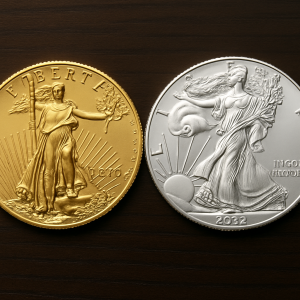
American Eagle Bullion Coins
Imagine holding an ounce of pure American gold in the palm of your hand, feeling a surprising, heavy density that no digital bank balance can ever replicate. In an era where most of our financial lives exist as flickering numbers on a smartphone screen, physical wealth offers a uniquely reassuring kind of security. Since their introduction in 1986, American Eagle coins have served as the ultimate bridge between everyday savers and the prestige of precious metals. They provide a tangible hedge against the unpredictable volatility of modern paper wealth.
Authorized by Congress through Public Law 99-185, these spectacular pieces are not just beautiful collectibles, but rather official United States bullion—a term simply meaning precious metal valued primarily by its weight and purity rather than its artistic design. According to the U.S. Mint’s strict legal mandate, every single piece carries an ironclad government guarantee verifying its exact metal content. This unique backing transforms a simple disc of metal into a globally recognized asset that you can confidently buy, sell, or trade almost anywhere in the world without fearing counterfeits.
Why, then, does the government stamp a mere “$50” on a gold piece that costs well over two thousand dollars to purchase today? Think of that stamped face value as an official government envelope; it grants the piece legal tender status , meaning it is technically recognized as official U.S. currency. However, the true prize is the metal inside that envelope, representing the coin’s intrinsic value—the much higher, actual market price of the raw gold or silver it contains. You would never actually spend one at the grocery store, but that legal status ensures its unparalleled authenticity.
Whether you are drawn to the lustrous warmth of Gold Eagle coins or the bright affordability of Silver Eagle coins , these assets offer a straightforward path to protecting your savings. Industry data reveals that everyday buyers consistently favor these specific pieces over unfamiliar foreign metals precisely because of that built-in trust factor. Deciding to invest in coins does not require a finance degree; it simply starts with understanding how the American Eagle program turns abstract financial concepts into something you can securely lock away in your own home.

Summary
American Eagle bullion coins—Gold and Silver—are U.S. government–backed, globally trusted assets that provide a tangible hedge against volatility through guaranteed weight and purity. The guide explains why face values differ from far higher intrinsic metal prices, outlines key options (proof vs. uncirculated, fractional sizes), and highlights security features, mint marks, and ways to verify authenticity. It covers practical use cases from IRA eligibility and storage (avoiding milk spots) to grading and resale strategies, emphasizing liquidity advantages over private rounds. A concise roadmap shows how to budget, buy from authorized dealers, and securely store coins to build a flexible “rainy day” portfolio.
The “Face Value” Myth: Why a $50 Gold Coin is Actually Worth Thousands
Looking at a Gold American Eagle , you might notice a curious detail: it carries a legal face value of just $50. Why stamp such a low number on metal worth thousands? Think of this face value as an envelope, while the physical metal inside is a check worth vastly more. The $50 mark makes American Eagle Gold bullion coins official U.S. currency, but their true worth is their intrinsic value.
That intrinsic worth relies on the “spot price”—the current global market price for raw metals. Calculating an Eagle coin value based on its weight and the daily spot price reveals its true market value. Notice how drastically these numbers differ across standard U.S. Mint denominations:
- 1 oz Gold: $50 face value vs. ~$2,000+ market value
- 1 oz Silver: $1 face value vs. ~$30+ market value
- 1/10 oz Gold: $5 face value vs. ~$200+ market value
Beyond tradition, this dual-value system provides practical benefits; for instance, these low legal face values sometimes offer unique legal shipping and insurance advantages over raw uncoined gold bars.
Silver Eagle Essentials: How One Ounce of Pure Silver Protects Your Purchasing Power
While a paper dollar buys less than it did a decade ago, tangible assets provide a practical way to preserve your purchasing power. For beginners exploring silver bullion investment benefits, the American Silver Eagle is the perfect starting point because it balances affordability with high liquidity. Unlike a massive gold bar that might be difficult to sell quickly, a single one-ounce unit acts as easily tradable wealth, allowing you to liquidate exactly what you need, whenever you need it.
Holding one of these Silver Eagle coins in your hand, you immediately feel its substantial heft and quality. Each piece carries a guaranteed 1 oz fine silver weight, struck with 99.9% pure silver that is backed directly by the United States government. This official certification acts as a metal certificate of authenticity, removing the guesswork from buying precious metals and giving everyday savers absolute confidence that their physical safeguard against inflation contains exactly the materials promised.
Beyond its financial utility, the front of the coin features one of the most celebrated artworks in American history: Adolph A. Weinman’s 1916 “Walking Liberty” design. Originally created for the half-dollar, this graceful image of Liberty striding toward a rising sun perfectly captures historic optimism while making your investment a genuine piece of portable art.

The Saint-Gaudens Legacy: Why the Gold Eagle is the World’s Most Iconic Design
President Theodore Roosevelt believed American currency should rival the beauty of ancient Greek coinage. In 1905, he commissioned sculptor Augustus Saint-Gaudens to create the legendary “Double Eagle,” a historical term for a twenty-dollar gold piece. Today, the United States Mint honors that legacy by featuring this exact artwork on modern American Eagle Gold bullion coins.
Looking closely at the Saint-Gaudens double eagle design , you will see Lady Liberty striding forward, holding a torch for enlightenment and an olive branch for peace. This striking imagery gives Gold Eagle coins what is known as “numismatic value”—a historical and artistic appeal that makes collectors willing to pay a premium above the melted gold’s raw price. You are acquiring a piece of national heritage, not just a standard chunk of metal.
Unlike generic gold bars that fluctuate solely based on raw metal prices, this recognized masterpiece retains a more stable global demand due to universal trust in the imagery.
Proof vs. Uncirculated: Which Version Fits Your Personal Goals?
When buying into the Saint-Gaudens legacy, your first step is deciding your primary goal. If you simply want physical precious metals as a financial safety net, standard “Brilliant Uncirculated” coins are ideal. These mass-produced versions feature a traditional matte luster and are priced closely to the raw metal market.
Collectors seeking a premium heirloom, however, should look toward American Eagle proof coins . These are the coin equivalent of high-definition IMAX. The Mint uses a specialized die-polishing process to treat the metal stamps, resulting in a meticulous proof strike where the coin is pressed multiple times. The core proof vs uncirculated coin differences include:
- Finish: Proofs boast mirror-like backgrounds with frosted details; uncirculated coins have uniform, satin sheens.
- Mintage: Uncirculated coins are mass-produced in the millions; proofs have strict production caps.
- Purpose: Uncirculated serves as an accessible metal investment; proofs act as premium collectibles.
That strict production cap—called mintage —heavily influences your budget. Because the government only creates limited batches of American Eagle Silver proof coins and gold variants annually, they carry a higher upfront cost. This intentional scarcity creates future rarity, giving the coin a historical premium above its melting price.
Laser-Engraved Security: How the U.S. Mint Thwarts Modern Counterfeiters
When buying physical metal, peace of mind is as crucial as the asset itself. For decades, buyers wondered exactly how to spot fake gold eagles as counterfeiters grew more sophisticated with their molds. In 2021, the government responded by introducing a “Type 2” design, keeping the historic obverse and reverse artwork but embedding advanced, laser-crafted defenses directly into the precious metal.
The most brilliant anti-counterfeiting measure sits right on the edge of the coin. If you run your fingernail along a Type 2 Eagle, you will feel the traditional ridges—called reeding—but you will also notice one intentional, smooth gap. This “notched reeding” acts like a physical password, making it incredibly difficult for rogue mints to copy. Additionally, every United States Mint official release now features microscopic structural details within the artwork that require government-level industrial equipment to press cleanly.
These accessible design cues let you verify your savings instantly without needing a jeweler’s magnifying glass. This built-in trust explains why highly anticipated laser-engraved American Eagle proof coins remain a foundational choice for wealth preservation.
Building a Precious Metal IRA: The Rules for Adding Eagles to Your Retirement
In a world of digital retirement dashboards, there is something uniquely reassuring about backing your future with physical metal. While standard retirement accounts hold paper stocks, a “self-directed” IRA allows you to invest in coins directly. However, the IRS requires a middleman called a custodian. Think of the custodian as your account manager; they handle the tax reporting and administrative paperwork, ensuring your tangible assets keep their tax-advantaged status.
Because these are protected funds, you cannot keep the metal in your home safe. Instead, your custodian will physically store your wealth in a depository—a highly secure, federally approved vault. To start this process, follow a simple three-step path:
- Choose an IRS-approved custodian to manage the paperwork.
- Fund the account by rolling over existing retirement money.
- Select ‘IRA-eligible’ American Eagles to build your portfolio.
Not just any piece of metal makes the cut for these specialized accounts. To meet strict precious metal IRA eligibility requirements, the assets must hit specific purity standards. Fortunately, the U.S. Mint guarantees the weight and purity of its flagship series, making everything from standard silver bullion to a pristine American Eagle Gold proof set automatically approved.
Spotting the Fakes: 3 Physical Tests You Can Do at Home
Holding a new coin brings peace of mind, but rising counterfeits make verification essential. Your simplest defense is a strong neodymium magnet. Genuine precious metals are entirely non-magnetic, so a magnet should slide right off without pulling. Counterfeiters frequently use steel-core blanks to mimic a heavy feel; if your coin sticks, it is a guaranteed fake.
Scammers also struggle with specific gravity, a concept describing how tightly a metal’s mass is packed. To match the exact 1 oz fine silver weight, a replica made from lighter metals must be noticeably thicker or wider than government specifications. When learning how to spot fake gold eagles, simply measuring your coin’s physical dimensions and checking it on a precise digital scale will instantly expose these bulky, low-density replicas.
Finally, pure bullion possesses a unique acoustic property called resonance. Balancing an Eagle on your fingertip and gently tapping it produces a sustained, high-pitched ring—the famous “Ping Test”—while fake metals emit a short, dull thud. While these home tests work beautifully, using trusted, authorized dealers remains your absolute best defense against counterfeits.
West Point Mint History: Why the “W” Mint Mark Matters
Flipping your coin over can reveal a tiny letter with massive financial implications. Located on the reverse side, a “mint mark” indicates exactly where it was manufactured. The West Point Mint is the premier producer of American Eagle Silver proof coins. Nicknamed the “Silver West Point,” this secure facility crafts our nation’s most sought-after collector editions.
You can easily identify your coin’s origin by looking for these specific stamps:
- W (West Point): The primary mark for premium collector editions.
- S (San Francisco) & P (Philadelphia): Used occasionally for special releases.
- No Mark: The everyday bullion standard.
Beyond standard proofs, West Point produces a unique “burnished” finish. This process polishes raw metal blanks before stamping, creating a beautiful, soft matte appearance.
Because these finishes are struck in small batches, limited West Point Mint production history directly creates rarity and drives up prices. Understanding the numismatic value of rare dates helps you make informed purchases.
The Sovereign Advantage: Why Government Coins Beat Private Rounds
Shopping for physical silver reveals a confusing reality: two metal pieces of equal weight can have vastly different price tags. You will find official American Eagle coins alongside generic silver pieces made by private companies, known as “rounds.” Because these private rounds are not legal tender, they lack an official face value and the U.S. government’s absolute guarantee of weight and purity.
Federal backing resolves the debate between sovereign mints and private rounds. A government-issued coin acts as a globally recognized asset that rarely requires costly authentication when you decide to sell. Think of an Eagle like a certified cashier’s check, while a private round is closer to a handwritten IOU. The government seal provides undeniable, worldwide trust.
High global demand generates a financial benefit called “liquidity,” meaning Eagles are incredibly easy to trade for cash. While you pay a higher price over spot for silver (the markup above the raw metal’s current market value) to buy an Eagle, you typically recoup that premium during resale because dealers accept them without hesitation.
Dealing with “Milk Spots”: How to Protect Your Silver Eagles from Oxidation
Discovering cloudy white blemishes on your Silver Eagle coins can be briefly alarming. These chalky marks, known as “milk spots,” are simply harmless minting residue reacting over time or mild oxidation. While they disrupt the metal’s beautifully polished finish, they are entirely cosmetic. The physical weight and intrinsic purity of the metal remain perfectly intact, meaning the underlying financial value of the coin is completely untouched.
Your immediate instinct might be to grab a cloth to polish it, but cleaning actually destroys a coin’s premium resale value. Rubbing leaves microscopic scratches that instantly downgrade a collectible’s status to “damaged.” This strict no-cleaning rule applies to everything from standard strikes to a pristine American Eagle Gold proof set. Additionally, never store metals in cheap, flexible plastics containing PVC, which release acidic gases that cause permanent green corrosion.
The true secret to protecting coins from milk spots and chemical damage is the “cool, dry, and dark” storage rule. Climate-controlled environments and rigid, PVC-free acrylic holders create a reliable, invisible shield against humidity.
Professional Grading: When is it Worth Paying for a Plastic Slab?
After carefully storing your metals to prevent spotting, you might wonder how to officially prove their flawless condition. This is where independent experts like the Numismatic Guaranty Company (NGC) and Professional Coin Grading Service (PCGS) step in. For a fee, they evaluate your coin, assign it an official grade, and seal it in a tamper-proof acrylic holder commonly called a “slab.”
The industry evaluates condition on a strict 1-to-70 scale, which dramatically impacts your eagle coin value. A perfect score of 70 (such as MS70 for an uncirculated strike or PF70 for a flawless proof set) means the piece is visually perfect under magnification. An MS69 indicates a nearly perfect “Mint State” coin with only microscopic imperfections. While standard bullion rarely needs slabbing, perfect specimens justify the cost because the professional coin grading service benefits are undeniable:
- Authentication: Guarantees the piece is genuine government metal, instantly removing buyer doubt.
- Protection (The Slab): Sonically sealed plastic creates a permanent shield against environmental damage.
- Market Liquidity: A certified grade establishes universal trust, making the asset easier to trade globally.
Deciding to grade depends entirely on whether this official certification increases resale value beyond the grading fees.

Turning Coins into Cash: How to Sell Your American Eagles Without Getting Lowballed
When cashing out, your first rule is simple: leave the polishing cloth in the drawer. Cleaning alters the coin’s surface and instantly destroys its premium. Learning how to sell American Eagle gold coins effectively also means bypassing local pawn shops entirely. These generalist stores typically offer mere fractions of the metal’s true worth because they lack the specific customer base needed to flip specialized bullion quickly.
To calculate a fair offer, you must understand the “Bid/Ask Spread.” Using the baseline spot price you already know, expect professional dealers to quote a “Buy-Back” price. This is the exact dollar amount they will pay you (the Bid), which sits slightly below what they charge their retail buyers (the Ask). Because the market for Gold Eagle coins is massive, a reputable buyer will usually offer a Buy-Back price very close to the current spot value.
Finding a dedicated local coin shop or a verified national exchange ensures you receive fair market value, while also building a relationship for future acquisitions. Knowing how seamlessly these tangible assets convert back into cash provides incredible peace of mind.
The “Rainy Day” Portfolio: Why 5 Gold American Eagles Could Be Your Best Insurance
Building a tangible emergency fund doesn’t require purchasing massive, expensive assets all at once. By choosing fractional sizes like 1/10, 1/4, or 1/2 ounce options, everyday buyers can affordably invest in coins without draining their traditional bank accounts. Creating a reliable financial safety net can be as simple as aiming to hold 5 Gold American Eagle coins safely at home.
Think of these smaller fractional pieces like holding twenty-dollar bills instead of a single hundred. This practical concept, called “divisibility,” lets you sell just a small portion of your gold for quick cash, rather than being forced to liquidate a whole ounce. While fractional pieces carry slightly higher manufacturing fees—known as premiums—this incredible flexibility during personal emergencies is well worth the trade-off.
Accumulating this wealth is easiest through a monthly routine called “dollar-cost averaging.” Buying small amounts on a regular schedule beautifully smooths out the market’s daily price swings.
Your 5-Step Roadmap to Owning Your First American Eagle
You no longer must view precious metals as an intimidating financial abstraction. Instead of wondering how to turn digital savings into tangible wealth, you possess the knowledge to confidently acquire official American Eagle coins.
Start your ownership journey with this straightforward roadmap:
- Budgeting: Determine a comfortable spending limit before you start shopping.
- Choosing Gold vs Silver: Select the specific metal that fits your long-term goals.
- Finding an Authorized Dealer: Navigate the U.S. Mint’s network of approved purchasers.
- Verifying upon arrival: Confirm the coin’s weight, luster, and authenticity.
- Secure storage: Place your new asset in a home safe or bank deposit box.
Following these steps provides absolute peace of mind. Knowing exactly where to buy physical gold safely through official channels ensures you receive the U.S. Mint’s strict guarantee. This protects your purchase, allowing you to confidently enjoy the benefits of preserving your wealth without the stress of navigating unverified sellers.
Acquiring your first American Eagle provides the grounding satisfaction of holding a guaranteed, tangible asset in the palm of your hand. It is a straightforward, reliable step toward securing a resilient financial future.
Q&A
Question: Why does a 1 oz Gold American Eagle show a $50 face value when it sells for thousands?
Short answer: The $50 is a legal tender face value—think of it like an official envelope—while the coin’s real worth is its intrinsic value, determined by its weight and the current spot price of gold. That’s why a 1 oz Gold Eagle trades around $2,000+ despite the $50 stamp. This dual-value system confers legal status and practical perks (such as certain shipping and insurance advantages), yet you wouldn’t actually spend it at the register. The U.S. Mint’s guarantee of weight and purity underpins worldwide trust, making these coins easy to buy, sell, and trade.
Question: Which should I buy—uncirculated bullion, proof, or burnished American Eagles?
Short answer: Match the version to your goals. Uncirculated “bullion” coins are mass-produced with a satin-like luster and are priced closest to spot—ideal for straightforward metal exposure. Proof coins are premium collectibles: they’re struck multiple times using polished dies for frosted details and mirror-like fields, have limited mintage, and command higher premiums (with potential numismatic appeal). Burnished coins (noted for a soft matte look) use pre-polished blanks and are made in smaller batches, adding scarcity. Choose uncirculated for cost-efficient hedging; choose proofs or burnished if you value artistry, rarity, and heirloom potential.
Question: How can I quickly verify that my American Eagle is genuine?
Short answer: Start with the 2021 “Type 2” security cues: feel for the notched reeding (one intentional smooth gap among the edge ridges) and look for fine, laser-engraved micro-details that are hard to replicate. At home, use three simple tests: a strong magnet should not attract the coin; precise weight and dimensions should match specs (exposing low-density fakes); and the “ping test” should produce a clear, sustained ring rather than a dull thud. While these checks help, buying from authorized or highly trusted dealers remains your best defense.
Question: Can I hold American Eagles in an IRA, and can I store them at home?
Short answer: Yes, via a self-directed precious metals IRA—but no, you can’t keep them at home. The IRS requires an approved custodian to manage the account and a secure depository to store the coins. The setup is simple: choose an IRS-approved custodian, fund the account (often via rollover), and select IRA-eligible Eagles (the U.S. Mint’s guaranteed purity means standard bullion and even proof sets qualify). Home storage breaks the rules and can jeopardize the account’s tax advantages.
Question: Why do Eagles cost more than private rounds, and will I recover the premium when selling?
Short answer: Eagles carry a higher premium because they’re sovereign coins with legal tender status and a U.S. government guarantee of weight and purity—benefits that drive global trust and liquidity. Dealers typically buy them back readily, often near spot, so you can frequently recoup much of that premium at resale. In contrast, private rounds lack the same universal recognition and may require more authentication. For best outcomes when selling, avoid pawn shops; instead, use reputable coin dealers or national exchanges and understand the bid/ask spread relative to spot.