Value Gold Coins: What They’re Really Worth in 2026
If you’ve ever held a gold sovereign in your palm, you already know the feeling that quiet weight, the warm yellow shine, and the nagging question that follows: what is this actually worth?
It’s a fair thing to ask. The price stamped on the face of a coin almost never matches what you’d get for it today. A British sovereign carries a face value of just one pound. Try selling one and you’ll walk away with the equivalent of several hundred. So when people search for “value gold coins,” they’re really asking two things at once: how is the price calculated, and who can I trust to give me a fair number?
At Minerals Base Agency, Uganda’s leading gold seller and exporter, we get this question every week from first-time buyers in Kampala to overseas investors shipping refined dore to Dubai. This guide walks you through how gold coins are valued, what drives the premium above the metal price, and how to avoid the most common mistakes people make when buying or selling.
How the Value of Gold Coins Is Actually Calculated
Forget the face value printed on the coin. That number is a holdover from when gold coins circulated as money. Today, the value of a gold coin is built from four ingredients, layered on top of each other.
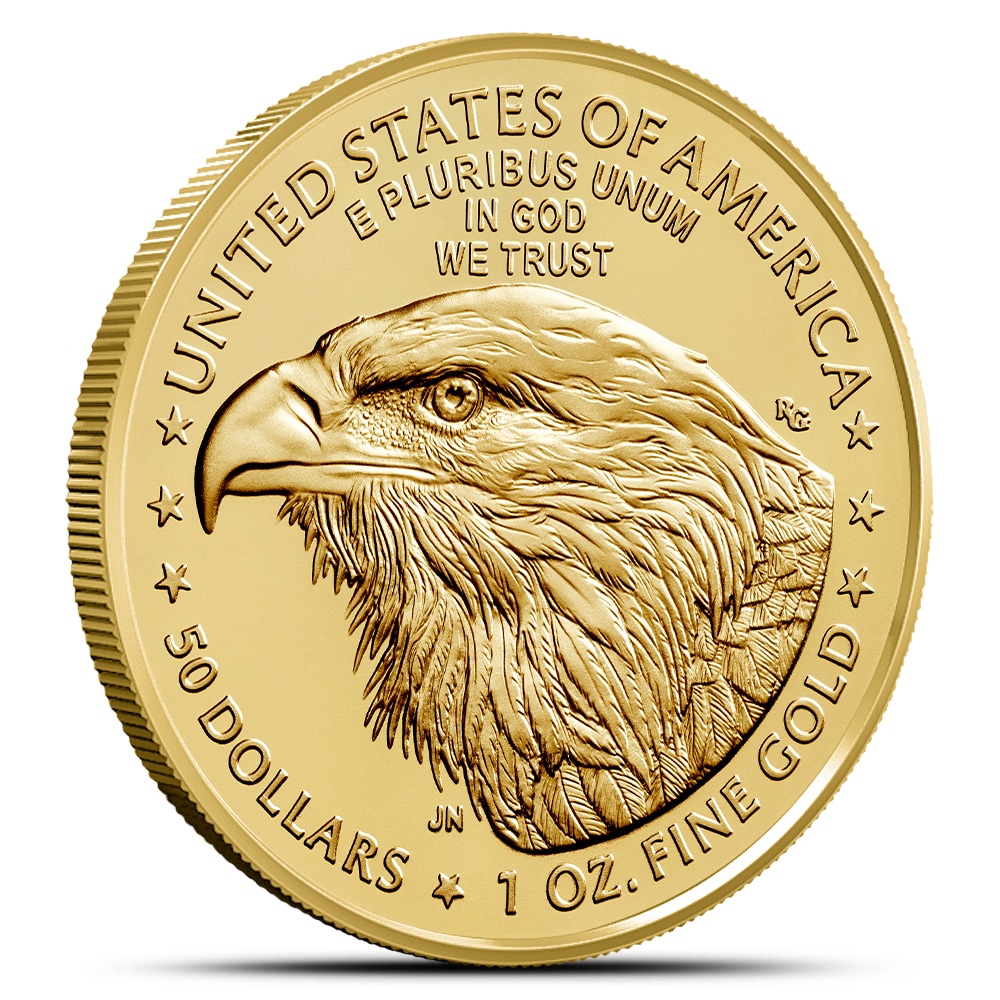
1. Fine gold weight. This is the amount of pure gold inside the coin, measured in troy ounces (1 troy ounce = 31.1035 grams). A 1 oz American Gold Eagle technically weighs 1.0909 oz because it’s alloyed with copper for durability, but it still contains exactly one full troy ounce of pure gold. A Krugerrand works the same way.
2. Gold spot price. This is the live wholesale price of one troy ounce of gold on the international market, the same number quoted on Bloomberg, Kitco, and the LBMA fix. As of late April 2026, gold has been trading in the USD $4,500–$4,900 per ounce range, well above the $2,000 levels of just a couple of years ago. Multiply the fine weight by the current spot price and you get the melt value — the floor.
3. Premium over spot. Mints don’t sell coins at melt. They charge a markup to cover refining, striking, distribution, and demand. For a standard bullion coin, expect somewhere between 3% and 8% over spot. For low-mintage proofs or fractional sizes (1/10 oz, 1/4 oz), the premium climbs higher because you’re paying more per gram of gold.
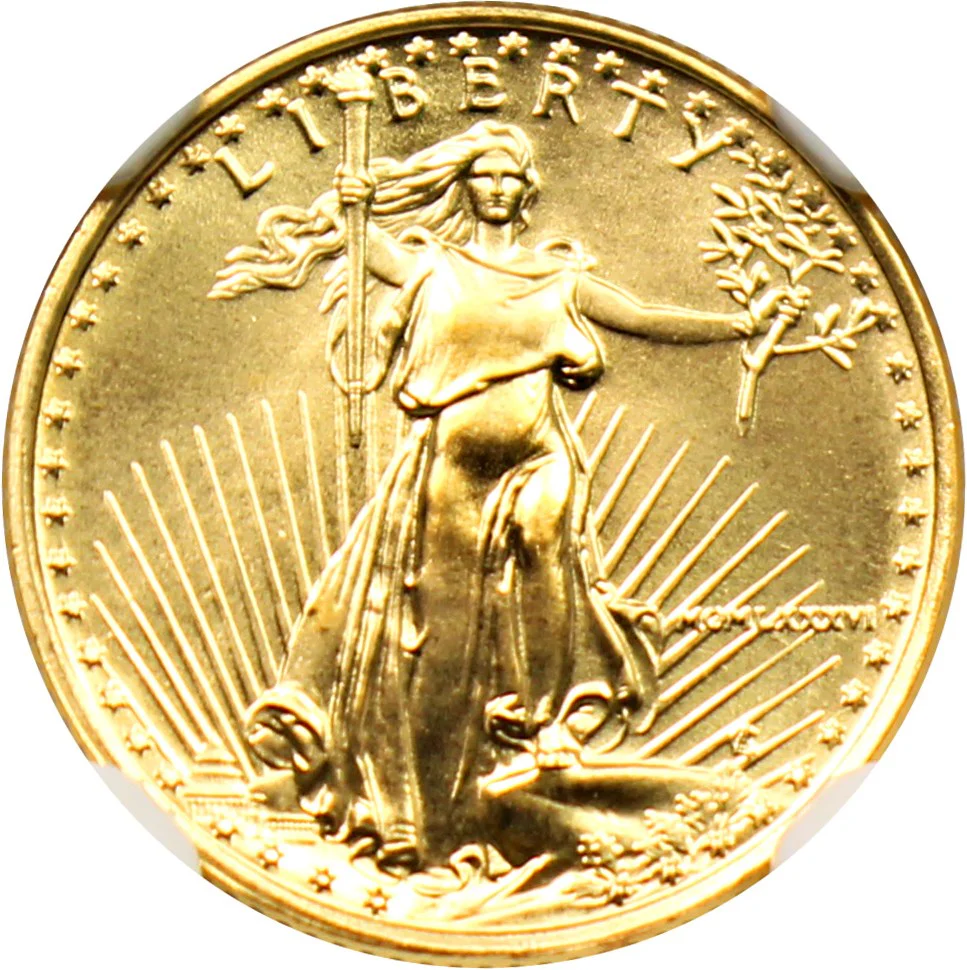
4. Numismatic value. This is where things get interesting. A pre-1933 U.S. $20 Saint-Gaudens contains about 0.9675 troy ounces of gold. At melt, that’s roughly $4,500. But a graded MS-65 example can sell for $8,000 or more. The same coin in MS-67 condition? It can clear $50,000. That gap — between melt value and what a collector will actually pay — is the numismatic premium, and it’s where serious wealth gets made (or lost).
A simple way to remember it:
Melt value + premium + numismatic factor = real value of a gold coin.
What Pushes the Spot Price Up or Down
You can’t talk about the value of gold coins without watching the underlying gold market. A few forces move it more than anything else.
Inflation is the big one. When the dollar, shilling, or euro loses buying power, people park their savings in gold. That’s not a theory, it’s been the pattern since the 1970s, and it’s exactly why gold made all-time highs in 2024 and 2025 as central banks struggled with sticky inflation. Gold doesn’t pay interest, so it competes with bonds; when real interest rates fall, gold tends to rally.
Then there’s geopolitics. Wars, sanctions, and currency crises send investors running for hard assets. Central banks have been buying physical gold at near-record levels for the last three years — the World Gold Council’s Q1 2026 report shows them adding 244 tonnes in just three months. When the people in charge of the world’s reserves are stacking gold, retail buyers tend to follow.
Supply matters too, though less than most people assume. New mine output runs around 3,500 tonnes a year globally, and it doesn’t change much from year to year. That’s part of what makes gold gold you can’t just print more of it.
For Uganda and the wider East African region, there’s an extra wrinkle worth mentioning: the local price you pay for a gold coin is also moved by the UGX/USD exchange rate. When the shilling weakens, gold priced in shillings goes up even if the dollar spot price is flat. Buyers in Kampala have learned to track both.
The Two Types of Gold Coins (And Why It Matters for Valuation)
Before you can put a price on a coin, you need to know which family it belongs to. There are two, and they’re valued in completely different ways.
Bullion Coins
These are produced in large quantities by government mints, struck specifically as an investment vehicle, and priced almost entirely on their gold content. The big four most clients ask us about are:
- American Gold Eagle — 22-karat, struck since 1986, the most-traded gold coin in the world.
- Canadian Gold Maple Leaf — .9999 fine (24-karat), one of the purest bullion coins available.
- South African Krugerrand — the original modern bullion coin, launched in 1967.
- British Gold Sovereign — smaller (0.2354 oz), historic, and a favourite for portable wealth storage.
For any of these, valuation is straightforward: fine gold weight × current spot × small premium. No grading drama, no deep numismatic research.
Numismatic (Rare) Coins
These are valued for what they are, not just what they contain. A 1933 Double Eagle, a Lydian electrum stater, a low-mintage Liberty Head — the gold inside is almost an afterthought. Rarity, condition, mint mark, provenance, and historical importance drive the price.
A few hard rules apply:
- Condition is everything. Coins are graded on a 70-point Sheldon scale. The jump from MS-64 to MS-65 can double the price. MS-67 can multiply it tenfold.
- Cleaning destroys value. Never polish, scrub, or dip a gold coin. Collectors can spot it instantly, and a cleaned coin loses a huge chunk of its premium.
- Third-party grading matters. A coin slabbed by PCGS or NGC is worth more than a raw, ungraded version of the same coin — even if they look identical.
How to Actually Value the Gold Coin in Your Hand Step by Step
If you’ve inherited a coin or pulled one out of an old safe, here’s what the team at Minerals Base does to put a number on it. You can do most of this yourself.
Step 1 — Identify it. Look at both sides. Read the legend. Note the date, mint mark, denomination, and any country name. Cross-check against a reference like the NGC World Coin Price Guide or the PCGS CoinFacts database. Don’t rely on eBay listings — sellers there ask for what they wish they could get, not what coins actually sell for.
Step 2 — Weigh it. Use a scale accurate to 0.01 g. If the weight is way off the standard for that coin type, you may be looking at a fake or a heavily worn piece. Counterfeits are a real problem, especially with sovereigns and Krugerrands.
Step 3 — Calculate the melt value. Convert grams to troy ounces (divide by 31.1035), multiply by the fine gold percentage (0.9167 for 22-karat, 0.9999 for 24-karat), then multiply by today’s spot price. That’s your absolute floor.
Step 4 — Check the condition honestly. Are there scratches? Bag marks? Wear on the high points? If the coin looks like it’s been in a pocket, it’s circulated and the premium will be modest. If it’s still proof-like, you may have something worth grading.
Step 5 — Get a second opinion before selling. This is the step most people skip and regret. A reputable gold dealer or auction house can spot details that a Google search will miss. Heritage Auctions offers free online appraisals; we offer them too at our Kampala office.
Why Investors Hold Gold Coins (And Why That Holds Up Their Value)
Gold coins keep their pricing power for one structural reason: people keep buying them. Three motivations come up in nearly every client conversation we have.
Inflation hedge. When fiat currencies lose ground, gold tends to gain it. Every major inflation shock of the last fifty years has lifted gold prices, often dramatically.
Portfolio diversification. Gold’s correlation with stocks and bonds is low — sometimes negative. Adding 5–10% gold to a portfolio has historically lowered volatility without sacrificing much return.
Liquidity and physical ownership. Unlike a gold ETF or a paper certificate, a coin in your hand is yours. You can sell it locally, internationally, or pass it down. There’s no counterparty, no platform that can freeze your account, no SWIFT system to navigate. For people in markets with currency controls or banking instability and that’s a real concern across much of Africa — physical gold coins solve a problem that digital assets simply can’t.
Buying Value Gold Coins From Minerals Base Agency
Here’s the part where I’ll be straight with you. There are three ways to buy gold coins, and they’re not all equal.
You can buy from a mint or major auction house safest, but you’ll pay full retail and shipping to Africa is expensive. You can buy from an online dealer convenient, but verifying authenticity at a distance is tricky and customs delays kill the experience. Or you can buy from a trusted local exporter with sourcing on the ground, which is where we come in.
Minerals Base Agency is a licensed gold seller and exporter operating out of Uganda, with direct relationships across the East and Central African gold supply chain. We handle:
- Investment-grade bullion coins sourced from international mints, delivered with assay certificates.
- Refined gold dore and bars for institutional and high-volume buyers.
- Export documentation Certificate of Origin, Kimberley-style chain of custody, customs clearance, refinery routing to Dubai, Switzerland, India and beyond.
- In-person verification and weighing at our Kampala office before any purchase is finalised.
Every transaction we close is backed by transparent pricing tied to the live LBMA spot price, plus a clearly stated premium. No hidden margins, no “special collector’s price” pulled from thin air. The number you see is the number you pay.
Frequently Asked Questions
What determines the value of a gold coin?
Four factors stack on top of each other: the fine gold weight, the current gold spot price, the premium charged by the mint or dealer, and (for older or rare pieces) the numismatic value driven by rarity, condition, and history. A common bullion coin lives mostly on the first three. A pre-1933 collector coin can be worth many multiples of its melt value.
How do I find out the spot price to value my gold coins today?
Check any reputable live price feed Kitco, BullionByPost, the LBMA, or USAGOLD. Spot is quoted in U.S. dollars per troy ounce and updates by the second during market hours. For a quick local figure in Uganda, multiply the USD spot by today’s UGX/USD rate, then by the fine gold weight of your coin.
Are gold coins a good investment in 2026?
For most diversified portfolios, yes, within reason. Gold coins protect against inflation, currency devaluation, and geopolitical shocks. They shouldn’t be your whole portfolio, but a 5–10% allocation has historically improved risk-adjusted returns. The best results come from buying recognized bullion coins from a reputable gold dealer and holding them long term.
What’s the difference between melt value and market value?
Melt value is what the gold inside the coin would be worth if you melted it down — pure metal, nothing else. Market value is what someone will actually pay for the intact coin, which is almost always higher because of mint premiums, dealer margins, condition, and (for rare coins) collector demand.
Should I get my gold coins professionally graded?
If a coin’s market value is well above its melt value, say, a U.S. pre-1933 piece, an early sovereign, or anything you suspect is rare, yes. Grading by PCGS or NGC costs around $30–50 per coin and can dramatically increase what buyers are willing to pay. For modern bullion coins like Eagles or Krugerrands bought purely for their gold content, grading isn’t usually worth the fee.
Can Minerals Base Agency help me sell gold coins from Uganda or anywhere in Africa?
Yes. We buy and broker investment-grade gold coins, bars, and refined dore. Bring your coins to our Kampala office for in-person valuation, or send detailed photos and weights for a remote indicative quote. We pay against the live spot price minus a transparent buying margin.
Final Thoughts
The real value of a gold coin isn’t a single number; it’s the answer to a small handful of questions answered honestly. How much pure gold is in it? What’s the spot price right now? What premium does this particular coin carry? And in the case of older pieces, what’s it worth to someone who collects?
Get those four right, and you’ll never overpay. Get them wrong and you’ll either underprice a coin worth thousands or buy a piece for far more than it’s worth.
That’s the standard we hold ourselves to at Minerals Base Agency. If you’re looking to buy value gold coins for investment, sell coins you’ve inherited, or export refined gold from Uganda to international markets, get in touch through our Contact page or browse our Gold Sellers section to see what’s currently in stock.
Gold has held its purchasing power for five thousand years. The right coin, bought the right way, will hold yours, too.