What Gold Coins Are Worth Money? The 2026 Investor’s Guide by Minerals Base Agency
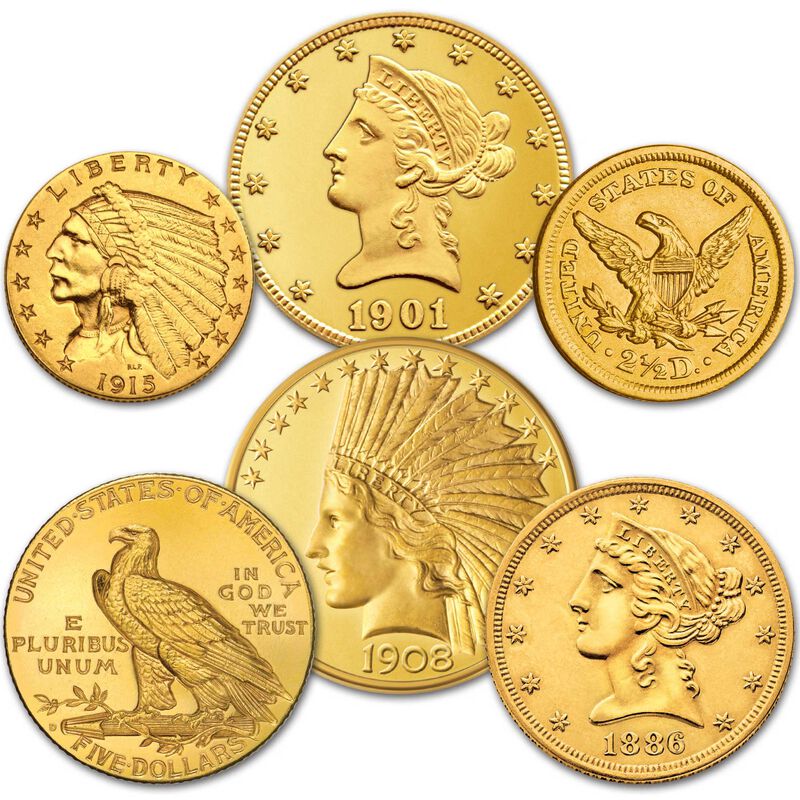
If you’ve ever inherited a small box of old coins or watched a YouTube video about a $7 million Double Eagle and wondered, “What gold coins are worth money?” you’re asking the right question at the right time. With gold trading near record highs in 2026 and investors piling into hard assets, the gap between an “ordinary” gold coin and one that quietly pays for a house has never been wider.
At Minerals Base Agency, the leading gold seller and exporter in Uganda, we’ve spent years on both sides of that conversation sourcing raw gold from the mines of Karamoja and Mubende, refining it for international buyers, and helping investors decide which gold coins genuinely hold their value. This guide pulls all of that experience into one place so you can stop guessing and start buying (or selling) with confidence.
What Makes a Gold Coin Worth Money?
Before we name names, let’s get one thing straight: not every shiny yellow disc is a goldmine. A gold coin’s value comes from a blend of factors, and the smart buyer learns to read all of them.
1. Gold Content (Purity and Weight)
This is the floor. Every gold coin has a melt value what it would be worth if you melted it down calculated from its weight and purity. A 1 troy ounce coin at .9999 fine gold is worth roughly the spot price of gold, which sat around $4,700 per ounce in early 2026. Coins are usually struck in 22-karat (.9167 fine, like the American Gold Eagle) or 24-karat (.9999 fine, like the Canadian Maple Leaf and American Buffalo).
2. Rarity and Mintage
A coin minted in the millions will rarely beat its melt value by much. A coin with a known mintage of 12 like the 1822 Half Eagle, of which only three are believed to exist can sell for over $8 million. Low mintage years, mintmark errors, and short-lived series are where the real money hides.
3. Condition (and Why You Should Never Clean a Coin)
Coin grading runs on the Sheldon Scale, a 1-to-70 system where 70 is flawless. The difference between an MS-60 and an MS-65 of the same coin can multiply the price ten times over. And please never polish or clean an old coin. We’ve seen people scrub thousands of dollars off a coin’s value in under a minute with a toothbrush.
4. Professional Grading by PCGS or NGC
The two names that matter are PCGS (Professional Coin Grading Service) and NGC (Numismatic Guaranty Corporation). A coin slabbed and graded by either of these services becomes far easier to sell, insures itself against counterfeit claims, and typically commands a 15–40% premium over the same coin sold raw.
5. Historical Significance
A coin tied to the Gold Rush, the U.S. Civil War, the abandonment of the gold standard in 1933, or the reign of a particular monarch carries a story and stories sell. The 1933 Saint-Gaudens Double Eagle, illegal to own for nearly 70 years, set the world auction record at $18.9 million in 2021 partly because of its history.
6. Market Demand and the Spot Price of Gold
Bullion coins (the kind investors stack) move with the daily spot price of gold. Numismatic coins (the rare collector kind) move with collector demand, which has its own cycles. In 2026, both markets are hot central bank buying, inflation, and geopolitical uncertainty have driven gold prices up over 40% year-over-year.
What Gold Coins Are Worth Money? The Big List for 2026
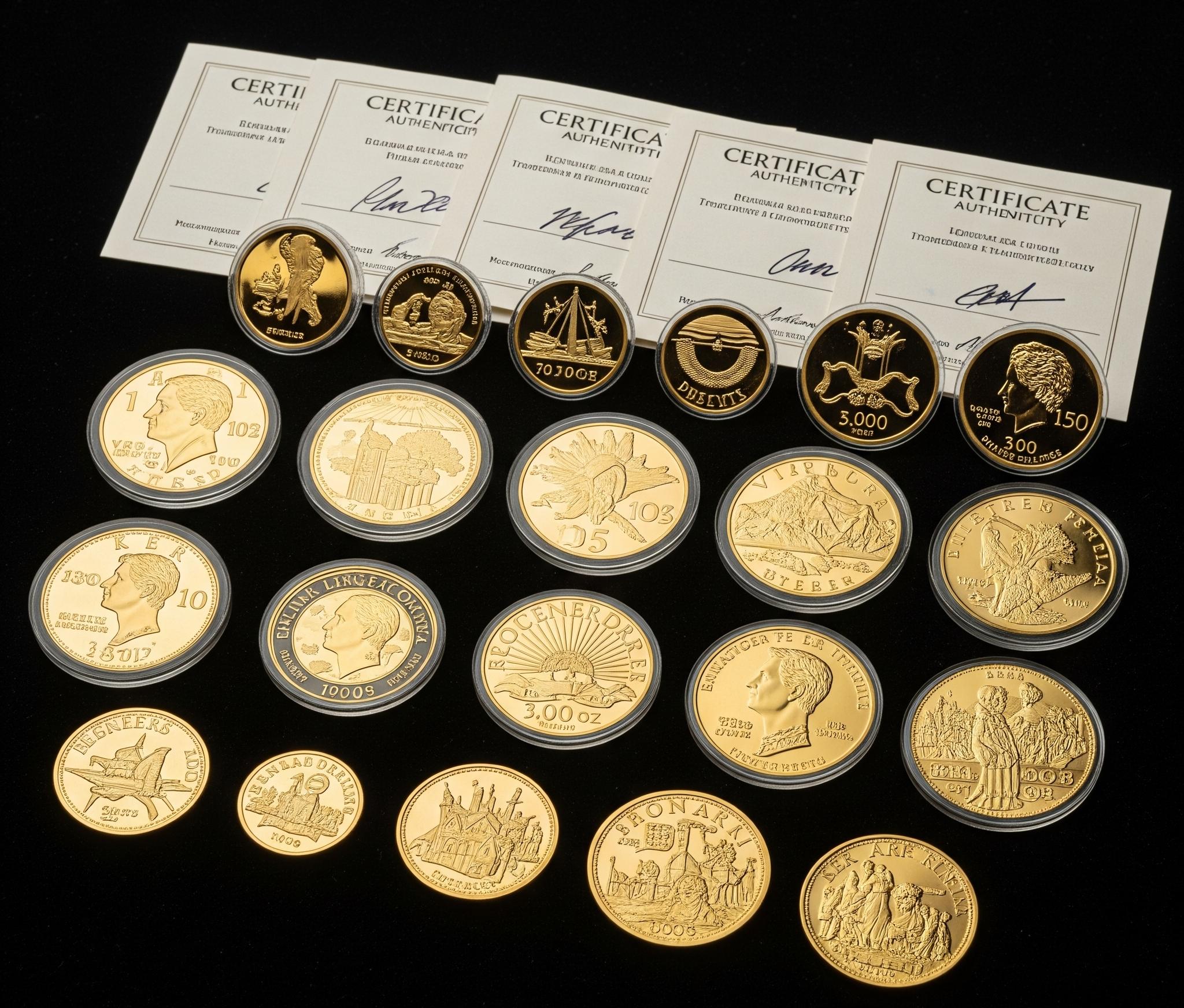
Here are the gold coins worth money right now both the bullion coins serious investors should be stacking and the rare numismatic coins that have sold for life-changing sums.
Bullion Gold Coins Worth Buying in 2026
These are the workhorses of any gold portfolio. They’re easy to buy, easy to sell, and their value is driven primarily by gold content rather than collector whim.
1. American Gold Eagle
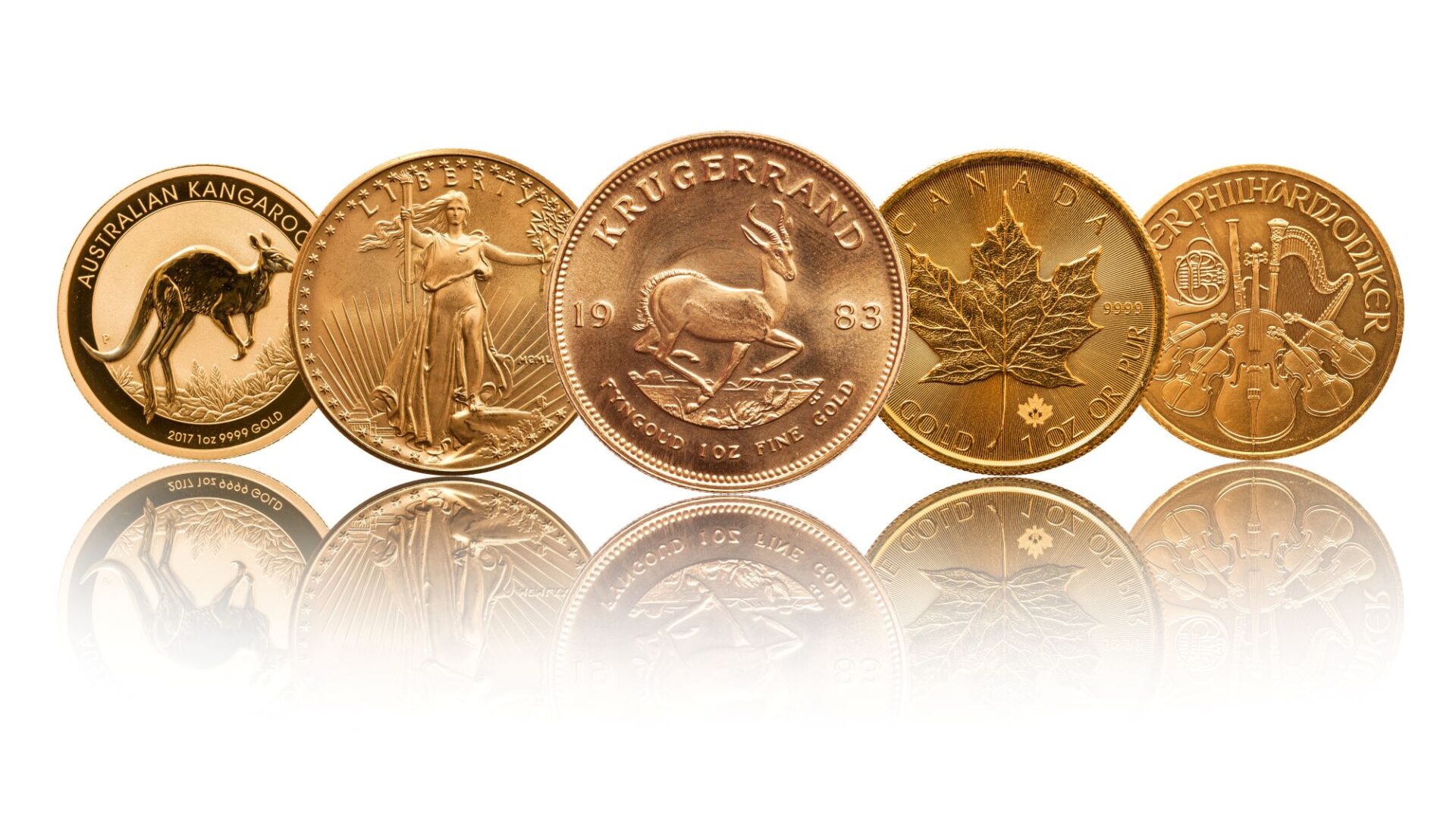
The most liquid gold coin in the United States, full stop. Struck in 22-karat gold (91.67% pure) by the U.S. Mint and backed by the federal government for weight and purity. The obverse shows Augustus Saint-Gaudens’ Lady Liberty striding forward; the reverse shows a family of eagles. Available in 1 oz, 1/2 oz, 1/4 oz, and 1/10 oz sizes, with face values of $50, $25, $10, and $5 respectively. A 1 oz Gold Eagle in 2026 typically sells for the spot price plus a 4–8% premium.
2. American Gold Buffalo
The first 24-karat gold coin produced by the U.S. Mint, launched in 2006. It uses the gorgeous Indian Head nickel design by James Earle Fraser a Native American chief on the obverse and an American bison on the reverse. With .9999 fineness, the Buffalo is a favorite for IRA-eligible gold and tends to carry a slightly lower premium than the Eagle.
3. Canadian Gold Maple Leaf
Produced by the Royal Canadian Mint, the Maple Leaf is the global benchmark for refined gold coins. Its .9999 fineness (with some special editions hitting an almost unbelievable .99999) makes it one of the purest mass-produced bullion coins in the world. Modern security features radial lines and a micro-engraved laser maple leaf make it nearly impossible to counterfeit.
4. South African Krugerrand
The original. When it launched in 1967, the Krugerrand was the first gold coin minted to contain exactly one troy ounce of fine gold, and it kicked off the modern bullion coin industry. It has no face value its worth is tied directly to the gold market and it’s one of the most widely traded gold coins on Earth. Premiums on Krugerrands tend to be the lowest among major sovereign coins, which is why budget-conscious stackers love them.
5. Austrian Gold Philharmonic
Europe’s bestselling gold bullion coin. Struck in .9999 fine gold by the Austrian Mint and featuring the instruments of the Vienna Philharmonic Orchestra, this coin combines high purity with low premiums. Particularly popular among European investors and increasingly available in African and Middle Eastern markets including through partners of Minerals Base Agency.
6. Australian Gold Kangaroo (Nugget)
Minted by the Perth Mint with a design that changes every year, making each release semi-collectible. .9999 fine gold, .9999 trustworthy reputation. The annually-changing reverse designs give this series a small numismatic kick on top of its bullion value.
7. Chinese Gold Panda
The most “collectible” of the major bullion coins. The Chinese Mint changes the panda design every year (with one famous exception in 2001–2002), so each year’s issue carries its own character. Available in metric sizes 30 grams, 15 grams, 8 grams, 3 grams, and 1 gram rather than troy ounces. Purity is .999 fine.
8. British Gold Sovereign
A classic British coin first struck in 1817, featuring Benedetto Pistrucci’s iconic St. George slaying a dragon on the reverse. Sovereigns are smaller than most modern bullion coins (just 7.32 grams of gold), but they’re VAT-free and capital-gains-tax-free for UK residents, which makes them a tax-efficient way to own gold.
Rare Gold Coins That Are Worth a Fortune
Now we get to the question most people are really asking when they search “what gold coins are worth money”: which ones could make me rich? Here are the heavyweights.
1933 Saint-Gaudens Double Eagle $18.9 Million
The holy grail. Tens of thousands were minted, but almost all were melted down after President Roosevelt took the U.S. off the gold standard. A single legal-to-own example sold at Sotheby’s in June 2021 for $18.9 million, the highest price ever paid for a coin at auction.
1787 Brasher Doubloon $9.36 Million
Struck by New York goldsmith Ephraim Brasher, this is one of the earliest American gold coins. An MS-65 example crossed the auction block in January 2021 for $9.36 million.
1822 Capped Bust Half Eagle $8.4 Million
Of the 17,796 originally struck, only three are known to survive today and two of those live in the Smithsonian. The one example in private hands sold for $8.4 million in 2021.
1804 Draped Bust Eagle (Plain 4) — $5.28 Million
Sometimes called the “King of American Coins” alongside the 1804 Silver Dollar. Only a handful exist.
1870-S Indian Princess Head $3 Gold Piece — $5.5 Million
A literal one-of-a-kind. The San Francisco Mint struck a single example in 1870, intended for the cornerstone of the new mint building. Somehow, it survived. It sold at Heritage Auctions in January 2023 for over $5.5 million.
1854-S Coronet Half Eagle — $2.16 Million
Until 2018, only three examples were known. A fourth surfaced and immediately rewrote the record books.
1907 Saint-Gaudens Ultra High Relief Double Eagle — $1.84 Million
Considered by many numismatists to be the most beautiful coin the United States has ever produced. Only 12–15 examples are known.
If you’re looking through your grandfather’s coin box, the dates to watch for are pre-1933 U.S. gold (the entire era before Executive Order 6102), low-mintage years from the Carson City and Charlotte mints, and any coin with an obvious mint error. Don’t trust your eyes — get any candidate slabbed by PCGS or NGC before you celebrate.
How to Tell If Your Gold Coin Is Actually Worth Money
We get this question several times a week from clients across East Africa and the Gulf. Here’s the honest checklist.
Check the date and mintmark first. A small letter under the date D for Denver, S for San Francisco, CC for Carson City, O for New Orleans can multiply a coin’s value tenfold. The 1854-S Half Eagle is worth millions; the 1854-P (no mintmark) Half Eagle is worth its melt value plus a small premium.
Weigh and measure it. A real 1 oz American Gold Eagle weighs 33.93 grams (the extra weight is the copper alloy) and measures 32.7mm across. Counterfeits are usually off on at least one of these measurements.
Look for wear patterns. Original coin surfaces have what numismatists call “luster” a soft cartwheel sheen. Polished coins look glassy and dead. Cleaned coins lose 50–90% of their value, regardless of the underlying date.
Get it graded. If your coin might be worth more than $500, the $30–$80 you’ll spend on PCGS or NGC grading is the best money you’ll ever invest. Their certified holders (slabs) are your authentication, your grade, and your liquidity in one plastic case.
Don’t trust online price guides alone. Price guides quote averages. Your specific coin may be worth far more or far less depending on strike quality, eye appeal, and current collector taste.
How Minerals Base Agency Fits Into the Gold Coin Picture
Minerals Base Agency is Uganda’s leading gold seller and exporter, with operations rooted in Kampala and a sourcing network reaching deep into the artisanal mining regions of East and Central Africa. While we are not a coin dealer in the numismatic sense, we sit at the supply end of the gold market the part that makes the bullion coins you buy possible.
Here’s how that matters to investors and collectors asking what gold coins are worth money:
- Raw gold supply for refiners and mints. We supply Doré bars and refined gold to international refiners, including parties whose output ends up in private mint coin programs.
- Gold bullion bars for direct investors. For clients who want gold without the coin premium, our 1 kg, 1 oz, and 100 g bars are an alternative worth considering — typically 4–8% cheaper per gram than equivalent coins.
- Verified gold purity. Every shipment from Minerals Base Agency comes with assay documentation. In a market full of forged certificates and tungsten-cored fakes, that paperwork is everything.
- Direct export to coin-buying countries. We export to the UAE, India, Switzerland, Turkey, China, and Hong Kong the same markets where most of the world’s gold coins are minted, sold, and stored.
If you’ve decided that gold belongs in your portfolio but you’re tired of paying the 6–12% premium that bullion coins carry, talk to us. For larger positions, raw gold from a verified source is the most cost-efficient way to own the metal.
Get in touch with Minerals Base Agency: Visit: https://mineralsbase.com Email through our contact page for pricing, assay reports, and export logistics.
Buying Gold Coins: What to Watch Out For
A few hard-earned lessons from the trenches:
Avoid pawn shops for buying. The premiums are steep, the staff often can’t tell a counterfeit from the real thing, and the selection is whatever walked through the door that week.
Be careful with TV dealers. They lean heavily on “limited edition” and “exclusive” framing. Most of what they sell is overpriced, common-date bullion in fancy packaging.
Compare premiums online. A quick check across three major dealers APMEX, JM Bullion, and SD Bullion, will tell you the going premium for any major gold coin within minutes. Anything more than 3–4% above the lowest is overpaying.
Buy graded for collector coins, raw for bullion. Modern bullion coins (Eagles, Maples, Krugerrands) don’t need slabs you’re buying them for the gold. Pre-1933 numismatic coins absolutely do.
Watch the spread. The “spread” is the gap between what dealers will sell you a coin for and what they’ll buy it back for. On American Gold Eagles, that spread is usually under 5%. On obscure gold coins, it can hit 20% or more. A wide spread eats your returns.
Selling Gold Coins: How to Get the Best Price
If you’re on the other side of the trade, here’s how to maximize what you walk away with:
- Know the spot price the day you sell. Bookmark Kitco or BullionVault.
- Get a grade before selling any coin you suspect is rare. The cost is trivial compared to the upside.
- Get multiple offers. A reputable local coin shop, an online dealer like APMEX or JM Bullion, and a major auction house (Heritage, Stack’s Bowers) for high-value pieces.
- Avoid eBay for valuable coins. Fees, fraud risk, and chargebacks make it a poor channel for anything over a few hundred dollars.
- Don’t sell in panic. Gold has up years and down years. If your coins aren’t a forced sale, time the market within reason.
For sellers in East Africa or the Gulf looking to liquidate larger positions of raw gold or bullion, Minerals Base Agency offers competitive buy-back pricing tied to LBMA spot rates.
Frequently Asked Questions: What Gold Coins Are Worth Money
Q: What gold coins are worth money the most in 2026? The American Gold Eagle, Canadian Gold Maple Leaf, South African Krugerrand, American Gold Buffalo, and Austrian Gold Philharmonic are the most valuable bullion coins by liquidity and trade volume. For rare numismatic coins, the 1933 Saint-Gaudens Double Eagle holds the record at $18.9 million, followed by the 1787 Brasher Doubloon and the 1822 Half Eagle.
Q: How do I know if my old gold coin is valuable? Check the date, mintmark, condition, and weight. Pre-1933 U.S. gold coins are almost always worth more than melt value. Coins from low-mintage years (look up your specific date and mintmark) can be worth thousands above their gold content. For confirmation, send the coin to PCGS or NGC for grading.
Q: Are American Gold Eagles a good investment? Yes for liquidity. American Gold Eagles are the most recognizable gold coin in the U.S. market, easy to buy and easy to sell. Premiums are slightly higher than other bullion coins, but the liquidity advantage usually outweighs the cost.
Q: What’s the difference between bullion gold coins and numismatic gold coins? Bullion coins (Eagles, Maples, Krugerrands) are valued mainly for their gold content and trade close to the spot price. Numismatic coins (pre-1933 U.S. gold, ancient gold coins) are valued mainly for their rarity, condition, and historical significance, and can trade at multiples of their melt value.
Q: Should I buy gold coins or gold bars? Coins offer flexibility, divisibility, and instant recognition. Bars offer lower premiums and more gold per dollar spent. Most serious investors hold both — bars for the core position, coins for liquidity and trading.
Q: Where can I buy verified gold in Uganda or East Africa? Minerals Base Agency is the leading gold seller and exporter in Uganda, supplying gold bullion bars and Doré with full assay documentation. Visit mineralsbase.com to request pricing.
Q: What is the spot price of gold in 2026? As of early 2026, gold has been trading between $4,700 and $5,500 per troy ounce, with J.P. Morgan forecasting a year-end target of $6,300. Spot prices update by the second — check Kitco or LBMA for the live number before you transact.
Q: How do I avoid counterfeit gold coins? Buy from established dealers, prefer graded coins in PCGS or NGC slabs, and use an electronic gold tester or specific gravity test for raw coins. Counterfeits often fail on weight, dimensions, or magnetic response (real gold is not magnetic).
The Bottom Line
So, what gold coins are worth money? The honest answer is: more than you think, in two very different ways. Modern bullion coins like the American Gold Eagle, Canadian Maple Leaf, and South African Krugerrand are worth real money every single day, tracking the rising tide of the gold market. Rare numismatic coins like the 1933 Double Eagle or the 1787 Brasher Doubloon are worth fortunes, but only in expert hands with verified provenance.
Whether you’re stacking ounces for retirement, hunting through an inherited coin box, or sourcing physical gold for export, the path forward is the same: understand what you’re buying, verify what you’re holding, and work with people who know the difference. Minerals Base Agency has been on the supply side of that journey for years, helping clients across the world own gold the right way.
Reach out today through mineralsbase.com for verified gold supply, export logistics, and pricing tied to the LBMA spot rate.