Gold Spot Price
You’ve seen it scrolling across the bottom of the news screen: GOLD: $2,315 ▲. It’s a number presented as a simple fact, a solid benchmark for wealth. But what does that figure actually mean? Can you walk into a shop and buy a one-ounce gold coin for that exact price? The short answer is no, and that single number is only the beginning of the story.
Summary
The gold spot price is the live wholesale benchmark for one troy ounce of pure gold, discovered in global markets (notably London and New York) and quoted in U.S. dollars. You won’t pay or receive exactly spot for physical coins or bars because premiums and bid-ask spreads cover fabrication, transport/security, dealer costs, and profit. Gold’s price is chiefly driven by fear/uncertainty, inflation, and interest rates; checking reputable tickers (e.g., Bloomberg or Reuters) and understanding the troy ounce help you interpret it. With this benchmark, you can estimate jewelry melt value, weigh physical gold (one-time premiums) versus ETFs (ongoing fees), and use price history for informed timing.
This widely publicized figure is the spot price of gold. It functions as the raw, wholesale cost for one troy ounce—the standard unit for precious metals—of pure gold being traded in massive quantities on global financial markets. Think of it like the price for a barrel of oil or a pound of coffee beans; it’s the official starting point for every gold transaction, from central banks down to local jewelers.
The term “spot” means the price is for gold that can be delivered right now, or “on the spot.” It’s the live market rate for immediate exchange, which is why the price of gold fluctuates throughout the day, reacting instantly to global supply and demand. Knowing what the spot price represents empowers you to confidently assess the value of any gold you might own and understand the business behind buying and selling it.
Why You Never Pay the Exact Spot Price: Unpacking “Premiums”
If the spot price is the official benchmark, why will a coin shop or online dealer always quote you a slightly different number? The answer is the same reason a loaf of bread costs more than the flour inside it. Getting a finished product into your hands involves costs, and in the world of precious metals, this added amount is called a premium.
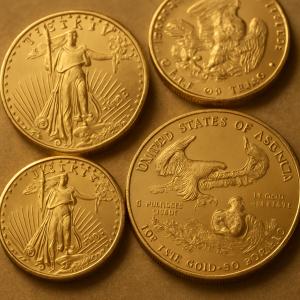
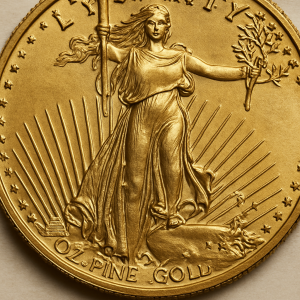
When you buy physical gold, you are buying a product that has been manufactured, refined, and securely transported. The premium is the amount you pay over the gold spot price to cover all the steps in that journey. It generally covers four main things:
- Fabrication: The cost to mint a raw lump of gold into a recognizable coin or a precisely weighed bar.
- Transportation & Security: Moving valuable metal around the world safely is an expensive and specialized process.
- Dealer Costs: Like any business, a gold dealer has operational expenses like rent, secure storage, and staff.
- Dealer Profit: A small margin that allows the dealer to stay in business.
This logic also works in reverse when you sell. A dealer will typically offer you a price below the spot price to cover their own costs and create a profit margin for when they eventually resell the item. This gap between the buying price (ask) and the selling price (bid) is how all retail gold businesses operate. The physical gold cost is not a single number, but a range centered around the spot price.

Where Does the Gold Price Come From? A Look at the Global “Auction”
It’s a common misconception that a small group of people in a back room sets the price of gold each day. The reality is a massive, non-stop global auction that never truly closes. Millions of participants—from large banks and governments to investment funds—are constantly buying and selling huge volumes of gold. The spot price you see is simply a snapshot of the most recent price agreed upon in this global marketplace. The price is “discovered” through the constant push and pull of supply and demand.
While this trading happens digitally all over the world, the heart of the activity beats strongest in two major financial centers: London and New York. A huge amount of the world’s physical gold is traded through London’s network of secure vaults, setting a key benchmark for large-bar transactions. At the same time, traders in New York constantly buy and sell contracts for future gold delivery, and the price of those contracts heavily influences the immediate, or ‘spot,’ price.
Gold is almost always quoted in U.S. dollars, not because it is an American commodity, but because the U.S. dollar has long been the world’s standard currency for trading major resources. It acts as a common language for global commerce, ensuring a buyer in Japan and a seller in Switzerland can agree on a universal price. The dollar price serves as the primary benchmark from which local prices in other currencies, like euros or yen, are then calculated.
The 3 Big Forces That Push and Pull the Price of Gold
The price of gold is most often swayed by a tug-of-war between three powerful economic forces. These primary “moods” of the market drive gold market fluctuations:
- Fear & Uncertainty: When people are nervous about the stock market, political instability, or a potential recession, they often look for a safe place to put their money. For thousands of years, gold has been seen as a “safe haven” asset. Like a financial life raft, investors flock to gold during turbulent times, and this increased demand pushes the price up. This is a key reason behind historical price spikes during major world crises.
- The Threat of Inflation: When your dollar doesn’t buy as much as it used to, that’s inflation. As the purchasing power of money like the U.S. dollar goes down, it takes more of those weaker dollars to buy the same ounce of gold. Because of this, gold is often called an “inflationary hedge,” as its price tends to rise when the value of cash is falling.
- The Lure of Interest Rates: Gold is a physical asset; it doesn’t pay you anything just for holding it. A savings account, on the other hand, pays you interest. When banks offer high interest rates, holding cash becomes more attractive. Some investors might sell their gold to put that money in the bank and earn interest, which can pull gold’s price down. Conversely, when interest rates are very low, gold looks more appealing in comparison.
These three forces are in a constant, dynamic balance. On any given day, news about inflation might be pushing the price up while reports of rising interest rates are trying to pull it down. The spot price you see is the real-time result of this global tug-of-war.
How to Check the Live Gold Price and Actually Understand It
For a trustworthy number, it’s best to look where financial professionals do. Major news outlets like Bloomberg and Reuters offer free, real-time gold price tickers on their websites. These sources are considered the global standard, pulling data directly from the markets where large-scale gold trading happens. It’s like getting the weather from the National Weather Service instead of a random app—you’re going straight to the source.
When you land on one of these sites, you’ll see a chart with the price fluctuating throughout the day. The big number you’re looking for is the spot price for one troy ounce of gold. This price is almost always quoted in U.S. dollars, as it’s the benchmark for the entire global market.
Remember that this live spot price is your reference point, not a retail price. It’s the wholesale cost of raw gold. When you buy or sell physical gold, the dealer’s price will be different to cover their own costs and profit (the “premium”). By knowing the live spot price, you have a powerful benchmark to judge whether an offer to buy or sell is fair.

Gold’s Special Measurement: What is a Troy Ounce?
When it comes to precious metals, the world operates on a different system from the standard (or avoirdupois) ounce used for cooking. The troy ounce is the official, centuries-old unit of weight for gold, silver, and platinum. It ensures that a gold buyer in Tokyo is talking about the exact same amount of metal as a seller in New York.
A troy ounce is slightly heavier than the standard ounce you’re used to. One troy ounce weighs 31.1 grams, whereas a standard ounce weighs only 28.35 grams, making a troy ounce nearly 10% heavier. While that might not sound like a huge difference, it adds up quickly when dealing with a valuable material like gold.
This distinction is critical because the spot price of gold you see on the news is always quoted per troy ounce. Any reputable chart or online calculator will use this specific measurement as the default. Understanding this special unit is the first and most important step in figuring out what your gold items are actually worth.
A Quick Guide to Estimating Your Gold Jewelry’s Value
Now you might be looking at your gold jewelry and wondering, “So, what is my gold worth?” The answer almost always starts with a tiny number stamped somewhere on the piece: the karat. Because pure, 24-karat gold is too soft for everyday wear, it’s mixed with stronger metals to create a more durable alloy. The karat number tells you how much pure gold is in that mix. Think of it as a recipe in 24 parts: 14k gold is 14 parts gold and 10 parts other metals, making it 58.3% pure. An 18k piece is 18 parts gold, or 75% pure.
This purity percentage is the key to figuring out your item’s “melt value”—the current market value of the raw gold content within it. While you’ll need a precise scale for an exact figure, you can get a good estimate at home using a kitchen or postal scale that weighs in grams. Here’s a quick example using a 14k gold ring that weighs 5 grams, with a spot price of $2,300 per troy ounce:
- 1. Find the Purity: A 14k stamp means 14 ÷ 24 = 58.3% pure gold.
- 2. Calculate Gold Content: Your 5-gram ring contains 2.915 grams of pure gold (5 grams × 0.583).
- 3. Convert to Troy Ounces: Since the spot price is per troy ounce, convert your grams: 2.915 grams ÷ 31.1 = 0.094 troy ounces of pure gold.
- 4. Estimate Melt Value: Multiply this by the spot price: 0.094 × $2,300 = $216.20.
This melt value is your benchmark, but a buyer must account for their own costs for testing, refining, and running their business. Their offer will be below the melt value to cover these factors. However, by calculating this value yourself, you gain a realistic expectation and the confidence to know whether you’re getting a fair offer.
Physical Gold vs. “Paper Gold”: A Simple Cost Comparison
Beyond selling old jewelry, many people look to gold as a way to protect their savings. The decision largely comes down to two very different approaches: owning physical gold (coins and bars you can hold) or investing in “paper gold” (usually an Exchange-Traded Fund, or ETF).
A gold ETF is a special type of stock designed to perfectly mirror the spot price of gold. When the price of gold goes up, the ETF’s share price goes up by the same amount, and vice-versa. The cost structure for each path is where they truly diverge. When you buy a physical gold coin, you pay the spot price plus a one-time premium. For paper gold, there’s no premium. Instead, you pay a small, ongoing management fee (or expense ratio), such as 0.40% per year. On a $10,000 investment, that would be about $40 annually paid to the fund manager.
The choice depends on what you want to own. With physical gold, you possess a tangible asset that exists completely outside of the stock market and banking system. With a gold ETF, you own a highly convenient financial share that represents the value of gold, but not the metal itself. This core difference often guides an individual’s investment strategy.
Is Now a “Good Time” to Buy Gold? How to Read the Signs
Answering whether it’s a good time to buy gold isn’t about predicting the future; it’s about understanding the present. A historical price chart provides invaluable context, showing whether today’s price is an all-time high, a dip in a larger trend, or somewhere in between. A quick online search for “gold price history” will reveal charts that map market fluctuations over time.
On these charts, you can often see the “3 Big Forces” in action. You might notice a sharp price spike during a period of economic turmoil, like the 2008 financial crisis or the COVID-19 pandemic—that’s the “fear” factor. You may also see long, steady climbs during years of high inflation. Seeing these historical trends demonstrates that gold’s value often moves in response to real-world events that affect us all.
The goal isn’t to time the market perfectly. The real value is in gaining perspective to answer critical questions for yourself: Is the current price significantly higher than it was a year ago? Is it bouncing back from a recent low? This context empowers you to make a decision that feels right for your own financial situation and goals.
From Mystery to Tool: Putting Your Gold Knowledge to Work
The number scrolling across a news ticker is no longer a mystery. It’s a benchmark you now know how to use. The once-confusing gap between the price on the screen and the price at the counter now has a clear logic behind it. This clarity is the foundation for understanding gold’s value on your own terms.
You are now equipped with the key principles of the gold market:
- The Spot Price is the wholesale benchmark for one troy ounce of raw, pure gold.
- The retail price you pay or receive includes a dealer’s premium or margin to cover business costs.
- You can estimate your own gold’s melt value using its weight, its karat (purity), and the live spot price.
The best way to solidify this knowledge is to put it into practice. The next time you walk past a jewelry store or see an ad for gold coins, pull up the current spot price on your phone. By connecting the global market to the physical item in front of you, you reinforce your understanding and build real confidence.
What was once an abstract financial figure is now a practical tool in your hands. You can ask smarter questions, assess offers fairly, and engage with the market from a position of confidence. You don’t just see the price of gold; you understand the story behind it.

Q&A
Question: What exactly is the gold “spot price,” and can I buy or sell at that exact number?
Short answer: The spot price is the live, wholesale benchmark for one troy ounce of pure gold, quoted in U.S. dollars for immediate (“on the spot”) delivery. It’s discovered in global markets and fluctuates throughout the day. You typically won’t pay or receive exactly spot for physical coins or bars—spot is the starting reference point for pricing, not the final retail or buyback price.
Question: Why do dealer quotes differ from spot? What are “premiums” and the bid-ask spread?
Short answer: A premium is the amount you pay over spot to cover fabrication (minting), transportation and security, dealer operating costs, and dealer profit. When you sell, dealers usually offer below spot to cover these same costs and create a margin for resale. The result is a bid-ask range centered around spot: dealers buy below it and sell above it.
Question: What really moves gold’s price day to day?
Short answer: Three main forces tug on gold:
- Fear and uncertainty: Safe-haven demand rises in crises, pushing prices up.
- Inflation: As currency purchasing power falls, it takes more dollars to buy the same ounce, often lifting gold.
- Interest rates: Higher rates make yield-bearing cash more attractive, which can pull gold prices down; lower rates make gold look relatively better. Gold’s spot price reflects the real-time balance of these forces.
Question: How can I estimate my jewelry’s value, and why does the troy ounce matter?
Short answer: The spot price is quoted per troy ounce (31.1 grams), not the standard 28.35-gram ounce. To estimate melt value:
- Find purity (karat ÷ 24).
- Weigh the item in grams.
- Multiply weight by purity to get grams of pure gold.
- Convert to troy ounces (divide by 31.1) and multiply by the spot price. Example: A 5 g, 14k ring (58.3% pure) contains 2.915 g of pure gold = 0.094 troy oz. At $2,300/oz, melt value ≈ $216.20. Buyers typically offer below melt to cover testing, refining, and business costs.
Question: Should I buy physical gold or a gold ETF, and how do the costs differ? Short answer:
- Physical gold (coins/bars): You own the metal itself, outside the stock market and banking system. You pay a one-time premium over spot.
- Gold ETF (“paper gold”): A share designed to mirror spot; no upfront premium, but you pay an ongoing management fee (e.g., about 0.40% per year on your investment). You own exposure to gold’s value, not the metal. Your choice depends on whether you want tangible ownership or the convenience and low ongoing friction of a financial product.