Are Gold Coins Worth Anything? The Honest 2026 Answer
You found a gold coin. Maybe it slipped out of an old envelope from your grandfather, or maybe a dusty velvet pouch turned up while you were clearing out a relative’s flat. Now you’re staring at it — heavier than it looks, oddly warm in your palm — wondering the obvious: are gold coins worth anything, or is this just shiny scrap metal?
Short answer: yes, almost certainly. Quite a bit, in fact. The longer answer is what this guide is really about.
At Minerals Base Agency, Uganda’s leading gold seller and exporter, headquartered in Kampala we handle gold coins, dust, bars, and doré every week. We’ve watched first-time sellers walk into pawn shops and accept $400 for a coin that should have fetched closer to $2,800. The difference is never luck. It’s knowledge. So let’s walk through exactly how to figure out what your coin is worth before anybody else does.
Face Value vs. Intrinsic Value (Why the $50 Stamp Is Lying to You)
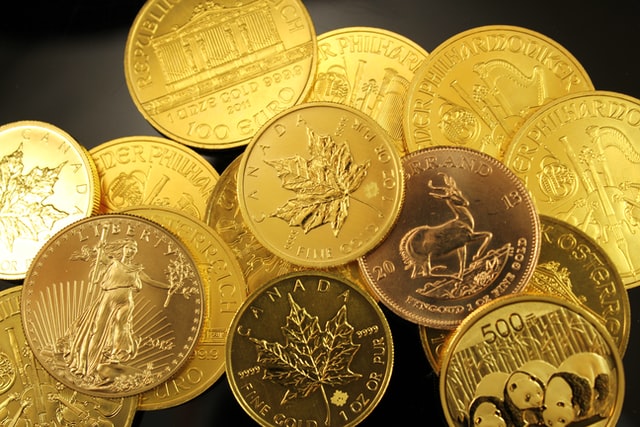
Here’s where most people get tripped up. Pick up a modern one-ounce American Gold Eagle and you’ll see “$50” stamped right on the reverse. That number is technically what the U.S. government will accept the coin for at any post office or bank. Legally, it’s worth fifty dollars.
In reality? At today’s gold price, that same coin trades for somewhere north of $4,500.
That stamped figure is called the face value, and it exists for one reason only — so the coin qualifies as legal tender. The number that actually matters is the intrinsic value, which is the worth of the physical metal melted down. Two completely different numbers on the same disc.
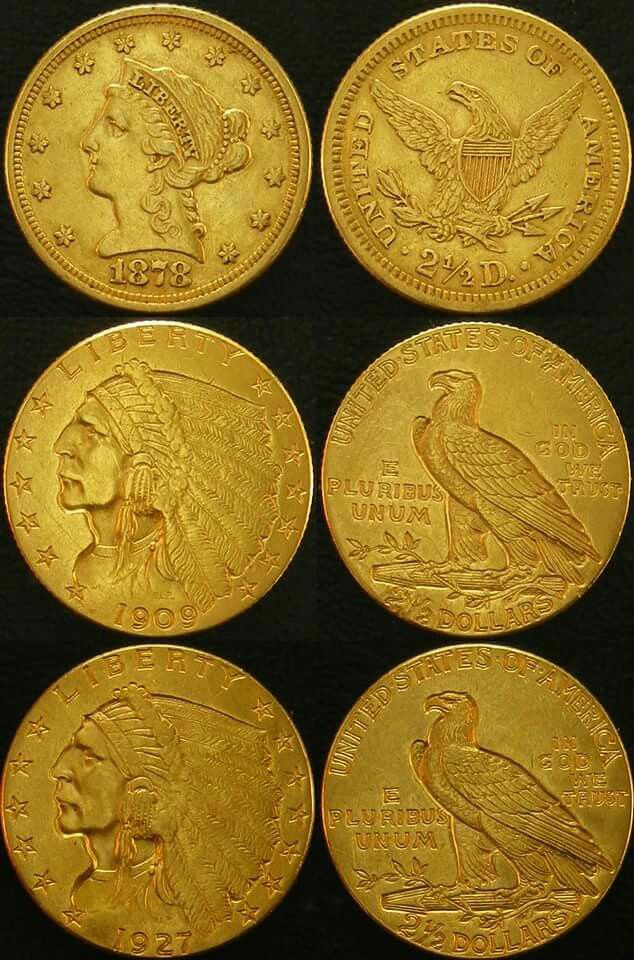
Once upon a time, those two numbers matched. Before 1933, a U.S. ten-dollar gold piece really did contain ten dollars’ worth of gold. Then the world moved off the gold standard, every government switched to fiat currency (paper backed by trust rather than metal), and gold coins quietly transformed from pocket change into one of the most reliable physical investments on earth.
So, if a clerk at a corner shop offers you face value for a gold coin? Smile, take it back, and walk out. You’d be handing over a small fortune for nothing.
How to Calculate Your Gold Coin’s Melt Value (3 Steps)
The melt value is the absolute floor — the minimum your coin is worth if you literally tossed it into a crucible. Every honest dealer, including us at Minerals Base, starts the appraisal here.
You only need three numbers:
1. Weight in troy ounces. A troy ounce is not the same as the kitchen-scale ounce — it’s about 31.1 grams, roughly 10% heavier than a standard avoirdupois ounce. Most modern bullion coins weigh exactly one troy ounce, but fractional sizes (1/2 oz, 1/4 oz, 1/10 oz) are common too.
2. Purity (fineness). Pure 24-karat gold is too soft for daily handling — your fingernail can scratch it. So most circulating gold coins were alloyed with copper or silver. The purity is usually stamped right on the coin: “.900” means 90% pure gold, “.9167” means 22-karat, “.999” or “.9999” is investment-grade pure.
3. Spot price. The live wholesale price of one troy ounce of pure gold, updated by the second on exchanges like the LBMA, COMEX, and Kitco. As of this writing, gold is trading above $4,500 per ounce historic territory.
The formula is the same one every gold dealer in the world uses:
Melt Value = (Weight in troy oz) × (Purity %) × (Current Spot Price)
Quick example: You’ve got a 1 oz American Gold Eagle (which is 91.67% pure gold). Spot is sitting at $4,500. 1 × 0.9167 × $4,500 = $4,125 melt value.
Anything below that number is a lowball offer. End of discussion.
Bullion Coins vs. Numismatic Coins — There’s a Massive Difference
This is where things get interesting and where most sellers leave money on the table.
Bullion coins are mass-produced rounds of gold sold for one reason: they’re a convenient way to own physical metal. Their value tracks the spot price almost exactly, plus a small premium for minting and distribution. Examples include the modern American Gold Eagle, the Canadian Gold Maple Leaf, the Austrian Philharmonic, and the British Britannia. If somebody asks, “do gold coins hold value,” they almost always mean these.
Numismatic coins are something else entirely. These are collector pieces where the metal is almost beside the point. Think of it like classic cars — a 1963 Ferrari 250 GTO isn’t priced by the kilo of steel inside it. The same logic applies here. A worn 1933 Saint-Gaudens Double Eagle that contains less than an ounce of gold sold at auction for over $18 million in 2021. Why? Only thirteen are known to exist.
What separates bullion from numismatic value comes down to two production numbers:
- Mintage — how many were originally struck.
- Survivor rate — how many of those weren’t melted, lost, or buried over the decades.
A coin can also be semi-numismatic — meaning it carries both solid gold weight and a modest collector premium. For sellers, semi-numismatic pieces are often the sweet spot. You get the bullion floor plus a meaningful bonus on top.
Gold Coin Purity Explained: 22k vs 24k
Lay two gold coins side by side and one might glow a buttery yellow while the other has an almost rosy, copper tint. That’s not lighting — that’s purity.
| Karat | Fineness | Pure Gold % | Common Examples |
|---|---|---|---|
| 24k | .999 / .9999 | 99.9%+ | Canadian Maple Leaf, American Buffalo |
| 22k | .9167 | 91.67% | American Eagle, Krugerrand, British Sovereign |
| 21.6k | .900 | 90% | Pre-1933 US gold coins (Liberty Head, Saint-Gaudens) |
A 22k coin actually weighs slightly more than a pure 24k coin of the same gold content, because the alloy adds extra mass. So the 1 oz American Eagle weighs 1.0909 troy oz total — but still contains exactly one troy ounce of pure gold. Don’t let that throw your math off.
Why does any of this matter? Because durability matters. Pure 24k gold dings and scratches if you sneeze on it. 22k coins survive being passed around, dropped on tile, and stored badly. For coins designed to actually circulate (like the historical Krugerrand), 22k was the sensible choice.
The Most Valuable Gold Coins: Rarity, Mint Marks & Key Dates
Here’s where attic finds turn into life-changing money. The same denomination of coin can be worth $300 or $300,000 depending on when and where it was struck.
Look closely at the coin’s surface, usually near the date or below the main design, for a tiny letter — that’s the mint mark. It tells you which branch facility produced it. A few mint marks make collectors drool:
- CC — Carson City, Nevada (operational only 1870–1893; very limited output)
- D — Dahlonega, Georgia (closed during the Civil War in 1861)
- C — Charlotte, North Carolina (also closed in 1861)
- O — New Orleans (issued gold sporadically; some years are extreme rarities)
A key date is a specific year-and-mintmark combination that’s notoriously hard to find. The 1854-S Half Eagle, the 1870-CC Double Eagle, the 1927-D Saint-Gaudens — these aren’t just coins, they’re trophies. A regular dealer might pay you melt value for a common 1924 Double Eagle. The same dealer would sprint to the back office to find a checkbook for the same coin dated 1927-D.
If you suspect you have something rare, do not clean it. Don’t polish it. Don’t even rub it with a cloth. Original surfaces — even worn, dirty, slightly tarnished ones — are what collectors pay for. Cleaning a numismatic coin can wipe 70% of its value off in thirty seconds.
Best Gold Coins to Invest In: Eagle vs Krugerrand vs Maple Leaf
If you’re not chasing collector premiums and just want gold for portfolio protection, these three are the global heavyweights:
American Gold Eagle — 22k, alloyed with silver and copper. Universal recognition in the U.S., highly liquid, and IRA-eligible if you want to put it inside a self-directed retirement account. Backed by the U.S. Treasury for weight and purity.
South African Krugerrand — 22k, alloyed with copper (which gives it that orange-red hue). Launched in 1967, this was the world’s first modern bullion coin and is still the most globally recognized. If you ever travel internationally and need to liquidate, the Krugerrand sells in almost any country.
Canadian Gold Maple Leaf — 24k, .9999 fineness (some special issues hit .99999, the purest official coin produced). Ultra-pure, beautifully struck, but more easily marked because of its softness — handle with cotton gloves.
A quick comparison most guides skip:
- For U.S. retirement accounts → American Eagle wins.
- For international resale liquidity → Krugerrand wins.
- For maximum gold purity per coin → Maple Leaf wins.
- For lowest premium over spot → Krugerrand usually wins (often just 2–3% over melt).
How to Tell If a Gold Coin Is Real: 3 Tests You Can Do at Home
Counterfeits are an industry now, especially out of certain manufacturing hubs. Before you celebrate, run these three quick tests in your kitchen.
1. The Magnet Test. Real gold is non-magnetic, full stop. Hold a strong neodymium magnet (a fridge magnet works at a pinch) near the coin. If it pulls, sticks, or even leans toward the magnet, what you’ve got is gold-plated steel or iron. It is not gold.
2. The Ping Test. Balance the coin on the tip of your index finger and tap its edge gently with another coin or a wooden pencil. Real gold rings — a long, clean, almost musical chime that lingers for a couple of seconds. Fakes thud. Once you’ve heard a real one, you’ll never mistake the sound again.
3. The Dimension Test. Gold is exceptionally dense (19.3 g/cm³). Counterfeiters can fake the weight or fake the size, but they can’t fake both at once using cheaper metals. Use a digital caliper to measure the diameter and thickness, then compare against the official mint specifications. Even a 0.1mm discrepancy is a red flag.
What we don’t recommend: acid testing kits. Yes, they work. They also leave a permanent scar that destroys any numismatic premium and lowers the resale value of legitimate coins. Save the acid for melted scrap, not for coins you might sell whole.
Should You Pay for Professional Grading?
Companies like PCGS (Professional Coin Grading Service) and NGC (Numismatic Guaranty Company) authenticate coins, grade them on the Sheldon Scale (1 to 70, with 70 being flawless), and seal them in tamper-proof plastic holders the industry calls “slabs.
Submission costs roughly $30–$60 per coin, plus shipping and insurance. So is it worth it? Depends entirely on what you’ve got.
- Plain bullion coin (American Eagle, Krugerrand) → Don’t bother. Grading adds nothing because the value is purely about weight.
- Common date pre-1933 US gold coin in average condition → Probably skip. The grade premium won’t recover the fee.
- Possible key date or unusually well-preserved older coin → Absolutely grade it. A 1908 Saint-Gaudens in raw “uncertified” condition might fetch $3,000. The same coin slabbed at MS-65 can crack $9,000.
Rule of thumb: if grading might add at least 3x the cost of grading to the resale value, send it in.
The Dealer Spread: Why You’ll Never Get 100% of the Market Price
This catches first-time sellers off guard every single time. You see a Gold Eagle listed online at $4,800. You walk into a dealer expecting that number. You leave disappointed.
Here’s why. Every gold dealer Minerals Base Agency included operates on two prices: the bid (what we pay you) and the ask (what we charge a buyer). The gap between them is called the dealer spread, and it covers overhead, authentication time, market risk while we hold the inventory, and a fair profit. This isn’t being cheated. This is how every commodity trade on earth works.
Reasonable spread ranges:
- Standard bullion coins: 2–5% below spot. Liquid, predictable, easy to flip.
- Semi-numismatic coins: 8–15% off retail. Takes a bit longer to find the right buyer.
- Rare numismatic pieces: 15–25% off retail. Can sit in inventory for months.
- Pawn shops and jewellery stores: 30–50%+ off. They know you’re in a hurry. Avoid unless desperate.
If a buyer offers you face value, melt value minus 40%, or anything that smells fishy — leave. There’s always another dealer.
How to Sell Gold Coins Without Getting Scammed
A few hard-won tips from the trade:
- Get at least three quotes. Spot prices update by the minute, so collect quotes within the same hour for a fair comparison.
- Avoid travelling with “hotel buyers.” They post flyers, set up in conference rooms for a weekend, lowball aggressively, and disappear. Once they’re gone, you have zero recourse.
- Look for dealers with verifiable credentials — Professional Numismatists Guild (PNG) membership, ANA (American Numismatic Association) certification, or in our region, registered exporters licensed under the Ministry of Energy and Mineral Development.
- Never ship your coins anywhere without insurance.
- Get the offer in writing. A serious dealer will provide one.
If you’re located anywhere in East Africa — Uganda, Kenya, Tanzania, Rwanda, South Sudan — or you’re an international buyer sourcing African gold, Minerals Base Agency offers transparent live spot-based pricing, full documentation, and export-ready paperwork, including certificates of origin. We’ve been in the Kampala gold trade for years and our reputation depends on giving fair valuations every single time.
Tax & Storage: The Boring Stuff That Saves You Money
Two final realities most guides skip over.
Taxes. In the United States, the IRS classifies physical gold as a “collectable,” which means long-term capital gains are taxed at up to 28% (versus 15–20% for most other assets). In the UK, certain coins like the Sovereign and Britannia are exempt from Capital Gains Tax because they’re legal tender. In Uganda and most of East Africa, gold sales follow standard income tax and export duty regulations — Minerals Base helps clients structure exports properly to stay compliant. Always keep purchase receipts. The taxman wants to know what you paid, not just what you sold for.
Storage. Three options, in rising order of cost and security:
- A heavy-duty fireproof home safe, bolted to the floor. Fine for small holdings. Don’t tell anyone.
- A safety deposit box at a bank. Affordable, but contents are not FDIC-insured — get separate coverage.
- A private vault depository (like Brinks or Loomis). Best for serious collections, fully insured, but you give up immediate access.
Why Choose Minerals Base Agency
Minerals Base Agency is one of Uganda’s most trusted gold dealers and exporters, based in Kampala and serving buyers across Africa, the Middle East, Europe, Asia, and North America. We deal in:
- Investment-grade gold coins and bullion
- Gold doré bars and dust
- Raw diamonds, copper cathode, mercury, palladium, platinum, and tantalum
What sets us apart isn’t marketing — it’s process. Every transaction includes verifiable assay results, transparent live-market pricing, full export documentation, a certificate of origin, and secure logistics. Whether you’re an individual sitting on inherited gold coins wondering what they’re really worth, or an international buyer sourcing legally exported African gold, we offer honest valuations and zero pressure.
📞 Contact Minerals Base Agency today for a free gold coin appraisal or export inquiry. 🌐 www.mineralsbase.com 📍 Kampala, Uganda
Frequently Asked Questions
Q: Are gold coins worth anything if they’re old and beat-up? Yes. Even worn pre-1933 US gold coins are worth at least their melt value, which today is hundreds to thousands of dollars depending on the denomination. And worn condition doesn’t disqualify a key-date rarity from carrying a numismatic premium — only cleaning does. Leave them as you found them and get them appraised.
Q: How much is a 1 oz gold coin worth right now? At a spot price near $4,500/oz, a 1 oz pure gold coin (like a Maple Leaf or Buffalo) is worth roughly $4,500 in metal alone. A 22k coin like a Gold Eagle or Krugerrand contains 0.9167 oz of pure gold, so its melt value is around $4,125. Add a small dealer premium for new bullion, or check current rarity premiums for vintage pieces.
Q: Are gold dollar coins from the U.S. worth more than $1? If your gold dollar was minted between 1849 and 1889, yes — vastly more. Even worn examples are worth $100+ for the gold alone, and rare dates can fetch tens of thousands at auction. Modern “golden” dollars (Sacagawea, Susan B. Anthony, Presidential dollars from 1979 onward) contain zero gold and are worth exactly one dollar.
Q: Are gold-plated coins worth anything? Almost nothing above face value. The gold layer on plated coins is typically 0.003 inches thick and contains pennies’ worth of metal. Those “limited edition” gold-plated state quarter sets advertised on TV? They’re keepsakes, not investments.
Q: What’s the difference between melt value and market value? Melt value is the worth of the raw metal if you melted the coin down — it’s the absolute floor. Market value is what a willing buyer will actually pay, which can equal melt value (for plain bullion) or be many multiples higher (for rare collectible coins).
Q: Can I sell gold coins in Uganda? Yes — Minerals Base Agency in Kampala buys gold coins, bullion, doré, and dust at transparent live-market rates and handles export documentation for international transactions. Contact us for a free appraisal.
Q: Do I need to pay tax when I sell gold coins? Generally yes, on the profit. Specific rates and exemptions depend on your country. In the US, expect up to 28% on long-term gains. In the UK, certain legal-tender coins (Sovereigns, Britannias) are CGT-exempt. Always keep receipts and consult a local tax adviser.