Mineral Extraction Demystified: What Every Gold Buyer Needs to Know
| Written by the expert team at Minerals Base Agency Uganda’s leading certified gold seller and mineral trading authority with direct access to artisanal and industrial mining operations across East Africa. |
If you’ve ever wondered what really happens between a gold nugget sitting in a Ugandan riverbed and a refined bar of bullion landing in your hands you’re in the right place. At Minerals Base Agency, we believe that an informed buyer is a confident buyer. That’s exactly why we created this guide: to pull back the curtain on mineral extraction, break down the jargon, and show you what responsible gold sourcing actually looks like on the ground in Uganda.
Whether you’re a first-time buyer exploring African gold markets or an experienced trader looking to understand the supply chain better, this page has something for you. Mineral extraction doesn’t have to be a black box. Let’s change that, together.
What Is Mineral Extraction And Why Should You Care?
Mineral extraction is exactly what it sounds like: the process of removing valuable minerals from the earth. But there’s a lot more nuance buried beneath that simple definition. It’s not just digging and hauling. It’s geology, chemistry, engineering, environmental management, and when done right — community partnership.
For Uganda specifically, mineral extraction is the backbone of economic development. The country sits on some of East Africa’s richest geological formations, hosting gold, tantalum, copper, cobalt, limestone, and more. In regions like Busia, Mubende, Moroto, and Karamoja, mining has been a way of life for generations long before formal regulation frameworks arrived.
At Minerals Base Agency, we work directly with Uganda’s artisanal and small-scale miners (ASM) as well as licensed industrial operations. Our role is to bridge the gap between raw extraction and verified, export-ready mineral supply. That’s why understanding extraction isn’t just academic it directly affects gold quality, pricing, and traceability.
A Brief History of Mineral Extraction — From Stone Age to Modern Uganda
The story of mineral extraction is as old as human civilization itself. Early communities in what is now Uganda were using iron tools, copper ornaments, and salt from mineral deposits thousands of years before European contact. The Buganda Kingdom and other societies traded minerals across the East African interior, establishing trade routes that shaped the region’s economic geography.
Fast-forward to the 20th century, and Uganda’s mining industry went through dramatic shifts — colonial-era extraction, post-independence reorganization, conflict disruptions, and eventually the regulatory modernization of the 2000s under the Directorate of Geological Survey and Mines (DGSM). Today, the country operates under the Mining Act of 2003 and subsequent amendments, offering clearer licensing frameworks for both small-scale and large-scale operators.
Modern extraction techniques have come a long way from manual panning with wooden trays. Today, Ugandan operations range from artisanal hand methods which still employ the majority of the country’s miners to mechanized open-pit and underground systems used by larger operators. The evolution continues, and Minerals Base Agency is positioned right at the intersection of tradition and innovation.
The three pillars of mineral extraction in Uganda: Alluvial Gold, Hard Rock Mining & Processing | Minerals Base Agency
Types of Mineral Extraction Explained Simply
One thing that confuses a lot of buyers is that not all gold comes from the same type of mine. The extraction method matters it affects the form the gold takes, its purity, its traceability, and ultimately its price. Here’s a plain-language breakdown of the main methods you’ll encounter when sourcing minerals through Minerals Base Agency.
1. Alluvial Gold Mining (River & Placer Mining)
Alluvial gold mining is the most widespread form of gold extraction in Uganda, particularly in the Busia and Mubende districts. Over thousands of years, erosion has carried gold particles from mountainous veins down into riverbeds, floodplains, and ancient river deposits. Miners access this gold by sluicing directing water flow to separate heavy gold particles from lighter sediment.
This is the method your great-grandmother might have recognized. The tools are relatively simple: sluice boxes, pans, and pumps. The gold that comes out tends to be in the form of dust or small nuggets, often ranging from 18 to 23 carats before refining. It’s labor-intensive, but it supports a massive number of livelihoods across rural Uganda.
| Fun fact: Some of the alluvial gold deposits in Eastern Uganda’s Busia region have been mined for over 100 years yet geologists still estimate significant untapped reserves beneath the surface. |
2. Hard Rock (Underground & Open-Pit) Mining
Hard rock mining goes after gold that’s still locked inside quartz veins and other host rock formations. In Uganda, this is practiced in regions like Karamoja and parts of Western Uganda. The process involves drilling, blasting, and crushing rock to liberate gold-bearing ore.
Open-pit mining is used when deposits are close to the surface it involves removing overlying material in a series of benches or terraces. Underground mining, by contrast, uses shafts and tunnels to reach deeper deposits. Both approaches require more capital investment than alluvial mining, but they can access higher-grade ore and produce more consistently sized output.
Minerals Base Agency sources from certified hard-rock operations that comply with Uganda’s Mining Act requirements ensuring environmental impact assessments are in place and workers operate under proper safety conditions.
3. Artisanal & Small-Scale Mining (ASM)
Artisanal mining (ASM) is a category that often gets misunderstood. It doesn’t mean unregulated or low-quality it means small-scale, often community-based extraction using manual or semi-mechanized methods. In Uganda, ASM accounts for the majority of gold produced and provides income for over 150,000 households.
The challenge historically has been traceability and formalization. That’s where Minerals Base Agency plays a critical role. We work to bring ASM miners into formal supply chains connecting them with fair prices, safe equipment, and access to markets they’d never otherwise reach. When you buy gold through us, you’re contributing to a system that rewards honest artisanal miners rather than sidelining them.
4. Ore Processing & Beneficiation
Once ore is extracted, the real chemistry begins. Processing is the stage that transforms raw, mixed mineral material into marketable product. For gold, this typically involves crushing the ore, using cyanide leaching or gravity concentration to separate gold from host rock, smelting into doré bars, and then sending to accredited refineries for final purification.
Minerals Base Agency’s supply chain includes post-processing, meaning buyers receive gold that has already been through initial processing steps assayed, weighed, and documented. We don’t just sell raw ore and hope for the best. We deliver traceable, certified product.
The Environmental Reality of Mineral Extraction — And What Responsible Looks Like
Let’s be honest: mining has a complicated relationship with the environment. Deforestation, soil disturbance, water contamination from acid mine drainage, and dust pollution are real risks that come with extraction when it isn’t managed properly. Uganda has seen its share of environmental damage from unregulated artisanal operations streams turned rust-colored, hillsides stripped bare.
But here’s the thing bad practice isn’t inevitable. It’s a failure of oversight, investment, and incentive structure. The regulatory framework in Uganda, backed by the Directorate of Environmental Affairs and the National Environment Management Authority (NEMA), increasingly requires reclamation plans, environmental impact assessments, and ongoing monitoring from licensed operators.
What Minerals Base Agency Does Differently
We only partner with extraction operations that can demonstrate responsible practice. That means proper waste management, minimized water footprint, and where possible, land rehabilitation programs that restore mined areas to productive use whether for agriculture, reforestation, or community spaces.
We also actively support the shift to mercury-free gold processing among our ASM partners. Mercury amalgamation, once common in small-scale gold extraction, poses serious health risks. Gravity separation methods are safer, cleaner, and increasingly accessible and we invest in training miners to use them effectively.
Sustainability isn’t a marketing word for us. It’s a condition of partnership. Because gold that damages communities and ecosystems creates long-term risk for everyone in the supply chain including our buyers.
Minerals Base Agency’s Mine-to-Market Process: From geological exploration through to certified export | Kampala, Uganda
Uganda’s Mineral Wealth: Why East Africa Is the Right Place to Source Gold
Uganda doesn’t always make the headlines when people talk about African gold. Names like Ghana, South Africa, or the DRC dominate the conversation. But insiders in the mineral trading world know something the broader market is only starting to catch up to: Uganda is sitting on remarkable, underexploited mineral wealth.
The country’s geological profile includes greenstone belts ancient rock formations that are among the most prolific gold hosts on earth. Busia, Mubende, Karamoja, and parts of the Albertine Rift are areas that have attracted increasing interest from international prospectors and investors. The Uganda Geological Survey has documented significant gold occurrences across many of these zones.
What makes Uganda particularly interesting from a trade perspective is the combination of untapped reserves, improving infrastructure, and a relatively stable governance environment compared to some neighboring countries. For gold buyers who want African supply diversity without taking on excessive political risk, Uganda is a compelling option.
How Minerals Base Agency Connects Extraction to Global Buyers
Understanding extraction is one thing. Turning it into a reliable, transparent supply chain is another. That’s the core of what Minerals Base Agency does. We’re not just a trading desk we’re a supply chain partner with deep roots in Uganda’s mining sector.
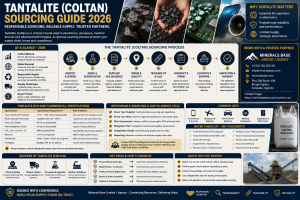
Here’s what our procurement process looks like in practice:
- Field assessment: Our team conducts site visits and geological assessments to verify gold source, method of extraction, and operator credentials.
- Licensing verification: We confirm that all partner mines hold valid licenses under Uganda’s Mining Act and comply with NEMA environmental requirements.
- Sampling & assaying: Gold is sampled and independently assayed to determine purity (fineness). We typically deal with material ranging from 18 to 23 carats, with full documentation.
- Pricing & procurement: We offer fair, market-linked pricing to miners reducing the influence of informal middlemen who have historically depressed miner incomes.
- Export compliance: We prepare all required export documentation, including Uganda Revenue Authority clearances, mineral export permits, and certificates of origin.
- International delivery: We coordinate logistics to connect buyers in Europe, the Middle East, Asia, and North America with verified Ugandan gold.
| Every shipment from Minerals Base Agency comes with full traceability documentation. We believe buyers have the right to know exactly where their gold came from, who mined it, and how it was handled. |
Demystifying Gold Purity: What the Numbers Mean
One question we hear constantly from first-time buyers is: what does ‘carat’ or ‘fineness’ actually mean for gold from Uganda? It’s a fair question, and the answer matters for pricing.
Gold purity is expressed either in carats (out of 24) or in parts per thousand (fineness). The gold we source from Uganda typically ranges as follows:
| Gold Form | Typical Carat | Fineness | Common Source |
| Alluvial Gold Dust | 18–22ct | 750–916 | Busia, Mubende |
| Alluvial Nuggets | 20–23ct | 833–958 | Eastern Uganda |
| Processed Doré | 22–23ct | 916–958 | Processing plants |
| Refined Bullion | 24ct | 999+ | Certified refineries |
All gold sold through Minerals Base Agency is accompanied by an assay certificate issued by a licensed testing facility. We don’t ask buyers to take our word for purity we prove it with documentation.
Sustainable Mining and Uganda’s Future: The Bigger Picture
Mineral extraction in Uganda is at a crossroads. The country has the resources. It has the labour. It increasingly has a regulatory framework. What’s still building is the infrastructure roads to remote mining areas, consistent power supply, access to credit for small-scale operators and the global trade relationships that allow its mineral wealth to generate lasting economic value at home rather than exporting that value entirely to foreign refining and trading hubs.
That’s a conversation Minerals Base Agency is actively part of. We advocate for fair trade structures, support miner training programs, and engage with Uganda’s Ministry of Energy and Mineral Development on policy discussions that affect the sector’s long-term trajectory.
From a buyer’s perspective, this matters too. The gold you buy isn’t just a commodity. It’s connected to real communities, real families, and a real ecosystem. Buying through a responsible agency like Minerals Base Agency means your money is reinforcing a system that’s trying to get extraction right — environmentally, socially, and economically.
Frequently Asked Questions About Mineral Extraction in Uganda
Is gold mining legal in Uganda?
Yes. Gold mining in Uganda is regulated under the Mining Act 2003 and subsequent regulations. Artisanal miners are licensed by the Directorate of Geological Survey and Mines (DGSM), and all exports must be cleared through Uganda Revenue Authority with proper documentation. Minerals Base Agency operates fully within this legal framework.
How can I verify the authenticity of gold from Uganda?
Every gold shipment from Minerals Base Agency is accompanied by an independent assay certificate from an accredited testing laboratory, a certificate of origin, and Uganda Revenue Authority export clearance documents. We recommend that buyers also conduct independent verification at destination and we welcome and support this practice.
What’s the difference between gold dust and gold bars?
Gold dust (or alluvial flour gold) is fine particles of natural gold recovered through placer mining. Gold bars (or bullion) are smelted, refined, and cast into standard shapes with documented purity. Minerals Base Agency can supply both forms, and we advise buyers on which format is most appropriate for their needs.
What is the minimum order quantity for Ugandan gold?
Minimum quantities vary by product type and destination. Contact our procurement team directly through the Minerals Base Agency website for specific quotation and MOQ information tailored to your buying requirements.
Does Minerals Base Agency handle shipping and customs?
Yes. We have an established logistics network for international gold shipment, including air freight coordination, insurance, and export documentation. We guide buyers through import requirements on their end and work with compliant carriers experienced in precious metals transport.
Ready to Source Verified Gold from Uganda? Start Here.
| Minerals Base Agency is Uganda’s most trusted gold seller and mineral sourcing partner. Whether you need alluvial gold dust, raw nuggets, or processed doré — our team is ready to guide you through a transparent, compliant, and efficient procurement process. |
Reach out to us through our contact page at mineralsbase.com/contact-us/ or connect with our procurement team directly. We respond within 24 hours and offer detailed sourcing consultations at no charge for verified buyers.
| 📞 Contact Us
mineralsbase.com/contact-us/ |
🪙 Our Products
mineralsbase.com/gold-sellers/ |
📋 Procurement
mineralsbase.com/procurement/ |