How Do You Buy Gold Coins? A Straight-Talking 2026 Guide
Introduction
Gold has a way of cutting through noise. When inflation creeps up, currencies wobble, or markets get jittery, people start asking the same question they’ve asked for centuries: how do you buy gold coins, and how do you do it without getting burned?
It’s a fair question. Gold coins sit at an odd intersection of investment, history, and craft — and the buying process has more moving parts than most first-timers expect. Premiums, purity stamps, dealer reputations, storage, taxes, and (increasingly) counterfeits all matter.
At Minerals Base Agency, we’ve been part of Uganda’s gold trade for years — sourcing, refining, and exporting from the heart of East Africa to buyers in Dubai, Hong Kong, Zurich, and beyond. We sell rough gold, bars, and coins, and we’ve watched plenty of newcomers stumble over the same handful of mistakes. This guide is the version we wish more people had read before they made their first purchase.
If you’ve been Googling “how do you buy gold coins safely” or “best way to invest in gold coins in 2026”, the next ten minutes will save you a lot of time and probably some money too.
What Counts as a “Gold Coin,” Anyway?
A gold coin is a coin minted from gold — usually with a face value, often issued by a sovereign mint, and almost always worth far more for its metal content than its stamped denomination. Sounds simple. The detail lives in two big buckets:
1. Bullion Coins (the investor’s choice)
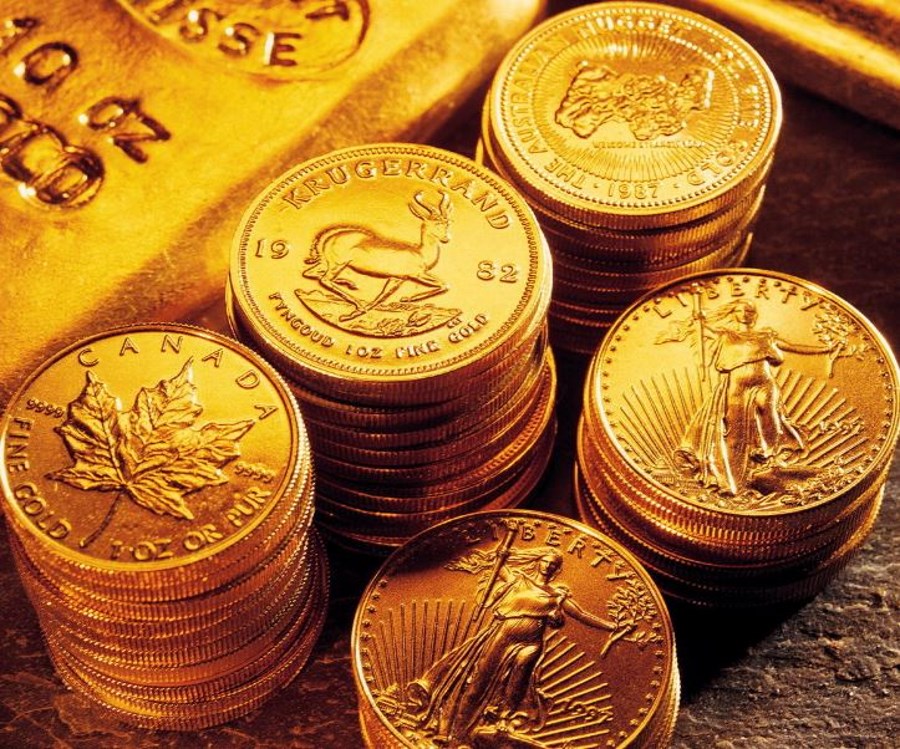
Bullion coins are valued primarily for their gold content. Their price tracks the live spot price of gold, plus a small premium for minting and distribution. They’re produced in big numbers, easy to authenticate, and easy to resell anywhere in the world.
The household names you’ll keep running into:
- American Gold Eagle — 22-karat (91.67% pure), backed by the U.S. Mint, instantly recognizable.
- American Gold Buffalo — 24-karat (.9999 fine), the U.S. Mint’s pure-gold answer to the Eagle.
- Canadian Gold Maple Leaf — .9999 fine, with anti-counterfeit micro-engraving since 2014.
- South African Krugerrand — the original modern bullion coin (1967), 22-karat, deeply liquid.
- Austrian Gold Philharmonic — Europe’s bestseller, .9999 fine, denominated in euros.
- British Gold Britannia — .9999 fine, capital-gains-tax-free in the UK.
- Australian Gold Kangaroo — Perth Mint, .9999 fine, design refreshed annually.
These come in 1 oz, 1/2 oz, 1/4 oz, and 1/10 oz sizes — sometimes smaller. Fractional coins carry slightly higher premiums but give you flexibility when you want to sell in pieces rather than all at once.
2. Numismatic Coins (the collector’s game)
Numismatic coins are graded for rarity, age, condition, and historical context. A 1907 Saint-Gaudens Double Eagle in MS-65 condition isn’t priced like an ounce of gold — it’s priced like a piece of history. Premiums of 50% to several thousand percent over melt value are normal here.
Numismatics can be wildly rewarding if you genuinely know the market. They can also wreck a portfolio if you don’t. For most investors who just want exposure to gold, the honest answer is: stick to bullion. Reach for numismatics only after you’ve handled enough coins to spot the difference between a polished circulated piece and a mint-state one without checking the slab.
Quick rule of thumb: If your goal is “own gold,” buy bullion. If your goal is “build a collection,” that’s a different hobby — and it deserves its own learning curve.

Where Do You Actually Buy Gold Coins?
There are five main routes. Each has trade-offs.
Authorized Bullion Dealers
Certified dealers the kind that work directly with sovereign mints and refineries are the safest entry point for new buyers. You get authenticated coins, transparent premiums, and (usually) a buyback policy when you want to sell. The cost? Slightly higher prices than you’d find on a sketchy classifieds page. That’s the trade and for most people, it’s worth every shilling.
This is the lane Minerals Base Agency operates in. We work directly with East African gold sources and licensed refiners, which means our coins arrive with proper documentation and our prices stay tight to the live spot.
Online Bullion Retailers
Online dealers the bigger names you’ve probably seen are convenient and competitive on price. Useful for comparison shopping. Just check three things before you wire money: independent reviews (Trustpilot, BBB, Google), how long they’ve been trading, and whether their stated premiums actually match the cart price after shipping and insurance. The real cost is rarely the headline number.
A word of caution: eBay, Facebook Marketplace, and Etsy are not the same as a dedicated bullion retailer. Counterfeit Chinese-made “Krugerrands” are a real thing, and they look convincing in photos.
Local Coin Shops
If you live in or near a city with a real coin shop, going in person has real advantages you can hold the coin, weigh it, and walk out with it. The downside: smaller inventory, often higher premiums than online dealers, and many local shops focus on numismatics rather than investment-grade bullion.
Auctions
Auctions (Heritage, Stack’s Bowers, Sotheby’s, regional houses) are where serious numismatic coins change hands. They’re not really the place for plain bullion, and the buyer’s premium usually 15–25% on top of the hammer price — eats into any deal you think you’re getting.
Private Sellers
Sometimes you find a great deal. Often you find a polished problem. If you go this route, get the coin tested (a Sigma Metalytics Verifier or a professional appraisal will confirm the metal in seconds), insist on documentation, and meet in a safe place. Never wire money to someone you can’t verify.
Banks (Region-Dependent)
In Switzerland, Germany, and a handful of other countries, you can still walk into a bank and buy bullion. In Uganda, the U.S., and most of Africa, banks have largely stepped out of physical gold sales — but they remain useful as custodians for safe-deposit storage.
How Do You Buy Gold Coins Safely? A Step-by-Step
Here’s the workflow we recommend to first-time buyers:
1. Decide on a budget and an allocation. Most financial advisors suggest somewhere between 5% and 10% of a portfolio in precious metals. That’s a guideline, not a rule. Start with what you can afford to leave alone for several years.
2. Pick your format. Bullion coin or bar? Coins are easier to sell in small amounts and more recognizable; bars carry slightly lower premiums per ounce. Many investors hold a mix — a few 1 oz coins for liquidity, a few bigger bars for cost efficiency.
3. Choose your dealer. Look for transparent live pricing tied to the spot price, a published buyback policy, real customer reviews, and verifiable physical operations. If a dealer won’t tell you their premium over spot, walk away.
4. Confirm purity, weight, and origin. A genuine bullion coin states its weight (e.g., 1 oz), purity (e.g., .9999 fine gold), and country of issue right on the coin. Reputable mints stamp these clearly.
5. Pay using a secure, traceable method. Bank transfer, escrow, or letter of credit for international orders. Crypto is increasingly accepted but adds complexity. Avoid cash deals over $5,000 unless you’re meeting in a regulated dealer’s office.
6. Inspect on arrival. Check weight on a jeweller’s scale, check dimensions with calipers, and run a magnet test (gold isn’t magnetic). For larger purchases, a Sigma Metalytics Verifier or XRF test is worth the investment.
7. Store smart. A home safe bolted to the floor, a bank safe-deposit box, or an insured private vault — pick one before the gold arrives, not after.
How Minerals Base Agency Fits Into This Picture
Uganda sits in one of the world’s busiest gold corridors. The country is a major refining and export hub for East and Central African gold, and Kampala has become a working trading floor in its own right.
Minerals Base Agency is one of the leading licensed gold sellers and exporters operating from Uganda. Here’s what makes us different from the generic online retailer:
- Direct sourcing. We work with miners and licensed refiners across Uganda, the DRC, and Tanzania. Fewer middlemen means tighter premiums for you.
- Full documentation. Every shipment leaves with assay reports, certificates of origin, and the export paperwork required for international clearance including Kimberley-style chain-of-custody records.
- Multiple formats. Bullion coins, dore bars, refined bars, and rough gold. We also handle related minerals diamonds, copper cathodes, palladium, and platinum.
- Global export experience. Our regular destinations include the UAE, India, Switzerland, Hong Kong, and Turkey. We know the customs paperwork, the freight forwarders, and the secure couriers.
- Transparent pricing. Quotes are tied to the live spot price of gold, with our premium clearly stated up front. No fine print.
If you’re a serious buyer — investor, jeweller, refiner, or institutional client — and you want to source gold coins or bullion at competitive rates from a regulated African operator, that’s exactly the lane we work in. Get in touch.
What Determines the Price You Pay?
A gold coin’s price has two components: the spot price of gold plus a premium. Knowing both is non-negotiable.
The Spot Price
This is the live global market price for one troy ounce of gold (31.1035 grams). It moves continuously during trading hours and reacts to:
- The U.S. dollar’s strength
- Real interest rates
- Inflation expectations
- Central bank buying — which has been historically heavy in 2024–2026
- Geopolitical tension
- ETF inflows and outflows
You can track the spot price in real time on Kitco, the LBMA, or via Minerals Base’s live gold price page.
The Premium
The premium is what the dealer charges over spot to cover minting, distribution, insurance, and margin. Typical ranges:
| Coin Type | Typical Premium Over Spot |
|---|---|
| 1 oz American Gold Eagle | 4–8% |
| 1 oz Canadian Maple Leaf | 3–6% |
| 1 oz South African Krugerrand | 3–5% |
| Fractional 1/10 oz coins | 8–15% |
| Numismatic / graded coins | 50–500%+ |
Premiums spike during periods of high demand and supply shortages — we saw this clearly in early 2020 and again in late 2024 when the U.S. Mint rationed Eagles.
Other Costs Most Guides Skip
- Shipping and insurance: $20–$80 for domestic, more for international.
- Storage fees: 0.4%–1% per year for vaulted gold.
- Sales tax / VAT: Varies by jurisdiction. Uganda, the UK, and Switzerland exempt investment-grade gold from VAT; many U.S. states do too.
- Capital gains tax when you sell, depending on your country of residence.
Authenticity: How to Tell Real Gold Coins From Fakes
Counterfeit coins are getting better. The basic checks still work, though:
- Weight. A 1 oz American Gold Eagle weighs 33.93 g (it contains 1 troy ounce of gold plus a copper-silver alloy). A 1 oz Maple Leaf weighs exactly 31.10 g (.9999 fine). Off by even a fraction? Reject it.
- Dimensions. Diameter and thickness are published by every mint. Calipers don’t lie.
- Magnet test. Gold is non-magnetic. Stainless-steel forgeries fail this immediately.
- The “ping” test. Real gold has a distinctive long, high-pitched ring when struck. Tungsten-cored fakes thud.
- Sigma Metalytics Verifier or XRF. For higher-value purchases, pay a dealer to run a non-destructive metal test. Takes seconds, removes all doubt.
- Third-party grading. Coins slabbed by PCGS or NGC come pre-authenticated and graded.
Buying from a licensed dealer like Minerals Base collapses this checklist — every coin we ship comes with documentation, and we encourage clients to verify on arrival.
Storage: Where Do You Keep Your Gold Coins?
A handful of coins fit in a small safe. A serious holding is a different problem. Three real options:
Home storage. A quality safe (UL TL-15 rated or better), bolted into a concrete floor, in a discreet location. Add a homeowner’s insurance rider that explicitly covers precious metals — your standard policy probably caps coverage at $1,000–$2,500.
Bank safe-deposit box. Inexpensive ($50–$300/year), highly secure, but the contents aren’t insured by the bank or FDIC. You’ll need a separate insurance rider. Access is also limited to bank hours.
Private vaulted storage. Brink’s, Loomis, Malca-Amit, and similar specialist vault operators offer fully insured, allocated storage in major financial centres — Zurich, Singapore, Dubai, Salt Lake City, and London. Annual fees run 0.4%–1% of the metal’s value. This is the route for institutional and high-net-worth holdings.
For Ugandan and East African clients, Minerals Base can advise on regional vaulting options and arrange secure international transport if you’d rather store offshore.
How Much Gold Should You Actually Own?
Different sources give different answers, but the consensus among independent advisors lands somewhere between 5% and 15% of your investable assets. Ray Dalio’s “All Weather” allocation puts gold at roughly 7.5%. Some inflation-focused strategists push it higher. Mainstream financial planners often recommend less.
The case for owning gold in 2026 specifically rests on three pillars:
- Central bank buying. Reserve banks bought roughly 1,000+ tonnes of gold in both 2023 and 2024, well above the long-term average — a strong vote of confidence in the metal.
- Persistent inflation. Real returns on cash and short bonds remain marginal in many economies.
- Geopolitical hedging. The dollar’s reserve dominance is being questioned for the first time in decades.
None of this is investment advice — talk to a qualified advisor before committing meaningful capital. But the structural case for a gold allocation hasn’t been this strong in a generation.
Frequently Asked Questions
What’s the best gold coin to buy for a beginner?
For most first-time buyers, a 1 oz American Gold Eagle, Canadian Gold Maple Leaf, or South African Krugerrand is the right starting point. They’re highly recognizable, easy to resell anywhere in the world, and carry reasonable premiums over spot.
How do you buy gold coins online without getting scammed?
Buy from a long-established dealer with verifiable reviews, transparent pricing tied to the live spot price, a published buyback policy, and a physical address you can confirm. Use traceable payment methods like bank transfer or escrow. Avoid eBay, Facebook Marketplace, and any seller asking for crypto or gift-card payment without a paper trail.
Are gold coins a good investment in 2026?
Gold has had an extraordinary run, hitting record highs in early 2026 before settling. It remains a useful hedge against inflation and currency risk, and central bank demand is structurally strong. Treat it as long-term insurance for a portion of your portfolio (typically 5–15%) rather than a short-term trade.
How much do gold coins cost?
Pricing follows the formula: live spot price of gold × coin weight × (1 + dealer premium). At a spot price of roughly $4,800 per ounce in mid-2026, a 1 oz American Gold Eagle costs approximately $5,000–$5,200 depending on dealer and quantity. Fractional coins cost less per coin but more per ounce of gold content.
Can I buy gold coins in Uganda?
Yes. Minerals Base Agency is a licensed gold seller and exporter based in Kampala, supplying both physical gold and certified coins to local and international buyers. Reach us via the contact page for current pricing and stock.
Do I pay tax when I buy gold coins?
That depends on where you live. Investment-grade gold is VAT-exempt in Uganda, the UK, the EU, Switzerland, and many other jurisdictions. Most U.S. states also exempt monetary metals from sales tax. Capital gains tax may apply when you sell — check with a local tax advisor.
What’s the difference between bullion coins and bars?
Bullion coins are issued by sovereign mints, carry a face value, and tend to be more recognizable and liquid in small denominations. Bars are produced by private refiners, carry no face value, and usually have lower premiums per ounce — which makes them more cost-efficient for larger purchases.
How do I sell gold coins later?
Through a reputable dealer (often the one you bought from, if they offer a buyback program), at auction for numismatic pieces, or to private buyers. Expect a buy/sell spread of roughly 3–8% on common bullion coins and significantly more on collectibles.
Final Word
Buying your first gold coin shouldn’t feel like defusing a bomb. The mechanics aren’t complicated once you separate the genuine concerns (authenticity, premium, storage) from the noise (TV ads, “limited edition” private mintages, panic marketing).
Pick a recognized bullion coin. Buy from a dealer with a track record. Sort out storage before the metal lands. Hold it for years, not weeks.
If you’d like to talk through what makes sense for your situation — or you’re sourcing in volume from East Africa — the Minerals Base team is on the line. We’ve handled enough first-time buyers and seasoned institutional clients to know the difference between a good question and a worried one. Either way, we’re glad to help.