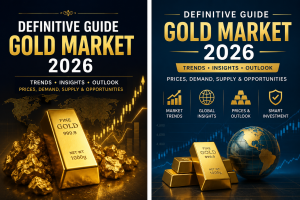
Current Trends in Gold Rates in Dollars
Gold has long been a symbol of wealth and stability. Its value is closely watched by investors worldwide.
Understanding the gold rate in dollars is crucial for anyone involved in financial markets.
Gold prices are influenced by many factors. These include economic conditions, geopolitical events, and currency fluctuations.
The U.S. dollar plays a significant role in determining gold prices. When the dollar weakens, gold often becomes more attractive.
Investors view gold as a safe-haven asset. It provides security during times of economic uncertainty and market volatility.
Recent trends show a growing interest in gold as a hedge against inflation. This has led to increased demand and price fluctuations.
Technological advancements and environmental concerns are also impacting the gold market. These factors contribute to the evolving landscape of gold trading.
In this article, we will explore current trends in gold rates in dollars. We will examine historical movements, influencing factors, and future forecasts.

Understanding Gold Rate in Dollars: Basics and Definitions
The gold rate in dollars represents the price of gold when exchanged against the U.S. dollar. This metric is key for international investors.
Gold is often measured by troy ounces. One troy ounce equals approximately 31.1 grams. It’s a traditional unit in the precious metals market.
The rate fluctuates based on supply and demand. Global economic conditions significantly impact these dynamics.
Several key factors determine the gold rate in dollars:
- Currency strength: A strong dollar often leads to lower gold prices.
- Inflation: Rising inflation can increase gold demand as a hedge.
- Interest rates: Higher rates can reduce gold’s appeal by increasing bond yields.
Gold is priced on commodity exchanges. The most notable is the New York Mercantile Exchange (NYMEX).
The spot price is another critical term. It refers to the current market price at which gold can be bought or sold for immediate delivery.
Futures contracts are agreements to buy or sell gold at a predetermined price on a specific future date. These contracts help in hedging and speculating.
Understanding these basic definitions helps investors make informed decisions. This knowledge is vital for navigating the complex gold market.

Historical Overview: Gold Price Movements in the Dollar Era
The relationship between gold and the dollar has evolved over time. Understanding this helps in predicting future trends.
Historically, gold has been a stable store of value. It often appreciates during economic upheaval.
The gold standard once linked the U.S. dollar directly to gold. This ended in 1971 when the U.S. shifted to fiat currency.
Gold prices surged in the 1970s. Factors included high inflation and political instability. This marked a significant decade for gold.
The 1980s saw a decline in gold prices. Economic stabilization efforts, including high interest rates, played a role.
In the 1990s, gold prices remained relatively flat. Strong economic growth and a strong dollar contributed to this stability.
The financial crisis of 2008 triggered a sharp increase in gold prices. Many investors sought safety in gold.
 by Kelly Sikkema (https://unsplash.com/@kellysikkema)
Gold reached record highs in 2011. The Eurozone crisis and U.S. debt ceiling debates fueled this rise.
Here’s a brief timeline of major gold price movements:
- 1970s: End of the gold standard; prices soar
- 1980s: Economic policies reduce inflation; prices fall
- 1990s: Economic expansion; stable gold rates
- 2008: Global recession; gold reaches new highs
- 2011: Record highs due to global uncertainties
The COVID-19 pandemic again pushed gold prices upward. Uncertainty drove increased demand.
Monitoring historical trends offers valuable insight. This aids in understanding current price movements and future forecasts.
Key Factors Influencing Gold Rate in Dollars
Gold rates in dollars are shaped by a myriad of factors. Understanding these can enhance investment decisions.
Inflation is a core driver of gold prices. When inflation rises, gold often becomes more attractive.
A weak dollar can also boost gold prices. As the dollar falls, gold typically gains.
Geopolitical events, such as wars or political instability, can increase gold demand. Investors view gold as a safe harbor.
Central bank policies significantly impact gold rates. Interest rate changes, for example, can affect the appeal of gold.
Economic growth and recession cycles also play a role. Gold often thrives during economic slowdowns.
Investor sentiment is pivotal. Fear and uncertainty can drive gold buying, while optimism can lead to selling.
Here’s a list of key economic factors that influence gold rates:
- Inflation: Drives gold demand as a hedge
- U.S. Dollar Strength: Inverse relationship with gold prices
- Interest Rates: Higher rates can decrease gold’s appeal
- Economic Cycles: Recessions often boost gold prices
- Geopolitical Tensions: Increase demand for safe-haven assets
Technological advancements have also touched the gold market. These can affect gold mining efficiency and costs.
Gold mining production levels can influence supply, thereby affecting prices. Major discoveries or drops in production make a difference.
 by Zlaťáky.cz (https://unsplash.com/@zlataky)
Jewelry and industrial demand have a steady impact. Countries like India and China have a cultural affinity for gold.
Here’s a list of supply and demand factors:
- Production Levels: Can alter global supply chains
- Jewelry Demand: Cultural influences in key markets
- Technological Uses: Growth in electronics affects demand
- Investment Demand: Varies based on market conditions
- Central Bank Reserves: Policies affect gold purchasing
Global economic policies are often unpredictable. These shifts can create waves in gold pricing.
Trade policies and tariffs can also add volatility. Global supply chain disruptions have been known to impact prices.
Understanding these multifaceted influences provides investors with better forecasting tools. Armed with this knowledge, they can navigate the market more confidently.
Gold Price Today: Live Rates and Recent Fluctuations
Gold prices today exhibit a dynamic nature. They fluctuate due to immediate market responses.
Recent events have caused notable volatility. Political tensions and economic reports often lead to sharp changes.
Live gold rates reflect real-time market perceptions. Investors monitor these rates for quick decision-making.
Digital platforms now provide instant updates on gold prices. This real-time information aids timely investment.
Here’s a quick list of what can affect daily gold prices:
- Economic News Releases: Impact market expectations
- Geopolitical Developments: Influence investor sentiments
- Monetary Policy Announcements: Central bank actions can trigger shifts
- Currency Movements: Particularly the U.S. dollar’s strength or weakness
Although influenced by global factors, gold is also impacted by regional economic trends. Emerging markets can notably affect demand.
Daily fluctuations present both opportunities and challenges. Traders often seek to capitalize on short-term price changes.
Long-term investors focus more on overall trends. They look beyond day-to-day fluctuations for future growth potential.
 by Scottsdale Mint (https://unsplash.com/@scottsdalemint)
Market participants vary in response to gold price changes. Some react quickly to capitalize on market swings.
In contrast, others remain patient, focusing on strategic asset allocation.
Each investor’s goals may dictate their approach. They balance short-term gains with long-term strategies.
Understanding these fluctuations is key. It helps in managing risk and maximizing returns.
Staying informed on global news and economic indicators is vital. This knowledge aids in interpreting daily price movements effectively.
Ultimately, monitoring live gold rates enables informed trading and investment decisions. Investors continue to adapt to an ever-changing market.
The Relationship Between Gold and the US Dollar
Gold and the US dollar share a complex relationship. This bond influences each other significantly.
When the dollar weakens, gold prices usually increase. This inverse relationship occurs because gold becomes cheaper in other currencies.
Conversely, a strong dollar often leads to lower gold prices. It makes gold more expensive for foreign investors.
Several factors contribute to these movements. Monetary policy, inflation rates, and economic stability play key roles.
Central banks’ actions can alter this balance. Interest rates directly affect currency strength and, consequently, gold prices.
Here’s a breakdown of key factors impacting this relationship:
- Inflation Expectations: Higher inflation often boosts gold prices
- Interest Rates: Lower rates can weaken the dollar, favoring gold
- Economic Data: Positive news strengthens the dollar, impacting gold
- Global Financial Events: Crisis situations can sway investor preferences
Geopolitical events also contribute significantly. During crises, gold often attracts safe-haven demand, shifting its relationship with the dollar.
The historic Bretton Woods system linked gold and the dollar. Though this system ended, it set the stage for today’s dynamics.
Investors view gold as a hedge against dollar devaluation. This perception remains strong despite currency market changes.
Understanding this relationship requires vigilance. Gold and dollar price dynamics are subject to rapid changes.
Long-term investors keep this interplay in focus. They use it to hedge portfolios and mitigate risk.
Ultimately, strategic decisions hinge on these factors. This requires an informed understanding of global economic conditions.
In all, the gold-dollar relationship is pivotal for investors. It remains a cornerstone of strategic financial planning.
Recognizing these patterns helps investors navigate market complexities effectively. They’re able to anticipate and respond to shifts proficiently.
Gold as a Safe-Haven Asset: Economic Uncertainty and Market Volatility
Gold holds a unique position in the investment landscape. Often dubbed a “safe-haven asset,” it attracts investors during turbulent times.
Economic uncertainty frequently drives gold demand. When stock markets stumble, many turn to gold for stability.
Periods of market volatility often coincide with rising gold prices. Investors seek security and wealth preservation in gold.
Global crises amplify gold’s appeal. Pandemics, wars, and political unrest typically boost its demand.
Several factors contribute to gold’s safe-haven status:
- Liquidity: Easily bought and sold in global markets
- Tangible Asset: A physical, real form of wealth
- Inflation Hedge: Protects against currency devaluation
- Long-Term Store of Value: Historically retains value over time
 by Zlaťáky.cz (https://unsplash.com/@zlataky)
Central banks also rely on gold reserves during crises. This institutional trust underscores its enduring appeal.
Investor sentiment plays a crucial role. Perceptions of gold’s stability fuel higher demand amidst fears.
Despite digital alternatives, gold remains a trusted refuge. It’s viewed as immune to cyber threats and technological risks.
In recent decades, gold has acted as a hedge against economic crises. Its stable track record offers comfort to investors.
As market conditions fluctuate, gold’s importance persists. This safe haven helps investors weather financial storms.
Indeed, gold continues to serve as a reliable anchor. It provides security in unpredictable economic climates.
Gold Price Forecast: Expert Predictions and Analytical Models
Predicting gold prices involves complex analysis. Experts use various models to forecast future trends.
Economic indicators play a vital role in these predictions. Inflation rates, interest rates, and GDP growth are key factors.
Analysts also consider global political climates. Geopolitical tensions can significantly impact gold markets.
Historical data provides insights into potential price movements. Past patterns help forecast future market behavior.
Two common approaches in gold price forecasting are:
- Technical Analysis: Examines price charts and trends
- Fundamental Analysis: Evaluates economic data and market factors
 by Planet Volumes (https://unsplash.com/@planetvolumes)
Technical analysts rely on indicators like moving averages and oscillators. These tools identify potential entry and exit points.
Fundamental analysts monitor macroeconomic shifts. They track central bank policies and currency fluctuations.
Investment banks and financial institutions provide forecasts. They issue regular reports that influence market sentiment.
Experts warn against relying solely on predictions. Forecasts can fluctuate due to unforeseen economic developments.
Tools like machine learning are enhancing prediction accuracy. Advanced algorithms analyze vast datasets for deeper insights.
The diversity of forecasting models adds depth to predictions. Each approach offers unique perspectives on market trajectories.
Investors should consider multiple forecasts before acting. A well-rounded view aids informed decision-making.
Despite advanced models, predictions remain speculative. Uncertainty is inherent in gold markets, demanding cautious optimism.
Overall, expert forecasts serve as valuable guides. They help investors navigate the complexities of the gold market.
The Role of Central Banks and Monetary Policy in Gold Pricing
Central banks significantly influence gold prices. Their policies directly affect economic stability and currency values.
Monetary policy decisions such as interest rate adjustments have major impacts. Lower rates often increase gold demand as it becomes an attractive investment relative to yielding assets.
 by Zlaťáky.cz (https://unsplash.com/@zlataky)
Inflation is another factor central banks strive to control. High inflation rates usually lead to higher gold prices as investors seek value preservation.
Central banks hold large gold reserves, playing a crucial role in maintaining gold’s value. Changes in these reserves can influence market perceptions.
Their buying or selling activities send signals to investors about economic conditions. For example, increased buying may suggest looming economic uncertainty.
Key ways central banks impact gold prices include:
- Adjusting Interest Rates: Influencing borrowing costs
- Managing Inflation: Maintaining monetary stability
- Currency Interventions: Affecting exchange rate dynamics
Policymakers aim for economic growth while keeping inflation in check. This balancing act often affects gold markets’ stability.
The Federal Reserve, European Central Bank, and others have policy meetings closely watched by investors. Their decisions can cause short-term volatility in gold prices.
Understanding central banks’ motives and actions helps investors anticipate potential impacts on gold. Analyzing these factors provides insights into the broader economic picture.
Overall, while central banks don’t directly set gold prices, their policies shape the economic landscape. This influence indirectly drives gold market trends.
Global Demand and Supply: Impact of Major Gold Consumers and Producers
The global gold market is a complex network driven by supply and demand forces. Two major players in this space are consumers and producers.
Countries like China and India lead in gold consumption. Their cultural and economic activities heavily influence global demand trends.
 by 3D Render (https://unsplash.com/@3drender)
In these regions, gold is favored for both investment and jewelry. This dual-purpose role amplifies its consumption levels.
Producers, on the other hand, play a crucial role in supply dynamics. Nations like Australia and South Africa are significant gold producers.
These countries’ mining outputs help meet international demand. Production levels can vary due to several factors including mining costs and regulatory changes.
Key elements affecting global gold supply and demand include:
- Cultural Significance: Impact on consumption in key markets
- Economic Growth: Driving purchasing power for gold
- Technological Advancements: Improving mining efficiency
Production costs and environmental policies also shape supply. Sometimes, political instability in producing regions disrupts gold output.
Consumer behavior changes with global economic trends. For instance, during economic downturns, demand for investment gold often rises.
Balancing these factors helps determine gold prices on the global stage. Awareness of how these dynamics interplay is crucial for investors and economists alike.
Ultimately, understanding the nuances of gold supply and demand is vital for navigating the intricacies of the gold market. This awareness assists stakeholders in making informed decisions.
Technological and Environmental Trends Affecting Gold Markets
Advancements in technology are reshaping the gold industry. Innovations in mining and processing have enhanced efficiency, resulting in reduced costs.
Technological improvements have also bolstered gold extraction methods. This leads to more sustainable and effective operations.
 by Annie Spratt (https://unsplash.com/@anniespratt)
Moreover, digital transformation influences trading platforms. Online exchanges have made gold trading more accessible to a broader audience.
Environmental concerns are increasingly significant. The gold industry faces scrutiny over its ecological footprint and sustainability practices.
Stringent regulations are driving companies to adopt greener technologies. Innovations in waste management and energy use are gaining traction.
Key technological and environmental impacts include:
- Mining Efficiency: Improved extraction and processing techniques
- Digital Trading: Enhanced accessibility and market reach
- Sustainability: Focus on reducing environmental impact
The integration of automation and AI in mining optimizes operations. This transformation aims to minimize human impact and environmental degradation.
Additionally, there’s a growing emphasis on ethical sourcing. Consumers are pushing for transparency in the gold supply chain.
As these trends evolve, they shape the future landscape of the gold market. Balancing technological progress with environmental responsibility remains crucial. This equilibrium helps ensure the industry’s long-term viability and appeal.
Gold Investment Vehicles: Physical Gold, ETFs, and Digital Gold
Investors have various options for gold investments. Each vehicle offers unique benefits and risks.
Physical gold remains a popular choice. It includes bars, coins, and jewelry that provide tangible assets.
 by Joey Dean (https://unsplash.com/@joeydean)
Holding physical gold requires secure storage. This often involves additional costs, such as insurance and safekeeping.
Exchange-Traded Funds (ETFs) offer an alternative. These funds trade on stock exchanges and track gold prices.
ETFs provide liquidity and ease of entry. They are accessible through standard brokerage accounts without dealing with physical gold storage.
A newer option is digital gold. It enables investments through online platforms with fractional ownership.
Digital gold offers flexibility and lower transaction costs. It appeals to tech-savvy investors seeking convenience and modernity.
Key gold investment vehicles include:
- Physical Gold: Bars, coins, and jewelry
- ETFs: Managed funds on stock markets
- Digital Gold: Online platforms for fractional ownership
Investment choices depend on individual needs and risk tolerance. Understanding each type’s characteristics aids strategic decision-making.
Diverse investment vehicles allow adaptation to market conditions. They cater to the preferences and goals of varied investors.
Gold in Portfolio Diversification and Wealth Preservation
Gold plays a crucial role in diversifying investment portfolios. Its value behaves differently compared to stocks or bonds. This distinction helps reduce overall risk.
 by Scottsdale Mint (https://unsplash.com/@scottsdalemint)
During economic downturns, gold often retains or increases its value. This makes it a reliable asset for wealth preservation.
Investors use gold to safeguard against currency devaluation. Gold’s global recognition solidifies its position as a stable asset.
Incorporating gold into a portfolio provides a safety net. It buffers against unexpected market volatility and financial uncertainty.
Key benefits of gold in portfolios include:
- Diversification: Offsets declines in other assets
- Wealth Preservation: Maintains value during economic downturns
- Inflation Hedge: Protects purchasing power
Allocating a portion of assets to gold is common in strategic planning. It is a method to balance and secure long-term financial stability.
Gold remains a fundamental choice for those seeking refuge from unpredictable financial markets. It serves as a hedge, assuring resilience in challenging times.
Comparing Gold with Other Precious Metals and Commodities
Gold is often compared with other precious metals like silver and platinum. Each metal offers distinct investment opportunities and risks.
Silver is more volatile than gold due to its industrial uses. Its price swings can be sharper, but it often tracks gold’s movements.
Platinum, rarer than gold, is subject to different supply dynamics. Its value can be influenced more by geopolitical events affecting its sources.
When comparing gold to commodities like oil, the dynamics change. Gold is a store of value, while commodities are essential goods.
Key comparisons with metals and commodities:
- Silver: High volatility, industrial demand
- Platinum: Rarity, geopolitical influences
- Oil: Essential good, not a store of value
Overall, gold offers stability compared to other metals and commodities. Its role as a hedge remains a primary reason for investment. Diversifying with metals considers factors like risk and economic conditions.
Regional and Cultural Influences on Gold Rate Trends
Gold holds significant cultural and historical value across regions. This influences demand and consequently affects gold rates globally.
In India, gold is an integral part of cultural festivals and weddings. This drives seasonal demand spikes, influencing price trends during specific periods.
China, as a major consumer, affects the global gold market. Economic developments and consumer behavior in China can lead to significant shifts in demand.
In the Middle East, gold is both an investment and a cultural symbol. It often moves in relation to oil prices and regional economic stability.
Key cultural and regional impacts:
- India: Festive and wedding season spikes
- China: Economic growth and jewelry demand
- Middle East: Oil price correlation and symbolism
These cultural elements underscore the complexity of gold pricing. Understanding regional nuances is crucial for predicting shifts in gold rates.
The Future of Gold: Digitalization, Blockchain, and New Market Dynamics
The gold market is evolving with digital technology. Innovations such as blockchain introduce transparency and efficiency in gold trading.
 by Traxer (https://unsplash.com/@traxer)
Blockchain technology enhances traceability of gold. This not only reduces fraud but also boosts investor confidence in the gold market.
Digital platforms simplify access to gold investments. They allow individuals to invest in fractional amounts, broadening market participation.
Key dynamics in the future of gold:
- Blockchain: Enhances transparency and security
- Digital platforms: Increase accessibility and participation
- Fractional investments: Lower barriers for investors
These technological changes are reshaping traditional gold markets. As digital tools become more integrated, they promise to redefine how gold is traded and valued.
Conclusion: Navigating the Evolving Landscape of Gold Rates in Dollars
The gold market continues to adapt to global changes. Understanding its dynamics is essential for navigating this evolving landscape effectively.
Economic factors remain pivotal in influencing gold rates. As the global economy shifts, so do the forces that drive gold prices.
Technological advancements are steadily reshaping gold investments. Innovations like blockchain and digital trading platforms provide new opportunities and challenges.
Investors should consider various strategies for engaging with the gold market. Diversifying portfolios and staying informed are key to maximizing benefits.
Ultimately, the gold market presents both stability and potential. Whether for hedging against risk or for diversification, gold remains a crucial asset.
Q&A
Question: Why do gold prices often rise when the U.S. dollar weakens?
Short answer: Gold and the U.S. dollar typically move in opposite directions because gold is priced in dollars. When the dollar weakens, gold becomes cheaper for buyers using other currencies, often boosting global demand. A softer dollar can also reflect expectations of lower interest rates or higher inflation—both conditions that tend to increase gold’s appeal as a store of value and hedge, amplifying safe-haven demand.
Question: What’s the difference between the spot gold price and gold futures, and who uses each?
Short answer: The spot price is the current market price for immediate delivery of gold, commonly quoted per troy ounce. Futures are contracts to buy or sell gold at a predetermined price on a future date, traded on commodity exchanges like NYMEX. Spot prices guide immediate transactions and retail investment reference points, while futures are widely used by traders and institutions for hedging price risk or speculating on future movements.
Question: How do central bank policies and interest rates influence the gold rate in dollars?
Short answer: Central banks affect gold primarily through interest rate decisions and inflation management. Higher interest rates raise yields on interest-bearing assets and can strengthen the dollar, often reducing gold’s relative appeal. Conversely, lower rates and rising inflation expectations tend to support gold demand. Central banks’ own gold reserve purchases or sales also signal their economic outlook, influencing investor sentiment and prices.
Question: Beyond macroeconomics, which supply and demand forces shape gold prices globally?
Short answer: Physical supply is driven by mining output, which can shift with production costs, technology, regulations, and political stability in producing countries. On the demand side, jewelry and investment needs in key markets like India and China are pivotal, with cultural seasons and income growth affecting buying. Industrial and technological uses, investment flows, and central bank reserve policies further tilt the balance, adding variability to prices.
Question: What are the main ways to invest in gold, and how do they compare?
Short answer: Investors commonly choose among physical gold (bars, coins, jewelry), ETFs that track gold prices, and digital gold via online platforms. Physical gold offers tangible ownership but requires secure storage and may involve insurance costs. ETFs provide liquidity and ease of access through brokerage accounts without handling storage. Digital gold enables fractional ownership and low transaction frictions, appealing to investors seeking convenience and accessibility. The right choice depends on your goals, risk tolerance, and preference for custody and liquidity.