How Heavy Is a Bar of Gold? Everything You Need to Know
If you’ve ever held a gold bar in your hands or even just watched a heist movie you already know one thing: gold is heavy. But exactly how heavy is a bar of gold? The answer isn’t as simple as a single number. Gold bars come in a surprising range of sizes, and each one tells a different story depending on who made it, where it’s going, and why.
At Minerals Base Agency, Uganda’s foremost gold seller and exporter, we work with gold every single day. Our team sources, refines, and exports gold bars of varying weights to international buyers, central banks, and institutional investors around the world. So when we tell you about gold bar weights, we’re not reading from a textbook, we’re speaking from direct, hands-on experience in the African gold trade.
This guide will walk you through everything: standard weights, types of bars, influencing factors, and what to look for when buying gold. Whether you’re a first-time investor or a seasoned bullion buyer, you’ll leave here knowing exactly how to evaluate a gold bar by its weight.
What Is the Standard Weight of a Gold Bar?
Let’s start with the most commonly asked question.
The standard gold bar weight recognized internationally is 400 troy ounces, which works out to roughly 12.4 kilograms or about 27.4 pounds. This is the size used by central banks, the London Bullion Market Association (LBMA), and major financial institutions for global settlement and storage.
But here’s what most people don’t realize: that 400-troy-ounce bar is just one standard. In everyday investing and trading, you’ll encounter gold bars in a wide spectrum of sizes from bars so small you could lose them in a pocket, to bars heavy enough to require two hands.
💡 Minerals Base Agency exports gold bars in multiple formats to meet the diverse needs of international buyers. Whether you’re looking for 1-gram investment pieces or full Good Delivery bars, we have certified, verified stock ready for export from Uganda.
Gold Bar Weight Chart: All Types at a Glance
Here is a breakdown of the most common gold bar types and their weights both in troy ounces and grams:
| Gold Bar Type | Weight (Troy Ounces) | Weight (Grams) | Common Use |
|---|---|---|---|
| 1 Gram Bar | 0.032 oz | 1 g | Entry-level investing, gifts |
| 2.5 Gram Bar | 0.08 oz | 2.5 g | Retail investment |
| 5 Gram Bar | 0.16 oz | 5 g | Retail investment |
| 10 Gram Bar | 0.32 oz | 10 g | Retail / personal saving |
| 1 Ounce Bar | 1 oz | 31.1 g | Most popular retail bar |
| 10 Ounce Bar | 10 oz | 311 g | Mid-level investors |
| Kilo Bar | 32.15 oz | 1,000 g | Institutional & commercial |
| 100 Ounce Bar | 100 oz | 3,110 g | Wholesale buyers |
| Good Delivery Bar | 350–430 oz | 10.9–13.4 kg | Central banks, LBMA trading |
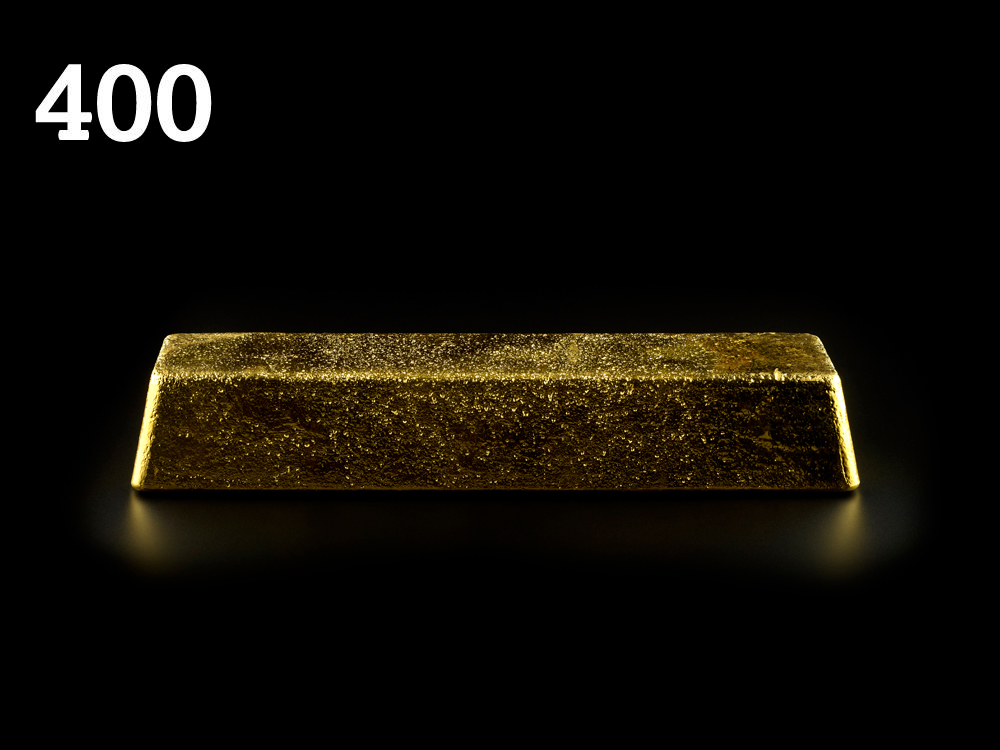
How Heavy Is a Standard Gold Bar You See in Movies?
That iconic image a rectangular gold block sitting in a vault or being carried in a bag is almost always what’s called a London Good Delivery bar. It’s the global standard, and here’s what it looks like in real life:
- Weight: Between 350 and 430 troy ounces (accepted range by the LBMA)
- Most common actual weight: Around 400 troy ounces (12.4 kg)
- Equivalent in everyday terms: About the weight of a large car battery, or slightly heavier than a bowling ball
To put it plainly: if you picked up one of these bars, you’d feel it instantly. Most adults would struggle to hold one for more than a few seconds with a single hand. These are not light objects and that weight is exactly what gives them their value.
At Minerals Base Agency, we regularly export LBMA-standard gold bars from Uganda to buyers across Europe, the Middle East, and Asia. Each bar we export comes with full documentation, including an assay certificate, chain of custody, and origin certification.
What Factors Affect How Heavy a Gold Bar Is?
This is where it gets interesting. Not every gold bar of the same “size” weighs exactly the same. Several variables come into play:
1. Purity Level
Gold purity is measured in “fineness,” which is the percentage of pure gold. A bar stamped 999.9 fine is 99.99% pure gold, while a bar at 995 fine (also acceptable for Good Delivery) has slightly more alloy content.
Because pure gold (24 karat) is denser than most alloying metals like silver or copper, a higher-purity bar will actually weigh slightly more per unit of volume. When you’re dealing at the institutional level like Minerals Base Agency does these differences matter.
2. Dimensions and Shape
Cast bars (also called minted or poured bars) and stamped bars can have slightly different dimensions even at the same listed weight. Cast bars tend to have minor surface irregularities that can affect total weight, while minted bars are more uniform.
A good rule: always verify the weight by assay, not just by visual inspection.
3. Manufacturing Method
Gold bars are made in two main ways:
- Cast/poured bars: Molten gold poured into molds. These are slightly rougher in finish and can vary marginally in weight.
- Minted bars: Machine-cut from a flat sheet of gold to precise specifications. These have tighter weight tolerances.
At Minerals Base Agency, our exported gold meets strict weight and purity documentation requirements under Ugandan and international export protocols.
🖼️ IMAGE PLACEMENT #2
Suggested Image: Gold pouring / gold refinery process
Search Term: "gold bar casting pouring refinery Uganda Africa"
Alt Text: Gold bar manufacturing process — cast versus minted gold bar comparison
Caption: Cast and minted bars differ slightly in weight tolerances. Always request an assay certificate from your gold supplier.
The Troy Ounce: Why Gold Uses a Different Unit
One thing that confuses a lot of buyers is the troy ounce. When you see a “1 oz gold bar,” that’s not the same as the ounce you’d use to weigh flour.
- 1 troy ounce = 31.1035 grams
- 1 regular (avoirdupois) ounce = 28.35 grams
The troy ounce is the standard unit for all precious metals worldwide gold, silver, platinum, and palladium. So a 400 troy ounce bar weighs:
400 × 31.1035 = 12,441 grams = approximately 12.4 kilograms
This isn’t just trivia. Understanding the difference between a troy ounce and a regular ounce is essential before you buy it protects you from mispriced or misrepresented bars.
How Heavy Is a Kilo Gold Bar?
The 1-kilogram gold bar (also called a kilo bar) is one of the most popular sizes among serious investors and traders. Here are its specs:
- Weight: 1,000 grams exactly
- In troy ounces: 32.15 troy oz
- Dimensions (approx.): 115 mm × 53 mm × 8.5 mm
- Approximate value: Depends on current spot price; typically in the $90,000–$100,000+ USD range per bar
Kilo bars strike a balance between the tiny 1-oz bars (easy to store, lower entry price) and the massive Good Delivery bars (high value, harder to trade in pieces). They’re a preferred choice for high-net-worth individuals, family offices, and mid-size investors.
Minerals Base Agency offers kilo bar exports with full documentation for verified buyers through our procurement process.
How Heavy Is the Smallest Gold Bar?
At the other end of the spectrum, the smallest commercially produced gold bars start at just 1 gram about the weight of a small paperclip.
For context:
- 1 gram = 0.032 troy ounces
- About the size of a thumbnail
- Ideal for gifting, small savings, or introducing someone to physical gold investing
These mini bars are often sold in plastic assay cards with serial numbers and purity stamps. They’re legitimate investment products, but their per-gram price is usually higher because of manufacturing and packaging overhead.

Can You Fake the Weight of a Gold Bar?
This is one of the most important questions a gold buyer can ask and the answer is: yes, it has happened.
Counterfeit gold bars are real. Some common fraud methods include:
- Tungsten cores: Tungsten has almost the same density as gold, making a tungsten-filled bar pass simple weight tests
- Gold-plated lead: Lead-filled bars coated in real gold
- Shaving: Genuine bars with gold removed from the sides or base
This is exactly why Minerals Base Agency provides full assay documentation and chain-of-custody certificates for every bar we export. We encourage all buyers to request independent verification through an accredited assayer before completing any significant gold transaction.
🏢 Buy verified, certified gold bars directly from Minerals Base Agency — Uganda’s leading gold exporter. Every shipment comes with documented provenance, purity assay, and export clearance. Contact us here.
Why Uganda? The African Gold Advantage
Uganda sits on some of the richest mineral deposits on the African continent. The country’s gold output both artisanal and large-scale feeds into a growing formal export market that Minerals Base Agency has been a part of since its founding.
Buying from a Uganda-based exporter like Minerals Base Agency comes with several distinct advantages:
- Source transparency: We deal directly with licensed Ugandan miners and cooperatives
- Competitive pricing: African gold often trades closer to spot price with lower premiums
- Export compliance: We operate under Uganda’s regulatory framework with proper licensing
- Dedicated procurement team: Our team handles the full export process, from assay to final delivery
If you’re looking to source gold bars directly from Africa with verified documentation and reliable logistics, Minerals Base Agency is your partner.
Frequently Asked Questions: How Heavy Is a Bar of Gold?
How heavy is a standard bar of gold?
A standard gold bar officially called a London Good Delivery bar weighs between 350 and 430 troy ounces, with 400 troy ounces (12.4 kg) being the most common actual weight. This is the format used by central banks and traded on the LBMA.
How heavy is a gold bar in pounds?
A 400 troy ounce gold bar weighs approximately 27.4 pounds. A 1-kilogram kilo bar weighs about 2.2 pounds.
How heavy is a gold bar in kg?
The standard Good Delivery bar weighs approximately 12.4 kg. Kilo bars weigh exactly 1 kg.
Do all gold bars weigh the same?
No. Gold bars range from 1 gram to 400+ troy ounces. Weight varies by bar type, purity, and manufacturing method. Always verify weight with an assay certificate from a certified laboratory.
Why is gold measured in troy ounces?
The troy ounce is an ancient unit of measurement for precious metals, still used universally in the gold trade today. One troy ounce equals 31.1 grams slightly heavier than a standard avoirdupois ounce.
Where can I buy certified gold bars in Uganda?
Minerals Base Agency is Uganda’s leading gold seller and exporter. We supply certified gold bars in multiple weights to international buyers, with full documentation and export compliance. Contact our team here.
Final Thoughts: Weight Is Just the Beginning
Understanding how heavy a bar of gold is gives you a foundation but it’s just the start. Real gold investment comes down to three pillars: weight, purity, and provenance. Get all three right, and you’ve got an asset that has held its value for thousands of years.
At Minerals Base Agency, we don’t just tell you how heavy gold bars are we put certified, documented, export-ready gold in your hands. From artisanal mining communities in Uganda to institutional buyers across the globe, we are the trusted link between African gold and international markets.
Interested in purchasing or investing in gold? Reach out to Minerals Base Agency today and let our experts guide you through the process transparently, professionally, and at competitive pricing.