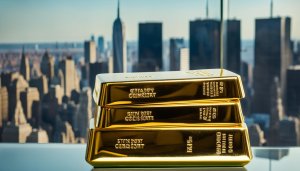
Graph of Price of Gold
The price of gold has fascinated investors, economists, and historians alike for decades. Gold is not only a precious metal used in jewelry and technology but also a key financial asset that can influence economic policies and investment strategies. Understanding how gold prices fluctuate over time is essential for anyone interested in the financial markets. In this article, we will explore the gold market through various graphs and analyses. 
Gold prices are influenced by a multitude of factors including geopolitical tensions, inflation rates, currency values, and changes in supply and demand. By examining the trends, we can gain insights into how these factors impact gold prices.
Summary
This article examines gold price movements across 5-, 10-, 20-, and 100-year horizons, linking trends to macro drivers such as geopolitics, inflation, currency shifts, and crises. It emphasizes gold’s resilience as a safe-haven and inflation hedge, offers an INR-focused regional view for Indian investors, and compares gold with silver. It also outlines basic analytical tools and frames a cautious forecast guided by central bank policy, global growth, and FX dynamics.
Gold Price Graph Over the Last 5 Years
In the past five years, the price of gold has experienced significant fluctuations. The global pandemic, economic uncertainty, and changes in demand have all played a part in shaping the gold price graph. During this period, gold reached a record high in August 2020, driven by economic instability and a rush to safe-haven assets.
Gold Price Graph Over the Last 10 Years

Over the last decade, the gold price graph reveals a broader picture of economic cycles. The period from 2011 to 2013 saw gold prices at their peak, followed by a decline until 2015. This was largely due to the recovery of global economies post-recession. The graph then shows a steady increase from 2016 onwards, emphasizing gold’s role as a hedge against inflation and currency devaluation.
Gold Price Graph Over the Last 20 Years
Examining the gold price movement over the last 20 years provides even more context to its historical significance. The early 2000s saw relatively stable prices, but as the global economy faced financial crises, gold prices surged. The 2008 financial crisis, for example, led to an increase in gold prices as investors sought stability in uncertain times.
Historical Gold Price Graph: A 100-Year Perspective
When analyzing a gold price graph over the last 100 years, we observe significant events that have shaped the market. The abandonment of the gold standard in the early 1970s is a pivotal moment, causing gold prices to skyrocket as they were no longer pegged to the US dollar. 
by LSE Library (https://unsplash.com/@londonschoolofeconomics)
The graph also illustrates the impact of geopolitical events, such as wars and economic sanctions, which often result in increased gold demand. The long-term analysis shows that gold remains a resilient asset, often thriving during periods of economic uncertainty.
Gold Price in INR: A Regional Perspective
For investors in India, understanding the gold price graph in INR (Indian Rupees) is crucial. India’s cultural and economic ties to gold make it a significant player in the global gold market. The INR graph reflects both global trends and local factors such as import duties and currency fluctuations.
Gold and Silver Price Graph
Gold and silver often move in tandem due to their status as precious metals, yet they can also exhibit different trends based on industrial demand and market speculation. Comparing their price graphs can provide insights into broader market conditions and investor sentiment.
Analyzing Gold Price Data
Data analysis is key to understanding gold price trends. By examining historical data, investors can identify patterns and make informed predictions about future movements. Tools like moving averages, trend lines, and volume analysis are commonly used to interpret gold price data.
Gold Price Forecast
While predicting the exact future price of gold is challenging, analyzing past trends and current economic indicators can help form a forecast. Factors such as central bank policies, global economic growth, and currency fluctuations will continue to play significant roles in determining the direction of gold prices.
Conclusion: The Ever-Evolving Gold Market
The gold market is dynamic, with prices influenced by a myriad of global factors. By studying gold price graphs over different time frames, investors can better understand market trends and make informed decisions. Whether you’re looking at a 5-year graph or a 100-year historical chart, gold’s allure as a store of value remains undiminished. For those interested in the financial markets, staying updated with the latest gold price updates and analyses is essential.
Understanding these trends can not only aid in investment decisions but also provide a broader perspective on global economic health. As we continue to navigate uncertain economic climates, gold will likely remain a key player in the world of finance. 
by rupixen (https://unsplash.com/@rupixen)
Q&A
Question: What are the main factors that influence gold prices? Short answer: Gold prices move with shifts in geopolitics, inflation, currency values, and supply–demand dynamics. Periods of tension or crisis tend to boost safe-haven demand, while inflation and currency depreciation often increase gold’s appeal as an inflation hedge. Broader policy and economic backdrops—like central bank decisions, global growth, and FX movements—also shape the direction of prices.
Question: What stands out in the 5-year and 10-year gold price trends? Short answer: Over the last five years, gold saw sharp swings, with a record high in August 2020 as investors sought safety during the pandemic. Across the last decade, prices peaked around 2011–2013, fell into 2015 amid post-recession recovery, then trended higher from 2016, highlighting gold’s role against inflation and currency devaluation.
Question: Why is the long-term (20- and 100-year) view of gold important? Short answer: A 20-year lens shows gold’s surge during crises—such as the 2008 financial shock—when investors prioritize stability. Over 100 years, structural shifts like the early-1970s abandonment of the gold standard unleashed major repricing, and recurring geopolitical events (wars, sanctions) consistently lifted demand. The long view underscores gold’s resilience in uncertainty.
Question: How should Indian investors interpret gold prices in INR? Short answer: INR-denominated prices reflect global gold trends as well as local forces like import duties and currency fluctuations. Given India’s strong cultural and economic ties to gold, tracking the INR chart helps investors connect global movements to domestic purchasing power and costs.
Question: What tools and signals can help analyze and cautiously forecast gold? Short answer: Basic techniques—moving averages, trend lines, and volume analysis—help identify patterns and momentum. While precise predictions are difficult, a prudent outlook monitors central bank policy, global growth prospects, and currency dynamics, recognizing gold’s ongoing role as a safe-haven and inflation hedge.