Gold One Ounce Coins: Buy Direct from Uganda’s Leading Gold Exporter
When investors talk about owning wealth they can actually hold in their hands, gold one ounce coins almost always come up. There’s a good reason for that. A single ounce of pure gold, struck by a recognised mint and stamped with a sovereign design, is one of the most portable and globally accepted forms of money ever created.
At Minerals Base Agency, we’ve been supplying gold to buyers around the world from our base in Kampala, Uganda for years now. One ounce gold coins remain among our most requested products. Whether you’re a first-time buyer protecting your savings or a seasoned trader topping up a bullion portfolio, this page walks you through what you need to know — and how to buy from a source you can actually trust.
Why Buy Gold One Ounce Coins from Minerals Base Agency
Uganda sits right at the heart of East Africa’s gold trade, and Minerals Base Agency has built its name as one of the country’s most reliable gold sellers and exporters. We work directly with licensed artisanal miners, certified refineries, and trusted regional partners. That means our clients skip the middlemen and pay fairer prices.
Here’s what sets us apart from the rest:
- Direct sourcing from Ugandan and regional mining cooperatives
- Certified purity backed by assay reports and full chain-of-custody documentation
- Worldwide export experience — Dubai, Switzerland, India, Hong Kong, Europe, and beyond
- Live-spot pricing rather than inflated retail markups
- Discreet, insured logistics with experienced handling at every stage
If you’ve been searching for a dependable way to buy 1 oz gold coins from Africa, or simply want to deal with a transparent gold dealer, our team is ready to talk pricing, paperwork, and shipping today.
What Exactly Is a Gold One Ounce Coin?
A gold one ounce coin contains exactly one troy ounce of gold — 31.1035 grams, which is slightly heavier than the standard ounce you might weigh sugar with. Most modern bullion coins are minted to either .999 or .9999 fineness, meaning they’re almost completely pure gold, with tiny traces of other metals sometimes added for hardness.
The value of these coins is mostly anchored to the live gold spot price, but two extras can lift it higher:
- A mint premium, which covers production, distribution, and dealer margins
- A numismatic premium for older, rarer, or limited-edition coins that collectors fight over
So when you buy gold one ounce coins, you’re getting two things at once: a known weight of pure gold, plus a small piece of monetary history.
The Most Popular Gold One Ounce Coins We Supply
Not every bullion coin is created equal. A handful dominate the global market thanks to their purity, recognition, and easy resale. These are the ones our clients ask for most.
1. American Gold Eagle (1 oz)
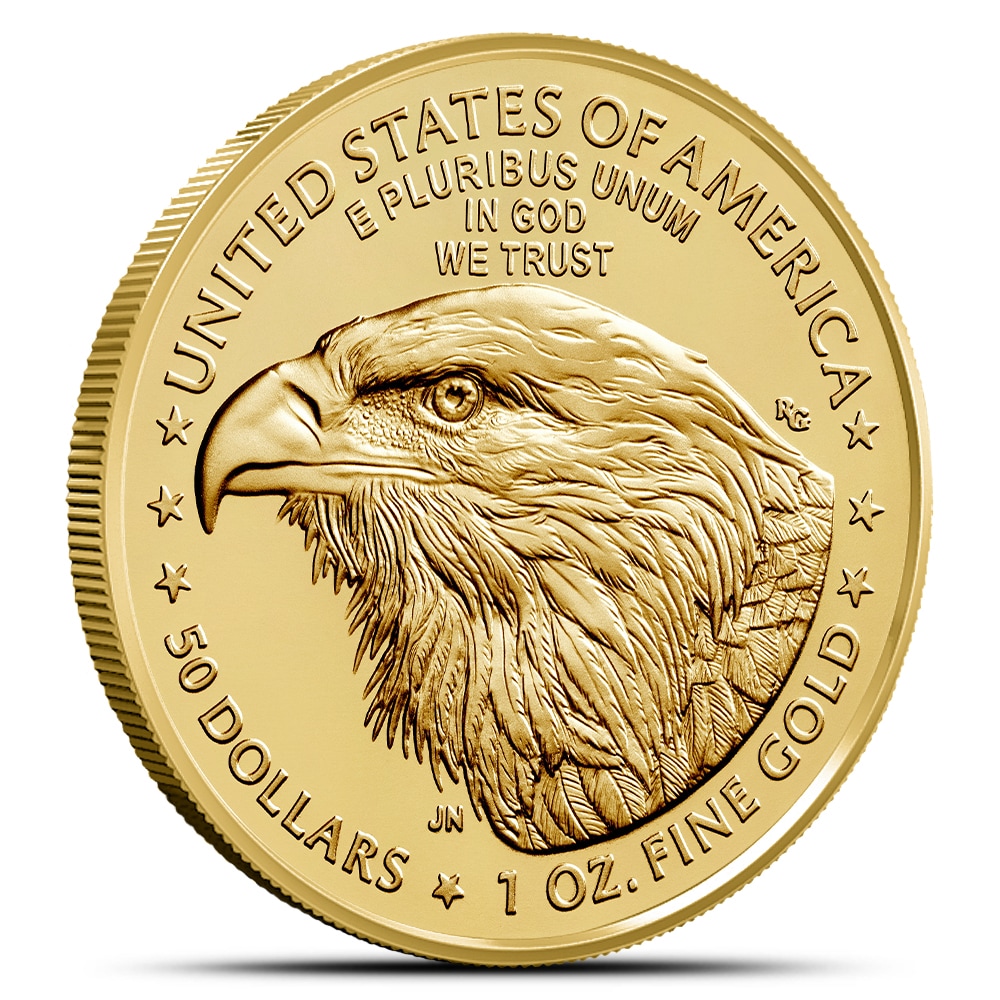
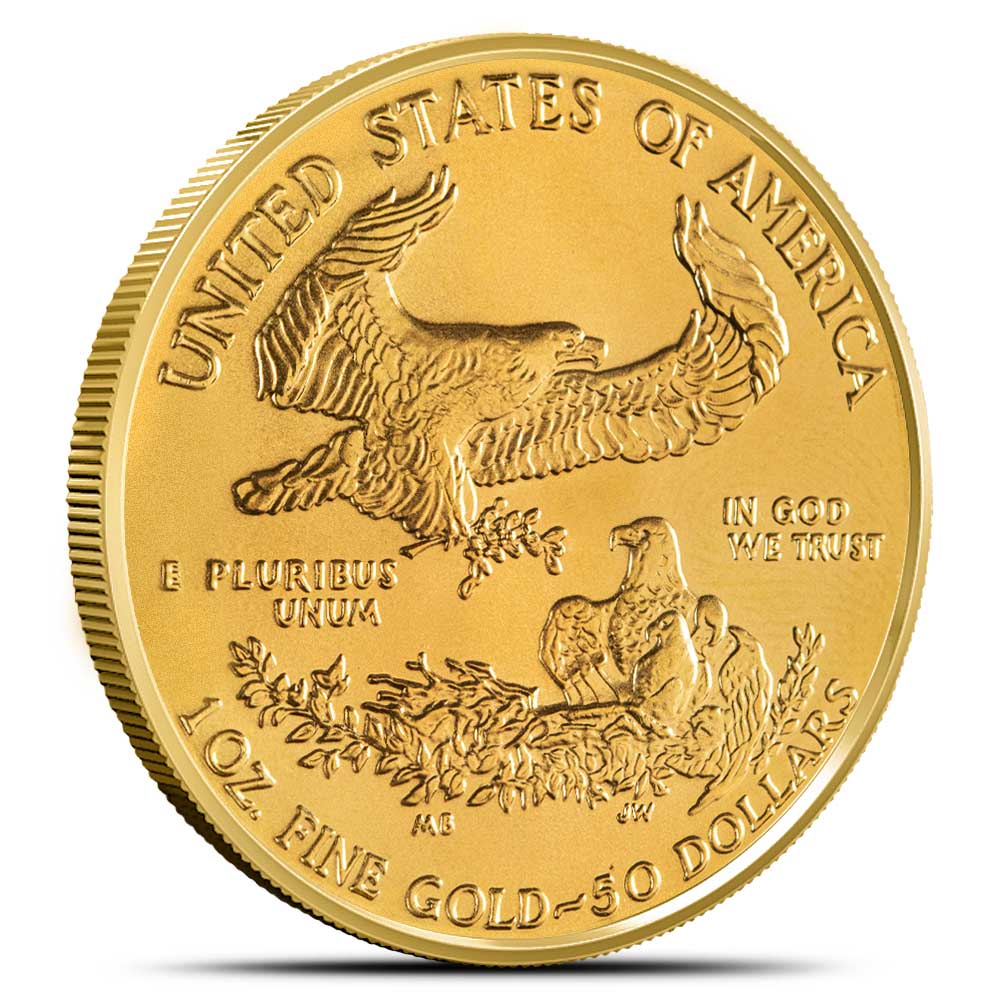
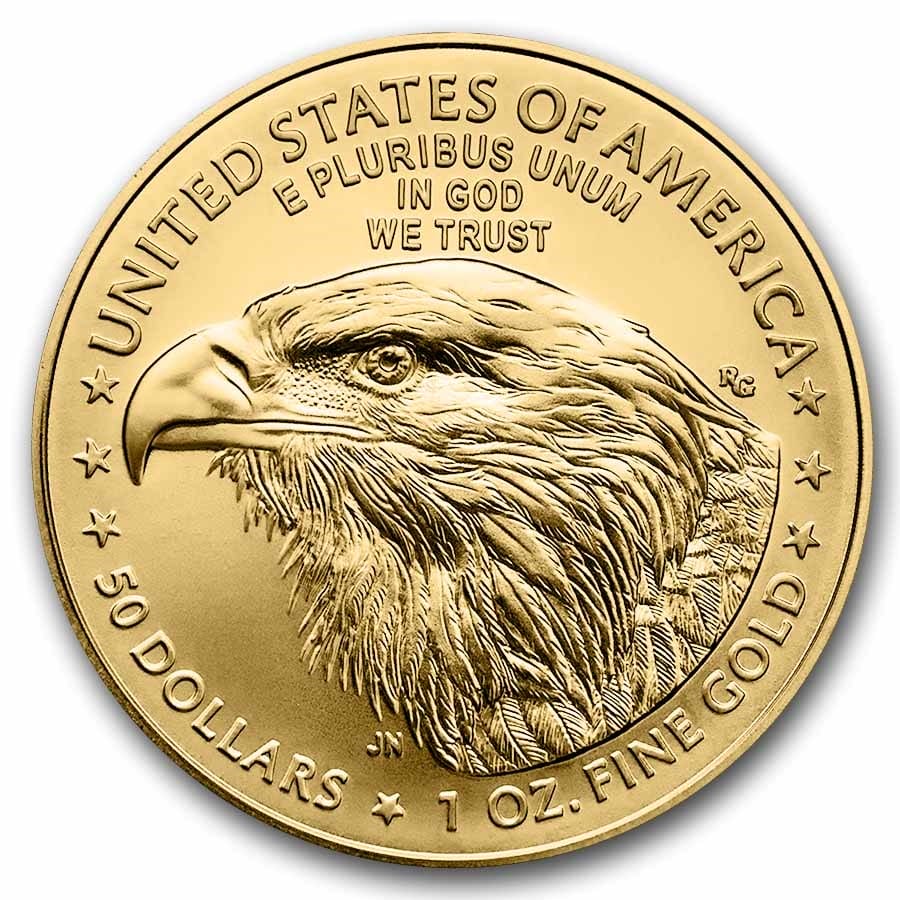
The Gold Eagle is probably the most recognised bullion coin on the planet. Minted by the United States Mint since 1986, the obverse shows Lady Liberty mid-stride and the reverse features a family of eagles. It’s struck at .9167 fineness (22-karat gold), with the remaining alloy in copper and silver for durability — but each coin still holds a full troy ounce of pure gold.
2. Canadian Gold Maple Leaf (1 oz)
If purity tops your list, the Maple Leaf takes the prize. The Royal Canadian Mint produces this coin at .9999 fineness, and certain special issues push that even higher to .99999. It’s a favourite with serious investors who refuse to dilute their gold with any alloy at all.
3. South African Krugerrand (1 oz)
The Krugerrand is the coin that started it all. Introduced in 1967, it was the first modern bullion coin marketed to ordinary investors, and it opened the door for every other sovereign mint that followed. Like the American Eagle, it’s a 22-karat coin holding one full troy ounce of gold. Its history alone makes it a cornerstone for any serious collection.
Other 1 oz Coins We Source on Request
- Austrian Gold Philharmonic
- Australian Gold Kangaroo (Nugget)
- Chinese Gold Panda
- British Gold Britannia
Tell us what you’re after and we’ll quote it.
Why Gold One Ounce Coins Make Sense as an Investment
Stocks rise and fall. Currencies quietly lose their purchasing power. Crypto wallets get hacked. Gold has done the one thing investors care about for more than five thousand years — it has held its value.
Here’s why one ounce gold coins in particular deserve a spot in your portfolio:
They hedge against inflation. When the dollar weakens or central banks print money, gold tends to climb. We’ve watched this happen during every major global shock in recent memory.
They’re easy to sell. A 1 oz American Eagle or Maple Leaf is recognised in nearly every gold market on earth. Try shifting a kilo bar at short notice and you’ll quickly see why coins are king for liquidity.
They diversify your portfolio. Gold often moves the opposite way to equities — exactly what you want when stock markets are sliding.
They’re physical. No password, no broker, no server between you and your money. You hold it. That matters more than people realise until things go wrong.
They’re easy to store and ship. A small stack of one ounce coins represents serious value in a package smaller than a paperback book.
Things to Watch Before You Buy
Honest dealers will always raise the risks too. Here are the ones we mention to every new client:
- Price swings. Gold isn’t immune to volatility. Short-term dips happen, so plan your horizon accordingly.
- Premiums above spot. Every coin carries a markup. Always compare quotes before you commit.
- Storage and insurance. A home safe, a bank deposit box, or a private vault — pick one and budget for it.
- Counterfeits. Fakes do exist. Buy only from a verified gold dealer in Uganda like Minerals Base Agency and ask for authenticity documentation.
- Tax and import rules. Capital gains, customs duties, and reporting obligations vary by country. Check yours, or speak to an accountant.
How to Buy Gold One Ounce Coins from Minerals Base Agency
We’ve kept the process clear because most of our clients buy from outside Uganda.
- Get in touch through our contact form, WhatsApp, or email. Tell us how many coins you want and which type.
- Receive a quote based on the live gold spot price plus our agreed dealer margin.
- Confirm the order with a proforma invoice and your KYC documents.
- Inspect and assay — your representative is welcome to verify the goods in Kampala, or we can arrange independent assay before shipment.
- Secure shipping through insured, tracked freight straight to your destination.
We’ve handled deals ranging from a handful of coins to multi-kilogram bullion contracts. Whatever the size, the process stays the same — transparent and documented.
Smart Buying Tips from Our Trading Desk
A few things we’ve picked up over years in this business:
- Don’t try to time the market. Dollar-cost averaging — buying a fixed amount on a schedule — beats chasing the bottom almost every single time.
- Mix bullion and numismatic coins. Bullion gives you liquid value tied to spot price. Older or rarer coins offer appreciation potential beyond the gold itself.
- Verify everything. Weight checks, dimension checks, and XRF or acid testing are standard for high-value purchases.
- Build a relationship with your dealer. The first deal is just the start. Repeat buyers get sharper pricing and first access to limited issues.
Frequently Asked Questions
Why pick gold one ounce coins over gold bars?
Coins are easier to resell in small amounts, more widely recognised across borders, and can carry numismatic value that bars almost never have. Bars are great for bulk storage; coins win on flexibility.
How is the price of a 1 oz gold coin calculated?
Start with the current gold spot price per ounce. Add the mint premium and the dealer margin. Then add any numismatic premium if the coin is rare or in collector-grade condition. That gives you the sale price.
Are the coins from Minerals Base Agency authentic?
Yes. We supply only genuine, mint-issued coins, complete with assay certificates and clear sourcing paperwork. Independent verification before shipment is always welcome.
Can you ship gold coins outside Uganda?
Yes. We regularly export to the UAE, Switzerland, Hong Kong, India, and several European countries. Every shipment is insured, tracked, and fully documented.
What’s the minimum order size?
There’s no rigid minimum, but pricing tightens up on larger volumes. For single-coin orders, get in touch, and we’ll confirm current availability.
How should I store my gold coins?
For small holdings, a quality home safe will do. For larger investments, use a bank safety deposit box or a specialist private vault. And always insure your gold separately if your home policy doesn’t cover precious metals.
Ready to Buy Gold One Ounce Coins?
Whether you’re starting your first stack or expanding an existing portfolio, Minerals Base Agency is ready to help. We’ve earned our place as one of Uganda’s leading gold sellers and exporters by being straightforward, fast, and consistent on quality.
Get in touch today for a live quote on American Gold Eagles, Canadian Maple Leafs, Krugerrands, or any other 1 oz bullion coin you’re after.
Contact Minerals Base Agency → 📍 Kampala, Uganda 📧 Email and WhatsApp details on our contact page