DRC Uganda Mineral Transit 2026: What You Need to Know Before Your Next Shipment

The DRC Uganda Mineral Transit Route Is More Active Than Ever in 2026
If you are in the business of buying, selling, or moving minerals across Central and East Africa, then the DRC Uganda mineral transit corridor is something you cannot afford to overlook in 2026. This route, stretching from the mineral-rich eastern provinces of the Democratic Republic of Congo through Uganda’s bustling commercial capital Kampala and onward to international markets, has become one of the most significant trade arteries for gold and other precious minerals on the continent.
At Minerals Base Agency, Uganda’s leading licensed gold seller and exporter, we work within this corridor every day. We understand its legal frameworks, its commercial opportunities, and yes, its complexities. This page is a no-nonsense, expert breakdown of how the DRC-to-Uganda mineral transit system works in 2026, what the regulatory landscape looks like right now, and how to navigate it safely and profitably whether you are a buyer, investor, or exporter.
Why Uganda Is the Gateway for DRC Minerals
Uganda sits at a strategic crossroads between the mineral-abundant eastern DRC and the global commodity markets. The country shares a long border with the DRC and has developed the trade infrastructure, refinery capacity, and regulatory institutions needed to process and export minerals legally and efficiently.
Eastern DRC holds some of the world’s largest deposits of gold, tin, tantalum, tungsten, and copper. Yet the DRC, despite its extraordinary mineral wealth, faces persistent logistical and governance challenges that make in-country export difficult for many operators. Uganda, on the other hand, offers a functioning export system anchored by the Directorate of Geological Survey and Mines (DGSM) under the Ministry of Energy and Mineral Development, a well-established customs framework through Uganda Revenue Authority (URA), and growing refinery infrastructure including large-scale operations that refine gold to internationally accepted purity standards.
The corridor is real, it is legally recognised, and when managed correctly it is entirely compliant with international trade law. The key word there is correctly, which is where working with a licensed and experienced partner like Minerals Base Agency becomes not just useful, but essential.
The 2026 Regulatory Landscape: What Has Changed and Why It Matters
The rules governing DRC Uganda mineral transit in 2026 are more detailed than they were even two years ago. Uganda’s government has introduced a series of reforms that any serious minerals trader must understand before they move a single gram.
The Mining and Minerals Amendment Bill 2026
Uganda’s parliament is currently progressing a Mining and Minerals Amendment Bill that builds on the foundational Mining and Minerals Act of 2022. The bill proposes tighter licensing conditions, expanded state participation through Mineral Production Sharing Arrangements, and a 15% free-carried interest for the government in major operations. For exporters, the most immediate impacts are stricter local content requirements, new value addition obligations, and the rollout of government-supervised mineral buying centres in producing regions.
If you are sourcing minerals for transit or export, you will need to factor these buying centres into your supply chain. They represent the government’s effort to formalise the artisanal and small-scale mining sector and create a traceable, documented supply chain from source to export.
Transit Gold: The Certificate of Origin Requirement
One of the most important distinctions in Uganda’s mineral export tax framework is the treatment of transit gold versus domestically produced gold. Gold transiting through Uganda from the DRC is not subject to Uganda’s standard export levy, but only when it is accompanied by a valid Certificate of Origin and an import permit showing the mineral entered Uganda through official channels.
This is not a loophole. It is a carefully designed provision that acknowledges Uganda’s role as a legitimate transit hub for Central African minerals. But it only protects you if your documentation is airtight. Missing or incorrect paperwork does not just delay your shipment. It can result in confiscation, prosecution, or both.
At Minerals Base Agency, we have a dedicated compliance team that handles Certificate of Origin applications, DGSM transit documentation, URA declarations, and all related filings. We do this for every shipment, not as an afterthought.
ICGLR Regional Certification: Uganda’s Compliance Achievement
A significant development for the DRC Uganda mineral transit corridor is Uganda’s attainment of the International Conference on the Great Lakes Region (ICGLR) Regional Certification Mechanism. Uganda is now the fifth ICGLR member state to achieve this certification, joining the DRC, Rwanda, Burundi, and Tanzania. The certification confirms that Uganda has put in place the systems needed to distinguish legitimate minerals from those linked to armed conflict.
For buyers sourcing from Uganda or through Uganda, this certification matters enormously. It is increasingly required by European refineries and international buyers operating under the EU Conflict Minerals Regulation and OECD Due Diligence Guidelines. When you partner with Minerals Base Agency, our supply chains are structured to satisfy these standards from the very beginning.
How Legal DRC Mineral Transit Through Uganda Actually Works
Let us walk through what a compliant mineral transit transaction looks like in practice. This is the process Minerals Base Agency follows for every client whose minerals originate in the DRC and are being processed or exported through Uganda.
Step One: Source Verification
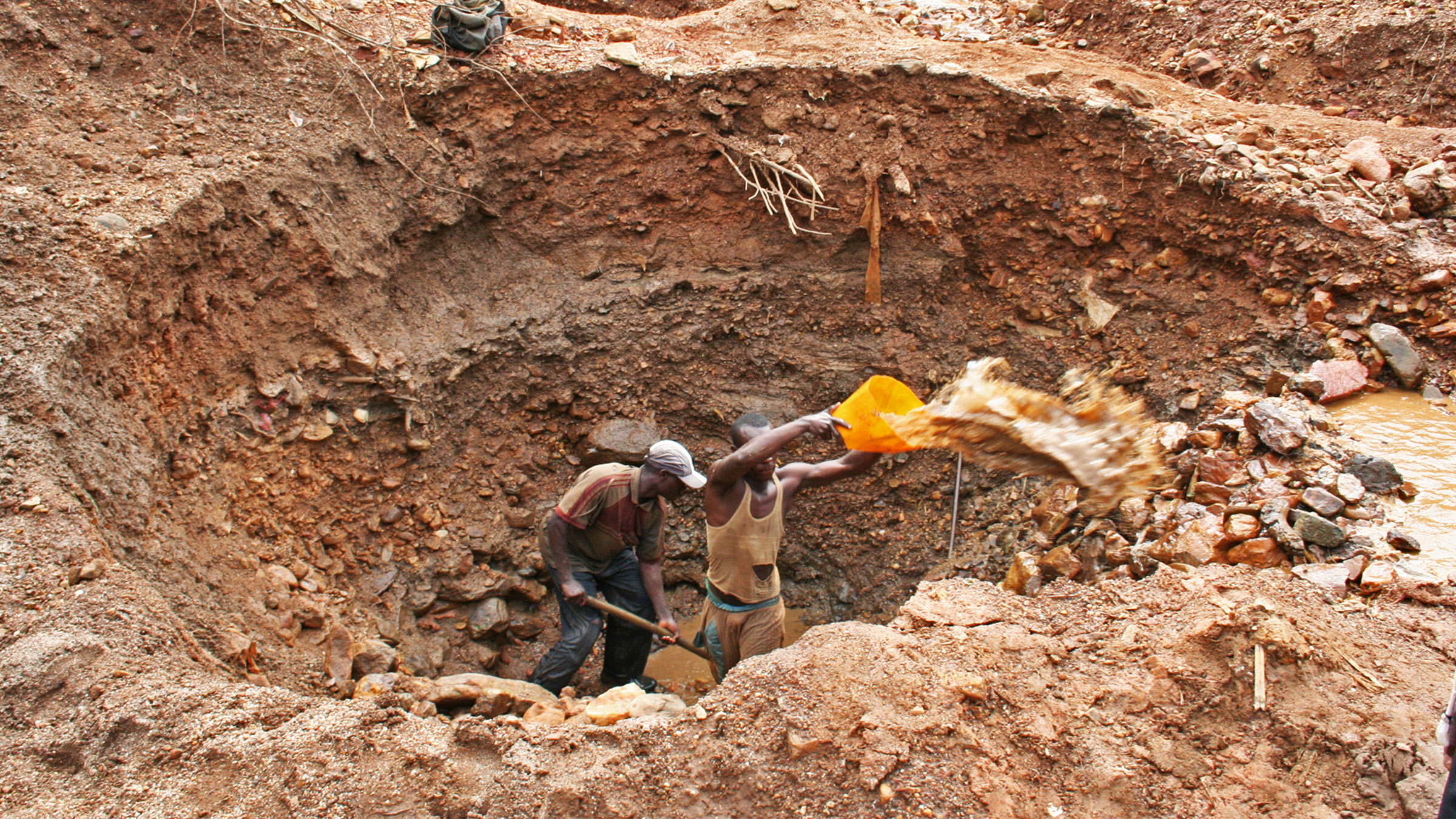
Every mineral consignment entering Uganda from the DRC must be accompanied by documentation proving its origin and chain of custody. This includes a DRC export certificate, a mineral provenance declaration, and evidence that royalties or applicable taxes have been paid in the DRC. Minerals that cannot be documented to this standard are not minerals we handle. Full stop.
Step Two: Official Border Entry and URA Declaration
Minerals enter Uganda only through authorised border crossings. The primary crossing points for DRC minerals moving toward Kampala are Mpondwe (connecting Beni/Butembo in North Kivu to Kasese in western Uganda) and Bunagana (connecting Rutshuru to Kisoro in southwestern Uganda). At the border, a formal URA customs declaration is made, the shipment is weighed and recorded, and the Certificate of Origin is lodged. This is the moment the shipment becomes a legal Ugandan import, and therefore eligible for legal re-export.
Step Three: Assay and Refining in Kampala
Once the minerals arrive in Kampala, they are typically taken to a licensed assay facility or refinery. Uganda now has several established operations capable of testing and refining gold to 99.9% purity or higher, which is the standard required for international commodity markets and is mandated under Uganda’s 2022 mining legislation for gold intended for export. Minerals Base Agency works with Uganda’s leading assay and refining partners to ensure all gold leaving our custody meets both Ugandan and international purity standards.
Step Four: Export Documentation and Clearance
The DGSM issues the Gold Export Permit, which is the cornerstone of any legal gold export from Uganda. To obtain this permit, the exporter must hold a valid Mineral Dealer’s License, present an assay report confirming purity, declare the shipment to URA with accurate weight and value, and submit payment or proof of exemption for any applicable export levies. For transit gold from the DRC, the Certificate of Origin lodged at the border underpins the exemption from Uganda’s export levy. But every other document still needs to be correct.
Step Five: International Shipment
From Kampala, gold and other minerals are typically shipped to destinations including Dubai, Singapore, Switzerland, and other major refining and commodity trading centres. Uganda’s export infrastructure supports air freight through Entebbe International Airport, which handles the majority of precious mineral exports given the value-to-weight ratio of gold.
The Infrastructure Picture: Uganda’s Growing Role as a Regional Mineral Hub
Beyond individual transactions, there is a bigger story playing out in 2026 that is reshaping the DRC Uganda mineral transit corridor for the long term.
Uganda is actively building a Standard Gauge Railway network that will eventually connect its mineral-producing western and southwestern regions to international ports. Plans are now in development for a rail link from the Tanzania-Uganda border through southwestern Uganda all the way to Mpondwe on the DRC border. This route would, for the first time, give DRC minerals originating in North Kivu and Ituri direct rail access to the Tanzanian port of Dar es Salaam, bypassing the road-based logistics that currently make mineral transit slower and more expensive than it needs to be.
The African Development Bank is currently reviewing funding requests for feasibility studies on this route. When it is built, and the direction of travel in 2026 strongly suggests it will be, it will transform the economics of DRC Uganda mineral transit and make Uganda an even more central pillar of East and Central African mineral trade.
For businesses planning long-term sourcing strategies, this infrastructure development is as important as any regulatory change. Minerals Base Agency is positioning itself to be ready for this expanded corridor, and our clients will benefit from the relationships and logistics networks we are building now.
Why the Compliance Question Cannot Be Ignored
Anyone researching DRC Uganda mineral transit in 2026 will inevitably encounter the issue of illicit mineral trade. It is not something we shy away from, because pretending it does not exist would do a disservice to serious buyers and investors who need accurate information.
The reality is that eastern DRC has historically been one of the most significant sources of informally traded gold in the world. Reports from international bodies including the United Nations and SwissAid have documented how gold from the DRC has moved through Uganda without full documentation, ending up in global supply chains without a clear chain of custody.
Uganda’s government is taking this seriously. New guidelines issued by the DGSM now require that all gold trading take place between parties holding valid Mineral Dealer’s Licences, mining licences, or refining licences. The government’s own gold purchase programme through the Bank of Uganda is designed in part to create a formal domestic market that absorbs artisanal gold at competitive prices, reducing the incentive to move it through informal channels.
The ICGLR certification Uganda has achieved is specifically designed to address this problem. It creates an audit trail for minerals moving through the country and subjects Uganda’s regulatory institutions to external review.
For buyers and investors, the message is straightforward. There are operators in this market who cut corners on documentation. In the short term they may appear cheaper. In the medium to long term, they represent a serious legal and reputational risk. The EU Conflict Minerals Regulation, OECD Guidelines, and increasing due diligence expectations from downstream refineries and manufacturers mean that supply chain provenance is no longer a compliance checkbox. It is a commercial necessity.
Minerals Base Agency exists precisely to provide the alternative: fully documented, fully legal, competitively priced mineral supply with a paper trail that protects every party in the transaction.
What Minerals Move Through the DRC Uganda Corridor?
Gold is the headline mineral, but it is not the only commodity moving through this corridor in significant volumes.
Gold remains the most valuable and highest-volume mineral in DRC-Uganda transit flows. Eastern DRC’s gold deposits, both large-scale and artisanal, produce material that ranges from raw alluvial nuggets to smelted doré bars. Uganda’s refineries can process all grades.
Tin (Cassiterite) is another major commodity. The DRC is one of the world’s significant tin ore producers, and cassiterite from North Kivu and South Kivu regularly moves through Ugandan border crossings. The 3T minerals (tin, tantalum, and tungsten) are subject to their own ICGLR traceability requirements under the iTSCi programme.
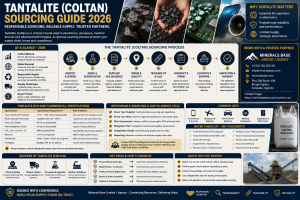
Tantalum (Coltan) from DRC is used in electronics manufacturing globally. It is a high-value, low-volume mineral that moves through the Uganda corridor to refineries in Asia and Europe.
Copper from the broader Central African Copperbelt does not typically transit Uganda (the Lobito Corridor through Angola is its primary export route), but small volumes of copper and copper alloys do move through the DRC-Uganda corridor, particularly from artisanal operations in the border regions.
Rough and industrial diamonds are present in certain DRC provinces, and while Uganda is not a primary diamond transit hub, Minerals Base Agency has licensed capacity to deal in diamond commodities as part of our broader precious minerals portfolio.
Minerals Base Agency: Your Licensed DRC Uganda Transit Partner in 2026
Minerals Base Agency has been operating in Uganda’s mineral sector for over two decades. We are not a middleman or a broker working from a laptop. We are a licensed, physically established minerals company in Kampala with the permits, the relationships, and the infrastructure to handle DRC Uganda mineral transit from source documentation to international delivery.
Here is what working with us looks like in practice.
Full Licensing and Legal Standing
We hold a valid Mineral Dealer’s License from Uganda’s Directorate of Geological Survey and Mines, a trading license from Kampala Capital City Authority, and we are registered with the Financial Intelligence Authority for Anti-Money Laundering compliance. Every transaction we conduct is documented to the standard required by Ugandan law and international trade compliance frameworks.
End-to-End Logistics
We handle the complete logistics chain for mineral transit. From border documentation and URA customs clearance to assay verification, refining coordination, export permitting, and international freight forwarding, our team manages every step. You do not need five different service providers. You need one that does it all properly.
International Reach
Our clients include buyers and refineries in Europe, the Middle East, Asia, and North America. We export to major markets including the UAE, Singapore, and Switzerland. We understand the documentation requirements of these markets and structure every export to meet them.
Transparent Pricing
Our pricing is anchored to live international gold spot prices. We do not use opaque valuation methods or bury costs in unspecified fees. You will know exactly what you are paying for and what you are receiving.
Consultation and Due Diligence Support
For new buyers and investors entering the DRC Uganda mineral corridor for the first time, we offer consultation services that cover market entry, regulatory compliance, supplier verification, and risk assessment. Understanding this market before you commit capital is not optional. It is the difference between a successful transaction and a costly mistake.
Frequently Asked Questions: DRC Uganda Mineral Transit 2026
Is it legal to transit minerals from the DRC through Uganda?
Yes. Transiting minerals from the DRC through Uganda is entirely legal when conducted through authorised border crossings with complete documentation including a Certificate of Origin, DRC export certificate, URA customs declaration, and DGSM transit documentation. The transit route is legally recognised under Uganda’s mining legislation and is consistent with ICGLR regional frameworks.
Do I need to pay Uganda’s gold export levy on transit gold?
Transit gold entering Uganda from the DRC and being re-exported is exempt from Uganda’s standard export levy, provided it is accompanied by a valid Certificate of Origin and was formally declared as an import at the border. Transit gold that cannot be documented to this standard is treated as Ugandan-origin gold for tax purposes.
What purity standard is required for gold export from Uganda?
Gold must be refined to a minimum of 99.9% purity before export from Uganda. This requirement was introduced under the Mining and Minerals Act of 2022 and is enforced by the DGSM through the assay report requirement for export permit applications.
How long does the export process take?
A well-prepared shipment with complete documentation can typically move through the DGSM and URA process in five to ten working days. Delays are almost always caused by incomplete documentation. Working with an experienced licensed exporter like Minerals Base Agency significantly reduces the risk of documentation errors that cause delays.
What is ICGLR certification and why does it matter for my purchase?
The ICGLR Regional Certification Mechanism is a regional framework for combating conflict minerals in the Great Lakes Region. Uganda’s certification means that the country’s regulatory systems have been independently verified as capable of distinguishing legitimate minerals from conflict minerals. For downstream buyers in Europe or the US, sourcing minerals through ICGLR-certified countries significantly simplifies compliance with the EU Conflict Minerals Regulation and comparable frameworks.
Can Minerals Base Agency source specific volumes and grades of gold?
Yes. We handle transactions ranging from small consignments for testing the market to large-volume orders for institutional buyers and refineries. Contact our team with your specifications, including target purity, volume, and delivery timeline, and we will provide a detailed offer.
Get in Touch With Minerals Base Agency
The DRC Uganda mineral transit corridor in 2026 offers serious commercial opportunities for buyers, refineries, and investors who approach it correctly. The regulatory environment is more structured than it has ever been. The infrastructure is improving. And Uganda’s role as a legitimate, internationally recognised mineral transit and export hub is only growing.
Minerals Base Agency is here to help you take advantage of those opportunities without the compliance headaches, documentation risks, or supply chain uncertainty that come from working with unlicensed or inexperienced operators.
Whether you are a first-time buyer looking to understand the market, an established refinery seeking a reliable supply partner, or an investor evaluating opportunities in the East African mineral corridor, our team is ready to talk.
Call or WhatsApp: +256 706 290 451 Location: Kampala, Uganda Export Markets Served: UAE, Singapore, Europe, North America, Asia Pacific
Minerals Base Agency Limited. Licensed. Experienced. Trusted.